Deep Ecology v. Transhumanism
This presentation reframes the relationship between deep ecology and transhumanism as a dialectical pairing rather than an adversarial opposition, drawing on the speaker’s professional background in psychotherapy where acceptance and change strategies work together. While deep ecologists tend to view technology worship as a root problem and emphasize the inherent worth of all living systems, transhumanists place faith in science and technology to solve problems of human and nonhuman flourishing. The speaker proposes that both movements share concern for well-being beyond anthropocentrism, and suggests that transhumanists might benefit from contemplative acceptance practices—not as resignation, but as a foundation from which more sustainable change can emerge.
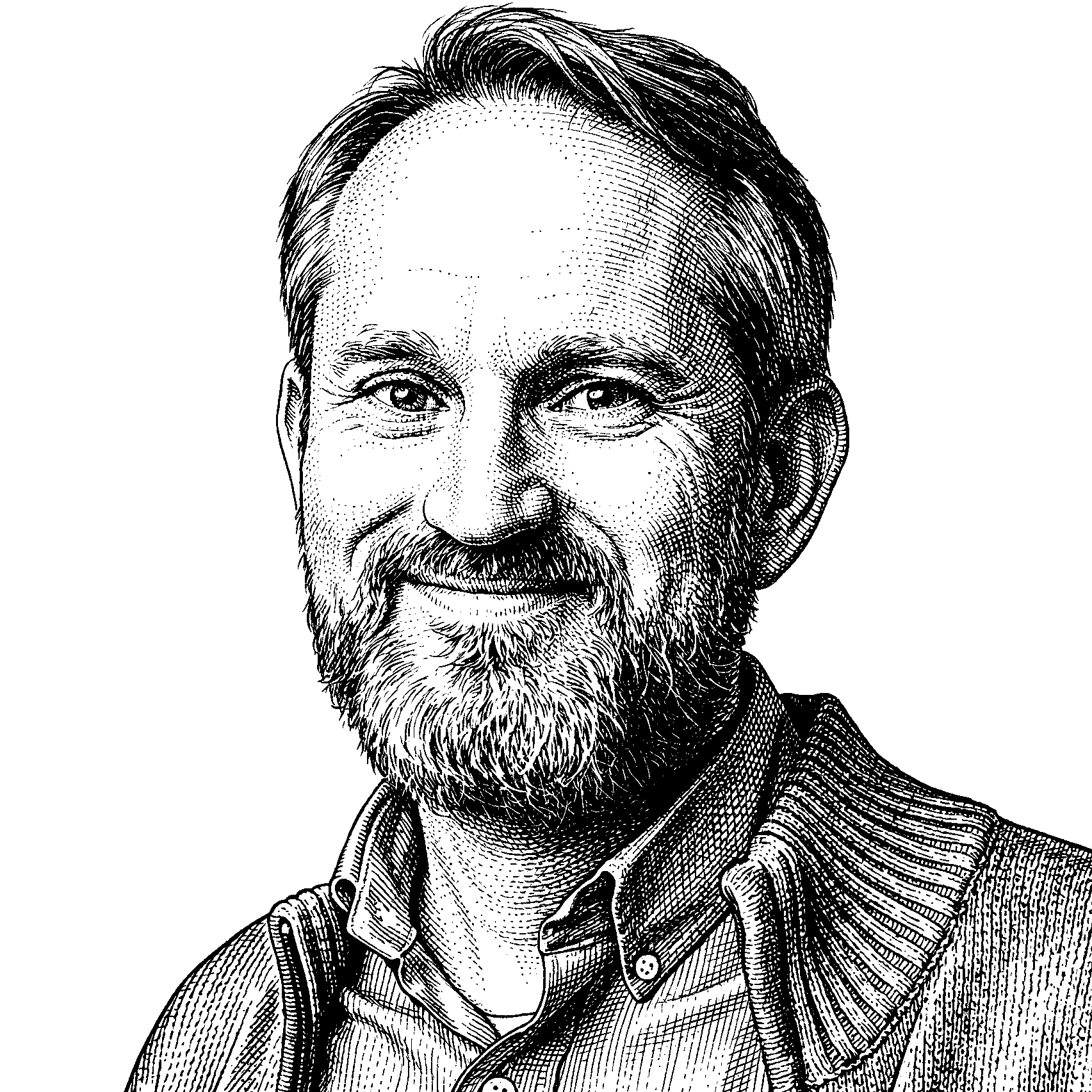
Jordan Harmon is a psychotherapist and social worker who considers himself an “accidental transhumanist.” His journey into transhumanism began after encountering the Mormon Transhumanist Association (MTA) through a podcast and subsequent interactions with members. Initially drawn by a misunderstanding—thinking it was the “Mormon Transpersonal Association” due to his interest in transpersonal psychotherapy and its implications for spiritual growth—Harmon initially approached transhumanism with some hesitation. ¶ However, after engaging with the ideas of transhumanists like Lincoln Cannon and Carl Youngblood, Harmon became increasingly interested in the movement. His work now explores the intersection of psychology and transhumanism, particularly focusing on our relationship to pain and problem-solving. He delineates two types of problem solving: the primitive, reactive response rooted in evolutionary survival, and the evolved, meaning-making response of the prefrontal cortex, which can sometimes exacerbate emotional and psychological pain. ¶ At the MTAConf 2015, Harmon discussed the “problem of problem solving,” examining how our evolved capacity for rational thought and planning can inadvertently trap us in our minds, hindering our ability to live fully. He also touched upon the internal experience, characterized by a vast array of thoughts, emotions, urges, and moral judgments, and how these elements interact to shape our perceptions and actions, highlighting persistent challenges in self-governance and interpersonal relationships.
Transcript
Speaker 1
So the title here, as expressed, was Deep Ecology versus Transhumanism, which kind of sets this up to be Somewhat adversarial. And so let me suggest an alternate title, which would be Deep Ecology and Transhumanism. And There’s a more than a semantic difference in the verses and language use. And that’s one is one is trying to hold what might be apparent opposites together into a dialectical whether we call that a synthesis or we call that a dialectical Pairing together.
Speaker 1
And so some of you guys may be aware of deep ecology, and some of you may not be. If you were paying attention to Carl’s Just lecture that happened. I’m sure deep ecology is more resonant with the Ishmael type approach that is going to be very aversive to most transhumanists. So I’ll go ahead and start out, and then we’ll see what we can do with our discussion.
Speaker 1
So professionally and personally, I have been convinced by approaches to addiction and mental health that balance acceptance strategies and change strategies. Acceptance strategies, sometimes framed as mindfulness and other contemplative practices, focus on being. whereas change strategies such as problem solving and more active interventions focus on doing. Acceptance and change form a dialectical pair of apparent opposites. Being and doing form another dialectical pair.
Speaker 2
Forgive me, I’m advancing your slides because it seems like you’re moving on. Do you want to tell me if I’m going too far?
Speaker 1
You can keep it right there for now, and then I’ll just. I’ll just say next slide when it’s coming up. So you can keep it right there.
Speaker 1
So basically, Carl’s got the slide up showing this dialectical formulation. You’ve got thesis, antithesis. And then if you want to go to the next slide. You’ve got the synthesis is the basic simplistic Hegelian model for it.
Speaker 1
And so and I’m talking quite a bit or I’m thinking a lot about acceptance And change in my domain, my professional domain as a psychotherapist. Most people seeking out psychotherapy, whether they’re going themselves or they’re encouraging their spouse or their child to go in. They’re wanting something to change. And yet, what we find in the psychotherapy domain is that acceptance as things as they are tends to lead to more sustainable change. So we tend to try to balance and get really strategic about how we use acceptance and change. And they both kind of you could say have their shadow side to them. But we hold we try to hold this dialectic these dialectical poles together.
Speaker 1
So moving on, in the types of so I mentioned that So today we’re discussing much larger systems than the ones I work with in my profession. I work with individuals, couples and families. But today we’re discussing the Earth, our relationship with the Earth itself, and perhaps our relationship with the universe beyond the Earth. So I have a bias toward dialectical thinking, acting, relating, and dialectical solutions. Do you want to go ahead, Carl, to the next slide?
Speaker 1
Here’s another dialectical pairing. David Hume wrote a lot about this one, the tension between is and ought. Things as they are, things as they should be. And we’re going to be talking a little bit about the tensions and convergences between transhumanism and deep ecology, both of them as frameworks, like most frameworks They describe things as they are or how that specific framework sees things, and they describe things how they should be. And so they give us a description and a prescription. So Go ahead to the next slide.
Speaker 1
So you guys know what transhumanism, of course, is, so you don’t we don’t need to you know I don’t need to describe that to you, but we’ll go to deep ecology. It’s an ecological and environmental philosophy promoting the inherent worth of living beings regardless of their instrumental utility to human needs. plus a restructuring of modern human societies and according to such ideas. This is from that great website, Wikipedia.
Speaker 1
But what I’m what I’m proposing is that movements of deep ecology and transhumanism can be seen as dialectical poles. Through which to discuss issues of environmental renewal, flourishing of life, and approaches to well-being for all sentient beings and living systems. And we might find syntheses between these two apparent opposites, but we don’t have to force syntheses. We can hold opposites together and kind of sit with the tension as well. There might be more convergence than you would think as well.
Speaker 1
So, some similarities between The two. Both movements are concerned with the flourishing of human and non-human life. Both are considered extreme by many in the mainstream. Both have had kind of prophetic like figureheads. Joanna Macy has been almost like a like a prophetess type figure for deep ecology, and Ray Kurzweil for transhumanism. I believe that both groups will have increasing adherence in the coming years, and both have platforms that are philosophical statements with practical applications.
Speaker 1
And we’ll look at those different platforms because they’re very interesting in that they I think they both have eight tenants to them, and you can see where there’s some congruence, and you can see where there’s going to be some sharp contrast.
Speaker 1
The difference is, so whereas transhumanists most often have faith and hope in science and technology to solve problems of human and non-human flourishing, deep ecologists tend to not share that same faith and hope, or they want to slow progress and growth down, or at least they want it to serve the value of kind of deep sustainability and kind of following the planet, the lead of the planet. It’s as if natural living systems are Are sacred to deep ecologists, and there’s no inherent value in progress per se, in what humans see as progress or innovation. to the deep ecologists.
Speaker 1
So I do see deep ecology as a kind of doppelganger to transhumanism. I imagine that deep ecologists would be skeptical and of and possibly even revile transhumanism, and that transhumanists, especially non-religious or non-ethical ones, would feel similarly towards deep ecology.
Speaker 1
I would encourage, in our exploring this and discussing it, a compassionate approach to enemy ideologies. So if you find yourself having a reaction to deep ecology, that makes sense. I’m speaking at a transhumanist conference. And I would encourage a sense of what we Adam Miller, some of you might know him, he spoke at the conference a few years ago. He wrote a great essay about approaching enemy ideologies with compassion, with charity, and that that will actually what comes out of that, however that transforms us will be more helpful to our own ideology. than if we approach it with a kind of reactive shutting down.
Speaker 1
I don’t necessarily find myself in either camp. I kind of find myself in both camps, and yet that might seem impossible. I am deeply concerned with human and non-human wellness and flourishing and compassion. I’m skeptical of our ability to do away with suffering. And yet, very wanting and committed to do away with unnecessary suffering. Also, aware that many of our attempts to do away with unnecessary suffering may have unintended consequences that exacerbate suffering. So there’s a lot of different minefields to take here. So if we want to go to the next slide
Speaker 1
And we’ll go ahead to the Transhumanist Declaration. Some of you are familiar with the Transhumanist Declaration. In fact, David Pierce was one of the authors of it, which was exciting to have him on today. But there’s eight statements. On this slide is the first four that humans will be profoundly affected by science and technology in the future. I think there’s no doubt that that is true. It goes on to describe broadening of human potential. And let’s see, where are we at? Yeah. Human’s potential humanity’s potential is mostly unrealized. Humanity faces serious risks, number three and number four. We need to understand these issues and deliberate how to reduce risks and expedite beneficial applications. Go ahead and sit next slide, Carl.
Speaker 1
And then we’ve got oh, this should say five, six, seven, eight. So these are the next four from the Transhumanist Declaration. So the reduction of existential risks. are important, basically. The policy should be guided by moral vision. We should take seriously opportunities and risks, respecting autonomy and individual rights.
Speaker 1
I think most of us look at these and would agree that these are good tenets to I like on the third one here, this is actually the seventh tenet, it says, we advocate the well-being of all. Sentients, including humans, non-human animals, and any future artificial intellects, modified life forms, or other intelligences. So, this is a place where I think deep ecologists and transhumanists find a lot of common ground in that. Advocating the well-being of humans, non-human animals, artificial intellects. Deep ecologists would add onto that all living systems. So not just non-human animals, but plants and the earth itself as a as an organism.
Speaker 1
So let’s go on to the the deep ecology platform, which also has eight kind of points. So their platform, they say the well being and flourishing of human and nonhuman life on earth have value in themselves. They want to promote the richness and diversity of life forms. They say pretty boldly, humans have no right to reduce the richness and diversity except to satisfy vital needs. So this is a big breaking point, whereas transhumanists say humanity should be going to our greatest potential, whereas deep ecologists are saying humans don’t have a right to reduce the richness and diversity of of the planet through science or technology other except to satisfy our vital needs.
Speaker 2
You got about three or four minutes left. Just got you. Thanks, Carl.
Speaker 1
So You can read these further, but basically, they’re concerned with human interference and human interference and intervention. Okay, go ahead to the next slide.
Speaker 1
So they also are concerned with overpopulation. And this was this was this In 1973, I think you, Carl Seyland Green, came out that same year. 1973 is when Arne Maas coined the term deep ecology. So they were very concerned with overpopulation, as were many other scientists of that time. So they’re very considered concerned with policies that will affect economic and technological change. They believe technological change Is mainly that of appreciating life quality, so dwelling in situations of inherent worth rather than adhering to an increasing higher standard of living
Speaker 1
So I think there’s some more convergence here, especially as we in the world become more concerned with the environment and climate impacts. But there’s definitely some tensions here. Let’s go ahead to the next slide.
Speaker 1
So this one especially, this is from the the website Foundation for Deep Ecology. They list the roots of current problems. And you’ll see the third one on there is going to be the one that Is going to get make transhumanists really mad. They say technology worship and unlimited faith in the virtues of science, the modern paradigm that technological development is inevitable, invariably good, and to be equated with progress and to Human destiny. They’re saying that’s one of the root problems of our situation. So that, of course, sets them up to be adversarial to transhumanism. But I’m interested in, go ahead to the next slide.
Speaker 1
I’m interested in back to dialectical thinking. We have things as they are and things as they ought to be, things as they should be. And go ahead to the next. Another way of thinking about this could be things as they are and things as they could be.
Speaker 1
And the reason this is important to me is because It’s very hard to us, whatever ideologies we’re talking about. We could be talking about liberal versus conservative. We could be talking about any ideology. When as soon as our idea of what should be contrasts with someone else’s idea of what should be, it’s hard for us to collaborate.
Speaker 2
Thirteen more minutes. Sorry, guys. We got some people who aren’t muted.
Speaker 1
Go ahead, Jordan. Yep.
Speaker 1
So with in discussing and dialoguing with ID evolved as humans to the point where we’re very good at it, right? We’re not very good at dialoguing when we have extremely opposing d ideologies. And one of the reasons is, I think, because of the is and ought. Idea. So ought brings should with it, and should is a judgment. And when we feel judged or our group feels judged, we naturally get defensive. And so back in the micro world of working with individuals and families, I do a lot of practicing with families how to change our language and our cognitive frameworks when we’re dialoguing with each other from a is versus ought to an is versus what can be. So we get rid of the language of should or shouldn’t, and we talk about what could be. Or what can be. Now, of course, you can’t just get rid of should or ought, it exists. So, but we place it in the realm of what is. In other words, what is, is that we as human beings, we do judge, we do have shoulds, we do react strongly to things we don’t like. But if we keep it in the realm of is, Then when we discuss the thing other things and potentialities and our choices and our actions and the things that we must do and our and how we’re going to be active in the world to help frame the world, we can talk about things as they could be more.
Speaker 1
So there’s other dialectics here. There’s that movie Interstellar. I think Julio referenced it last year. In that movie, it’s very a transhumanist movie saying we’re not, you know, we’re not caretakers, we’re not stewards, we are explorers. We’re pioneers. I would put that up here as another dialectical pair. Maybe we’re both. Maybe we are explorers and pioneers, and we are stewards, and we’re caretakers. That we can practice acceptance and change. We can practice understanding things as they are, even if it’s a dire picture, and we can see things as they could be.
Speaker 1
So deep ecology and transhumanism, I’m interested in where these could overlap. If you go to the next slide, we’ll see some discussion areas, some ideas here for what we could talk about. Areas of resonance with Deep ecology, areas of discomfort. Can human flourishing be benefited by assuming a non-anthropocentric orientation? What are the implications of that? What are implications for viewing life on our planet and in the cosmos as fundamentally interconnected in a web of living systems? That’s kind of related to the one before. This next one has to do with agency somewhat. What does consent have to do with our relationship with interacting with with interacting with and taking from the non-human world or just interacting with the non-human world? So the idea of agency being more radical and distributed than we might realize. And the next slide. These are just some further go ahead to the next slide, Carl.
Speaker 1
So I think it’s very possible and likely that some extreme or IDP college idea of like abstaining from technology is kind of ridiculous. even if we tried. And I don’t think we want to, and I don’t think we could. I think that’s a part of us and that is part of the natural world as we arise from the natural world. But the idea is how can we change our relationship to our tools? and to our technology. Rather than necessarily changing or slowing down technology, how do we change the way we interact with them?
Speaker 1
Another I mean, this discussion could go off in a million different ways, but one that I’m very interested in is identity and identification. I see the kind of a lot of the conflicts throughout history and presently as conflicts between who we identify with and what the other is, what the other that threatens us. And oftentimes, in the history of tribes and human species for thousands of years, that’s been a tribal other, or it’s been a predator, or something like that. With the climate crisis and right now with COVID-19, there is this kind of opportunity to identify ourselves together Beyond a national identity or racial or gender or class or age, that we all have this common threat, which is we could say the climate crisis is a common threat, or we could say COVID-19 is a common threat. But I think deep ecologists have something, and maybe transhumanists we have a version of this too, to go beyond that and identify ourselves with more than even our own species.
Speaker 1
that we identif and this is where religion and spirituality can help. Religious convergence of these ideas might help us identify ourselves if we call it the family of God, that the family of God would be all living things or all living systems even, expanding beyond the earth. But if we identify ourselves in that way, I’m interested, what would that do to the way we see these dilemmas that we face and these questions of how we manage resources and how are we stewards? Are we dominators? Are we conquerors? Are we primarily explorers? Or are we primarily stewards? Or is there something in a way that we’re both. So those are that’s the kind of short and dirty version of it, maybe a little longer than we wanted to. But I’m interested in what you guys think and any discussion we can have on some of these issues.
Speaker 2
So what I would say is, um, we’re over time, but since lunch is next, like, what we could do if you want, is we could all go grab something to munch on if we haven’t already. And we could continue the discussion for a little while during the break if people would like to. I would certainly like to. If you don’t mind, I’m going to go Get some non-precision fermented food, and hopefully, that’ll change soon. Well, only as I only want it as quickly as it actually tastes good and and is good for me. So but anyway, yeah, I’m going to go take a quick break and I’d love to continue to engage. Awesome.
Speaker 4
This is Caleb. Hi.
Speaker 4
Great presentation. I wanted to ask, and I don’t know if you’ve seen this, but there was a while ago on Hidden Brain. podcast, they did one talking about narratives and facts and how the the human mind has a very difficult time when its narrative is displaced unless it a new an equally or more compelling narrative is offered to them. That’s compatible, that they see as compatible or attractive. And I was curious if you thought about, you know, you talking about how do you take Very different or even opposing worldviews and reconcile them, kind of the role of narrative and acknowledging each other’s narratives, but also offering up new narratives and ways to do that.
Speaker 1
Yeah, I think that’s true. Narratives, that has to do with identity too, to me, in that narratives are stories. Stories have protagonists and antagonists. Stories have and we are always situated as a protagonist in our own story. I think even I tend to believe that even people that we most people would agree are objectively evil, someone like an Adolf Hitler. That they saw themselves as the protagonist in their own narrative, and they didn’t see themselves as the antagonist. So I think narrative is. Is more influential than facts in terms of motivating the way we interact with the world. Something that actually I was thinking about as preparing this was there was a I think, Caleb, you know Dan Witherspoon. He has a podcast, Latter Day, Latter-day Faith, I think it’s called. But he did a podcast with what’s his name, Stephen. Not Stephen Peck, but it was a Stephen who was very interested in narratives and stories. And they discussed circle narratives and straight line narratives. And they were kind of talking, a straight line narrative was this kind of they were talking about it in relation to Orthodox Mormonism versus Some sort of post or non-Orthodox Mormonism. And they were talking about the straight line narrative of one that’s this kind of linear, logical You know, line through life and the circular narrative, that’s one that’s more holistic and moving around. They eventually got they were kind of saying we’re stuck in this linear line story and we need to get back to the circular, but they were also talking about Some dialectical synthesis. And as I was listening to that, I was thinking of the spiral. I was thinking of different I was thinking about your, Caleb, your presentation a few years ago with the fractals. But I think that in some ways deep ecology is kind of like stuck in a circular narrative where they are idealizing indigenous cultures. They are idealizing some noble savage past that we have to get back to. And I think trans and this is a stereotype for both. And I think transhumanism, to some extent, might be stuck in a linear Narrative at times, at its worst, right? In terms of not acknowledging benefits of non rational thinking, not acknowledging benefits of learning in ways that don’t mat that we don’t understand right now, like indigenous ways. And so there’s this kind of I’m interested in where in the narrative is there a circle with a line narrative? And I think in our best stories there is both. Frodo leaving, and there’s clearly a march away from where he is, and there’s growth, and yet he returns back to the Shire. He’s not the same, but there is a circle kind of thing going on there. I don’t know if that’s approaching at all your statement or question, but it prompted that thought.
Speaker 4
No, that’s a good response. And just briefly, I’ll comment that I’m forgetting her name, but she’s a a lesbian Jewish rabbi, and she gave a TED talk about basically how our stories we need to anticipate our stories failing us. And this, I think, goes to the circular aspect of how can we recover from that and adapt to it, and then author new, compelling, flourishing narratives, right? And just acknowledging that cycle is part of the human experience. Yeah, yeah, that’s very interesting.
Speaker 2
Yeah, could I could I ask Yeah.
Speaker 2
So one of the quick things I just wanted to mention as I was watching your talk that struck me was the idea that technology is an unmitigated blessing I think it would strike most like would be rejected by most transhumanists. So I don’t necessarily see Deep ecology as being incompatible with transhumanism in that sense. I think a lot of transhumanists are actually quite Concerned about potential failure scenarios and risks, existential risks related to technology. So I think there may be more commonalities between them than at first appear. But partly it I think partly what needs to happen is that Some deep ecologist needs to under need to understand that or need to fully confront like what the alternatives are, right? Like you were saying, it’s not possible to just abandon the technology that’s brought us here. In fact, a lot of the things that ecologists think are part of the natural world probably are not. They’re probably partly what Emerged with the coevolution of all the different species on the planet, right? So, like one example is like almost all agriculture, even like Heirloom plants are things that actually came from that were cultivated by humans, right? So ultimately, products of technology. Even tomatoes are products of technology. Technology, right? So, right. Anyway, just yeah, just some thoughts there.
Speaker 1
Yeah, I think that’s great. And I’ll just say, and then go to you, is I think I’m interested in. The applied aspects of this debate, but also getting back to this fundamental question of as human beings And with our technology, we are part of nature. We arrive from nature. So there’s kind of sometimes a false dichotomy between the natural world and the man-made world. Where do we draw that line? And
Speaker 1
part of what’s our nature seems to be this ability and desire to extend ourselves and to strive against what is natural or what is like we can do things that animals can’t do in the sense of we can go against our fight or flight reflexes. You know, other species cannot do that. They can’t go against their fight-or-flight, you know, their instincts. And we can. Bryant, I can’t remember his last name, but he posted on Facebook the other day. Bryant, he’s a member of the MTA, I believe. He posted a thing about Margaret Mead basically putting forward when she thought human civilization started, and it had to do with when they found evidence of a femur that had been broken and had been healed. And the point was, civilization started when people sacrificed for someone else. Other animals, they didn’t find this evidence, but people sacrificed for another human and carried them, took care of them long enough for them to heal and survive. Just really quickly before I shut up here is that I think this is where religion and specifically Christianity is interesting in that to me, Christianity, we still don’t understand the evolutionary power That’s radically in Christianity, which is, you know, this whether you believe literally in Christ or not, his message is kind of lose your own life. Like, submit to death, you know, to save to lose yourself and identify with something bigger, to identify to save something else or to save something bigger. And I think that’s what humanity can do. We can, in the face of ourselves being threatened we can we can connect with a value that’s bigger than our own mortality or our own suffering. We can have compassion, which literally means suffering with. That’s where I’m pretty adamant that I don’t I don’t think our goal should be or Is best meant to be to get rid of compat or get rid of suffering, but rather unnecessary suffering. Anyway, yeah, sorry, I’m talking a lot. Yes. Here.
Speaker 5
So, thank you for your remarks. And I think you and I have a bit of a different perspective because I am one of those people who perceives an intense opposition between Transhumanism and deep ecology. One of my earlier works of writing is a science fiction novel called Eden Against the Colossus. And you can see what these metaphors stand for. But the Eden is not the Mormon Eden, it is the deep ecologist Eden. In fact, in that novel, it’s exemplified by this alien species whose entire society is based on gradations of the experience of suffering, and they actually experience this suffering by inflicting it upon themselves until they eventually destroy themselves and become the food for their society. And so the protagonist who represents a transhumanist Civilization and is on an expedition to this planet, has to figure out the mystery of this species and why it came to be. And it turns out to be a species. Engineered by a deep ecologist coup within the human civilization, and that these are actually descendants of humans whom these deep ecologists are trying to turn into The social experiment for how a deep ecologist Eden would be. So, my concern with the whole deep ecologist vision is it is a vision That is centrally premised on suffering. You can’t have the deep ecologist Eden without massive death, without massive predation, without 99. 9% of all species that ever existed. going extinct. And for me, it does seem like the imperative for transhumanists is to overcome that, to find something that’s better. That’s more humane, that values the individual. And I think the key tension is the deep ecologists value this circle, as you said, this. Cycle of natural processes, whereas the transhumanists value the individual and the preservation of the individual. So, I don’t want to die. I don’t want you to die. This I don’t want any good person to die. But that’s deeply contrary to how evolution has worked throughout history. So, in my view, we need to take the future in our hands and essentially convert. Existence from these cruel evolutionary processes to humane processes that fully exemplify our ethics So I’d be interested in your thoughts on that. It seems like a chasm that really can’t be overcome. It’s more a matter of persuading more people to adopt our outlook rather than the deep ecologists.
Speaker 1
Yeah, well, first of all, I want to say I want to read your book. It sounds really cool. So that sounds really awesome. And you probably know a lot more about Deep deep ecology than me. I’m a therapist in my day job, and I study this stuff kind of on the side, and I haven’t really gone further to deep Ecology, because I haven’t really found deep ecologists around. There’s, but there’s this whole group of Mormon transhumanists that I found, so I like engaging with you guys. Um, but I do hear deep ecology, as I’m sure you do, coming through, like, uh the the the Deep the woman, the adolescent from Germany, Greta, who’s who’s like our kind of figure right now in saving the planet, she she talks in, I think, compelling ways about that economic growth And neoliberal, kind of inevitable progress, that we shouldn’t think of that as an inherently good thing. And so you hear deep ecology coming, and I think there’s I think there’s a lot of people that resonate with it because they’re afraid of certain things or they value the natural world, whatever that means to them. But to your point, One of the things that’s been interesting to me, and it works on the micro level.
Speaker 1
When I say micro, I mean individuals, like psychologically, behaviorally. Families and couples. One of the things that works is it’s this paradox with acceptance and change, that accepting things as they are, Doesn’t mean that you will stay stuck in things as they are. Like, in other words, the only thing constant is change. We can’t get rid of change. Change is who we are at our most fundamental level. So accepting things as they are. doesn’t mean that you’re giving up and you’re saying, fine, I’m never going to do anything or change anything. It means that you can see more clearly things as they are, and you can come from a place of instead of reactive fear, You can come from a place of what do I value? What do I care about? How do I move forward? How do I collaborate? And so, again, I don’t know how this works. On the macro level or on these bigger ideas, but in an individual psychological process, like let’s say I’m working with a person who is struggling a lot with anxiety. And their anxiety is so bad that what happens is anxiety is that fight or flight mechanism that we share with Animals that are non-human, we have this fight or flight tendency or freeze to escape something aversive. And the actual way to get out of anxiety is to Sit with it to change our relationship to it rather than to run away from it. That actually makes it worse. Now, anxiety is good if it is actually an existential threat. But if it’s an anxiety disorder, it means there’s not an existential threat in us, but our mind is perceiving one, and we’ve been conditioned to believe in one that’s there. And so the acceptance strategies actually allow us to escape that suffering, the unnecessary suffering of an anxiety disorder, more than the change strategies of continue to avoid or just don’t be anxious. Or take a nip or develop another medication that’ll take my anxiety away. That tends to make us more fragile. And so, part of the things I’m interested in on a macro level is the idea of Anti-fragility as well. Anti-fragility is a concept that Nassim Taleb has developed, and he’s kind of trans-political in that sometimes his ideas really fit with libertarian ideas, sometimes they don’t. But the idea is that natural systems tend to be more fragile to unpredictable events, black swan events. Whereas man-made systems tend to be more fragile and tend to cause more unnecessary suffering. So that’s an area where I think transhumanists can look at that and say, okay, what does this mean for our goal of enhancing human and nonhuman flourishing? How can we learn from these counterintuitive and paradoxical acceptance measures? That actually might help us change things in a more healthy way, if that makes sense.
Speaker 5
So it’s more of a matter of building resilience and robustness in the event of Adverse outcomes. And I would fully support that. I mean, I’ve been advocating for a massive buildup of the hospital infrastructure in the United States in response to this pandemic, because we shouldn’t have a situation of just in time inventories of supplies when it comes to health care. We need to have So many supplies and stock, and so many resources, and medical professionals, that the system should never be overwhelmed, and we shouldn’t have this ridiculous curve flattening strategy in response to scarcity, there are certain areas of life in which we should simply not admit scarcity to begin with.
Speaker 1
Yeah, there’s a lot of ways to think about it. I was at the Hoover Dam a couple of years ago, and the Hoover Dam is this amazing feat of human engineering, and it’s amazing, right? The Hoover Dam came about partially because a lot of the areas, you know, I don’t know, the tributaries, like the cities like Yuma and other areas were being flooded every year. And the people that lived there were asking the state and federal government, help us out. We’re being flooded. This is too, you know, too much. Indigenous populations that had come before never had that issue because they were nomadic, right? And they would move with the seasons and they would move. And so they had for thousands of years been moving out of the way during certain seasons. Our natural way of living is more fragile, of course, to things like hurricanes because we’re not nomadic. We live where we live. We stay there And because we you know, if there’s not a hurricane for 10 years, then we’re excited to build buy a house on the coast and have a beachfront property. And but the problem, of course, with that is as the climate crisis continues to develop, we’re going to see how we’re fragile in way more ways than COVID nineteen. We’re fragile in so many ways. And so the idea with anti-fragility would be to say, look at natural systems, look at an anthill, look at, look at. Indigenous cultures and how did they deal with hurricanes, earthquakes? How did they deal with some of these things? And it doesn’t mean we have to idealize the noble savage, but it means like we should definitely be for learning and learning and being open and curious about what the future might look like. And I think that’s where some kind of creative cross fertilization Between these two very opposing ideas, could be fruitful for people that are transhumanists.
Speaker 2
Real quick, guys, so we’re going to reconvene at 12:40 in the main hall. So I just wanted to give everyone that update, and we can keep chatting until then. Maybe are there any other thoughts? Catherine just shared something. Thanks for a stimulating discussion, Jordan.
Speaker 2
Yeah, I just I feel like like even in my own talk, I didn’t have a whole lot of time and I didn’t want to g convey the impression that like everything is just going great and everything’s going to be fixed by technology. I did want to like counteract the Impression that like destruction is inevitable and that the only solution is like the annihilation or vast or massive decimation of the human race. Yeah. Because I think that each the very concept of carrying capacity is totally dependent on technology. Like the carrying capacity of the planet in the days of hunter-gatherers was like way, way lower. Like their technology was so bad that even a small group like them could really seriously devastate the planet, you know? And in a similar way, like we’re constantly running into new ways that we mess things up and that we threaten the balance, right? The delicate balance. And while I don’t want to downplay the serious threats we face, like I think that the only we can’t go back by like killing off most of the population. We have to try to use our ingenuity to to fix things and make them more balanced and sustainable.
Speaker 1
Absolutely. I really liked your um in your presentation. I want to find out more about the I want to watch the documentary, the Apocalypse Cow uh Apocalypse Cow. Looks really interesting. And I think that’s I think I’m hopeful, actually.
Speaker 1
I am very hopeful. I think we will have unpredictable things happening. And I believe that humans more deeply than we want to escape pain, we want to love. I believe that. I believe we you know, sometimes I’m cynical and I don’t believe that, but I think more deeply than our desire to escape pain reactively is our desire to connect in a healthy way. And so I am hopeful. And I think I mean, I engage in these ideas from a very different place. But I it’s amazing the way that compassion and opening up to and acceptance of pain including the imagining and the inevitability of our mortality and our death and our suffering, allows for possibilities to arise. And so, and this kind of, you know, last year we talked about death, and I was defending death, right? But I wasn’t defending death as a value in itself, but death as a part of life. And I don’t see our I don’t see that we’re going to be ending our quest to end death anytime soon. I don’t think we should. But I think that our it’s possible and maybe even likely that our quest to overcome death might actually be hastened if we accept death. Acceptance doesn’t mean we like it. It doesn’t mean we agree with it. It means we see it as it is in the moment, right? We experience what it brings to us. And so for me, acceptance, I have this kind of rule of thumb in working with myself, my family, and the clients I work with. It’s acceptance first. And change comes out of that. In the religious domain, it would be grace first and the work as an extension of grace. And so I’m not and I’m not a deep ecologist. I believe I’m a transhumanist, a religious transhumanist. but one that has a that believes that science, at least behavioral science, is telling us that acceptance strategies and mindfulness strategies and contemplative practices that go way back thousands of years are more powerful and more effective in transforming our psyche individually and collective than we may realize. And so that’s maybe my wrap up. But I appreciate you guys letting me come here because I know sometimes I might appear as like a thorn in your side.
Speaker 2
Oh, no, I love it. The contrarian thorn or something. I love it, and I hope you think of yourself as a part of the group and welcome here. We have lots of different viewpoints and perspectives. All we ask is that people share them respectfully, right? So thanks a lot for your presentation. Yep. It sounded like Greg wanted to add something. We’ve got like one or two minutes, Greg. You want to
Speaker 6
That’s fine, Dan. That’s good, because you don’t want to ever give me much more than a minute or two. So I just wanted to say I appreciate your presentation. Kind of like hanging here and listening to you guys talk about this because I was born again in twenty fifteen and been listening a lot closer to Jesus, and he’s been teaching me He was preparing me a long time ago for my mission, but he brought an awareness that I of a pattern I see throughout the scriptures: is it He uses means to deliver us. So, yeah, he delivers us, but he uses means. And those means, another word for them are technology. I’m trained as a sociologist. And so we have A wide definition of what technology involves. It’s not just the device, but it’s the ideas and essences around those devices. And so I resonated with what you were talking about regarding acceptance because that’s where Jesus has been leading me towards an Eastern mind. So I was colonized by a Western mind very strongly because I I’m an ENTP on the Myers Brig, and so really lean heavily on my intuitive thinking. But I’ve been brought as I get closer to Christ. Towards the Eastern way of thinking, the dialectic. And that is technology because that’s because that’s what I view. Ultimately. You have a superior being who’s way smarter than I am, because he says, Go slow to go fast, Greg. Go low to go high, and go as an idiot or go as a fool to be wise. And those are three key things I have to review every day. But that’s why I think I was attracted to transhumanist. When I first saw it, it was just this morning. I was brought to my attention again by the Holy Ghost. Like, oh, I guess I’m supposed to go to that. So I plugged in and just I I wait to see what connections there are, but I like the emphasis on technology because I’m a yeah, I can’t share many of these ideas, but you guys have minds that understand That very thing, that you’re looking for technology to solve these problems just as Nephites were looking for breastplates To solve very practical problems. And those things are revealed from above, but they’re also part of the endowments that we carry with us. I’m guessing the breastplate guy probably had some experience, like Brigham Young, had a mind that could conceive of how to colonize the Joseph Smith.
Speaker 2
Hey, Greg. I’m sorry to interrupt. I really appreciate your thoughts. It’s about time for us all to rejoin the main hall.
Speaker 6
Good. Yep, that’s great. Thanks, Greg. Thank you so much. Thank you. Bye-bye. All right. I’ll see you there.