After Anthropos: Humanistic Social Science in a Posthuman Milieu
Anthropologist John Bialecki examines what transhumanism means for a social science that defines itself as the study of the human. He traces anthropology’s Boasian tradition of treating humanity as remarkably plastic yet culturally dependent, then asks whether posthuman transformations—particularly radical scenarios like Churchland’s networked “centipede” minds—would place future beings beyond the reach of ethnographic methods. Bialecki proposes that anthropology’s capacity to study a transformed subject might serve as a test for whether that transformation enhances or abandons what we recognize as human.
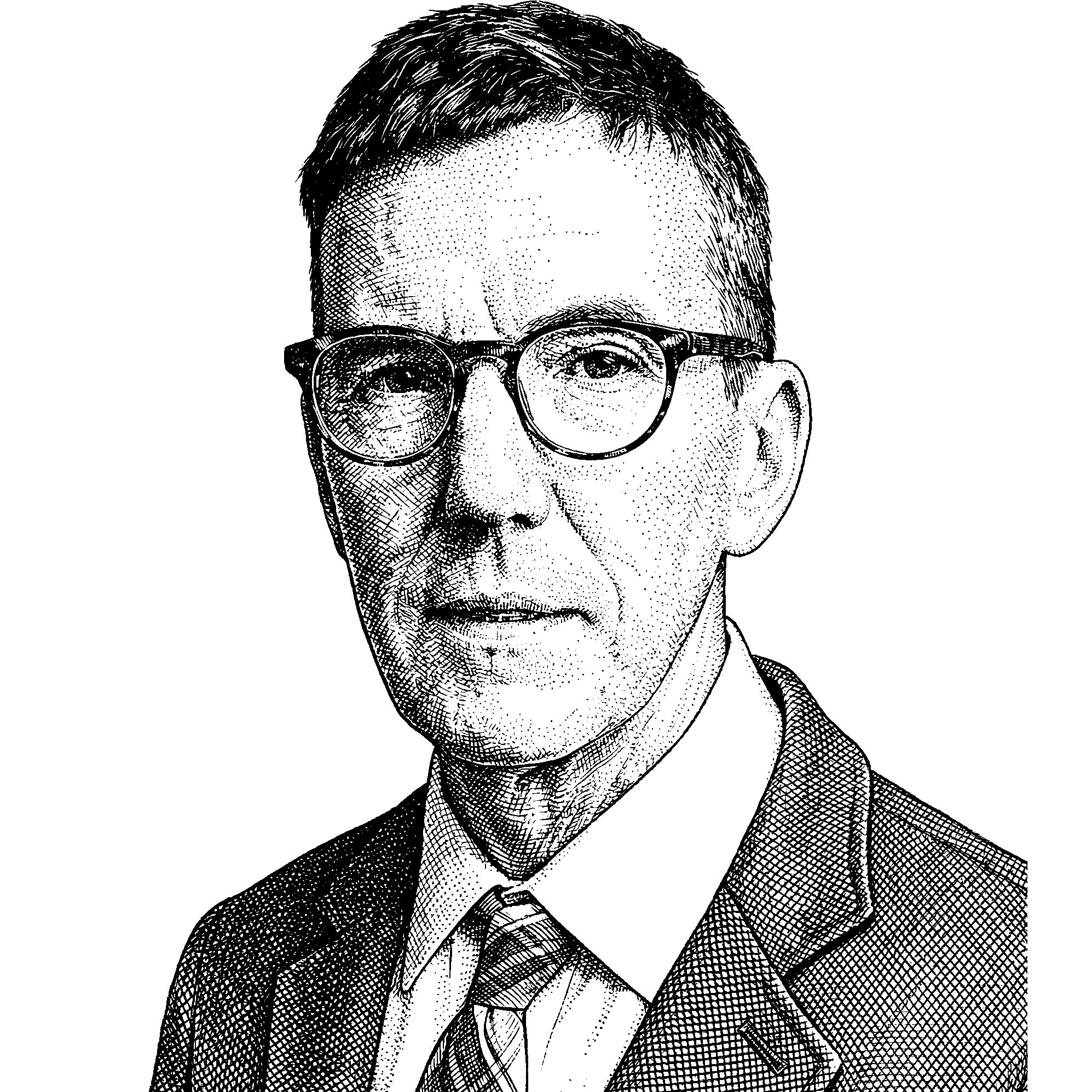
Jon Bialecki is a Continuing Lecturer in the Department of Anthropology at the University of California, San Diego, a position he has held since 2020. His research centers on the anthropology of religion, the anthropology of the subject, ontology and temporality, religious language ideology, and religious transhumanist movements. He approaches these topics with a keen interest in religious authority and its intersections with other authoritative discourses, such as science. ¶ Bialecki’s prior work includes a major field project with Southern California evangelicals, where he studied Pentecostal practices and the constitution of religious authority. This groundwork led to his current participant observation research focused on the Mormon Transhumanist Association (MTA). ¶ He holds a BA, MA, and PhD from the University of California, San Diego, as well as a JD from the University of San Diego. His work has appeared in numerous edited volumes and in academic journals such as the South Atlantic Quarterly, American Ethnologist, Anthropological Theory, and the Journal of the Royal Anthropological Institute. He also served as co-editor for a special issue of Anthropological Quarterly focusing on Christian language ideology.
Transcript
John Bialecki
Hello, my name is John Bileski, and I want to start out by saying two things. The first is that I’m incredibly sorry not to be here with you today. I’d have liked to go, but for various family reasons it turned out not to be workable this year. I’ve been fortunate enough to attend the last three MTA annual conferences, though and I’ve had a blast during each and every one of them. The talks, of course, will still be recorded for me to watch. I may very well be listening to them right now, depending on how the live stream is going. Hey If I’m watching Hi, me But the conversations with both old and new friends is something that at least this year will unfortunately escape me
John Bialecki
The second thing I want to say is that I’m an anthropologist. This may sound a bit random. After all, every one in the MTA has a day job of some sort or another. However My being an anthropologist is germane today, in two different ways. It was through anthropology that I first became aware of the Mormon Transhumanist Association. But also anthropology is central to the argument of my talk to day. My being an anthropologist explains my ties to the Association because, with the blessing of the Board of Directors of the MTA, I have been conducting an almost four year long ethnographic study of religious transhumanism with the weight of it focussing on Mormon transhumanism. I’m happy to say that some of my first published writings on the MTA will be coming out this year Appearing as part of an edited volume on theology and anthropology that is soon to be published by Oxford University Press.
John Bialecki
I’ll be saying a lot more about anthropology later on, but as I’m sure most of you know, anthropology is predicated on participant observation When there is some quantitative research, most of anthropology is qualitative. It consists of interviews and observations. Anthropology has sometimes jokingly been called the science of just hanging out. but also consists of participating, of doing the same sort of activities as the people you are working with, while they are doing them as well and to be honest That was what this presentation initially was to me an opportunity to do what MTA members, or at least a significant number of MTA members, do, namely, think out loud about transhumanism and religion. But the more I worked on my talk, the more I became enraptured with the challenge of transhumanism not as an anthropological problem, but as a problem in and of itself. This became an opportunity to think of transhumanism not as a social phenomenon that has to be put in context and unpacked, but rather as an epistemological and ontological challenge in its own right. And it’s my hope that you’ll find my particular approach to this problem interesting as well, and even if it is a little bit heavy on the social science, I think it might have some wider implications and could spark some conversation.
John Bialecki
And the problem is this. What does transhumanism mean for a social science that understands itself as the science of the human? Saying that anthropology is a science of the human may seem to be going a bit far, perhaps over reading the Greek anthros that predicated the suffix logi, grounded in the Greek logia. But if you think of other social sciences they carve out only a determinate section of the human activity. Think of sociology’s self presentation as the study of society as a causal or emergent force. Political science is the study of contestation and collective decision making. Economics is the study of exchange, and so on. By way of contrast, anthropology has always presented itself as a science of the human, specializing not in any particular field of human endeavor, but rather in the connections and resonances between disparate phenomena found among various domains.
John Bialecki
This is particularly true of the anthropological tradition I was trained in, the American variant of the discipline known as Boasian, or Fourth Field Anthropology. Now America has had anthropological authors during the nineteenth century such as Lewis Henry Morgan and Frank Hamilton Cushing. But anthropology was really established in the United States as an academic institution and intellectual programme by Franz Boas. Active from the eighteen eighties to the nineteen forties, Boas was a German Jewish émigré who was originally trained in physics, but turned to anthropology as an attempt to disprove the discriminatory racial theories of the day. He also used anthropology as a weapon to combat eugenics, which was then enjoying a great deal of popularity in America. Because Boas had to at once show that it was culture not inheritance create the sort of human differences that were then thought to be bred into different strains of humanity, and also because in addition to arguing for culture, he had to disprove biological racist causal accounts Boas and the American anthropologists who came after him saw archaeology, linguistics, physical anthropology and the study of culture and society as all being proper anthropological subdisciplines, tied together by the common thread of the human. Anthropology was to be an integrative science, unifying phenomena rather than splintering them into separate intellectual silos It was because of this ambition that anthropology expanded its scope well beyond the small scale societies, then called savages, that were its original focus in the late nineteenth and early twentieth century. Over the twentieth century would eventually widen its remit to include peasants, urban members of the non West, eventually even Euro American societies and cultures that had fostered the foundations of anthropology in the first instance. In time, anthropology eventually expanded to the point where there were researchers who conducted entirely in-row lithographies of virtual spaces such as Second Life and World of Warcraft.
John Bialecki
In the course of its investigation, anthropology has created a very particular picture of the human, one that is at once expansive in the powers it awards the human animal, but crippling in the vulnerability that it sees as constituting the human as well. Both these stances are rooted in the anthropological understanding of humans as being, at their core, incredibly plastic animals. As a strength, this is an understanding of the human as an incredibly adaptable creature. Using tools such as language and culture, humans can disseminate new techniques and approaches at a rate that far outpaces older forms of information propagation, such as genetic reproduction. Furthermore, these new techniques can be produced intentionally rather than having to engage in an effectively blind genetic combinatory search for effective solutions As a weakness, however, this is a picture of a creature incredibly dependent upon culture. Absent linguistic and cultural programming, the human is effectively an ape without instincts to guide him or her. or kid, to work in conjunction with. The romanticism of stories such as the Jungle Book put to the side, the life expectancy and degree of thriving enjoyed by pharaoh children can be safely characterized as Not good. The focus on the seeming plastic and open capacity of the human, and the unformed weakness of the human as well, may be a function of how anthropology operates.
John Bialecki
With the exception of some biological anthropologists interested in human development, anthropological comparisons are interhuman comparisons moments where different groups are contrasted with one another to see what is particular to each of them. What is shared, however, escapes from anthropological attention in this operation. But it is what is shared that is most at risk when it comes to transhumanism. the sort of transformations that transhumanism heralds means such a shift in what Marx called species being, that to say we were human in the old way, would no longer be accurate or truthful. This of course is on the one hand something that we have always been experiencing. Since the first instance of either weaponry or medicine, technologies have always been expanding the c capacities available to the species But star capacities are being imagined to possibly soon come about due to advances in the fields of nanotechnology, cryonics, bioengineering, and artificial intelligence are exponentially greater than heretofore extant technologies. Where there may be some formal resemblance between medical capacities to, on one hand, prolong life or temporary stave off death, on the other hand, achieve immortality or resurrection Substantively they are of a very different order. Differences in degree become differences in kind. The political, ethical, economic, and pragmatic challenge of the advent of such technical capacities are a transformation of world historical order.
John Bialecki
So asking what transcending the human might mean for anthropology may seem to be a misplaced set of priorities. But today I’m not thinking about challenges raised by big data or the possibility of artificial intelligence as writing ethnography, or even the collapse of the university model of intellect intellectual production though these are all admittedly profound issues. Rather, I am concerned with something that might be considered to be a greater challenge than that. To the degree that anthropology is no longer conceptually able to engage in or even imagine the collective or individual life worlds of post-human figures This methodological or theoretical failure might serve as a sort of canary in the coal mine, signalling the depth of the degree of the transformation the shift, and also indicating when that shift is working toward not some more full instantiation of the human, but rather towards some form of desubjectification If the tools and theories used by the science of the human are no longer applicable, then perhaps the object of study has not simply built upon the human, but has rather left the human behind.
John Bialecki
To be clear, not all transformations will necessarily result in something that is beyond the anthropological remit or beyond ethnographic techniques. Moments where transformations in both speed and capacity are roughly similarly scaled such that the ratios Various human possibilities remain the same, even as capacities change, will pose no problem for future ethnographers. Even if both the ethnographer and the population that he or she documents are no longer human in the biological sense of things.
John Bialecki
Let me give one example that would be familiar to those who attended last year’s conference. The scenario outlined in Robin Hansen, for instance, in the Age of M may be an example of something transcending the human while still being recognizable to the human sciences. Hansen imagines a highly accelerated, entirely virtuous society, comprised entirely of emulations of once living people due to the differences in material conditions that come with the shift to entirely virtual subjects, as well as the several orders of magnitude faster pace that we’ve bestowed to Scenarios, actors would operate under a different economic logic than that which we’re normally used to. But even virtualized But accelerated as his emulations of the human minds are in Hansen’s account, as he describes them they are still recognizably human to the extent that we could speak of the culture or society of these emulations. In fact, though Hansen doesn’t posit this as part of his scenario, we could imagine an emulation whose task is to communicate with, document, and theorize the nature of M’s. and the structure of and causal forces behind what we would call M society. It’s a world where one could imagine an orthographer not a human orthographer, of course, but perhaps emulation of a human orthographer. documenting this emerging society through the sort of participant observation techniques that have long been at the center of anthropological practice. But then M’s aren’t our limit.
John Bialecki
The problem really arises when the transformation either doesn’t keep up roughly the same set of ratios between various individually enhanced capacities. Or where the transformation structurally alters the relations between various human faculties, the example I have in mind is a thought experiment by the philosopher Paul Churchland, an experiment which is sometimes referred to as Churchland’s centipede. Turchland’s experiment starts with an observation regarding the genetic condition referred to as callosal agenesis. where the individual is born without a corpus is callossum, the neural structure that we might think of as a bridge between the two cerebral hemispheres. They constitute the average human brain The affirmation is that this does not result, when there are cases of this disease, in any obvious impairment, displaying a neural instead of a cultural plasticity the two hemispheres learn to share communicative uh information without this major arbitrary of interhemispheric communication. Churchill’s question is this If these two halves of the human brain can learn to communicate, can spatially separated human brains likewise learn to communicate and integrate their actions by way of some technical supplementation? in the same seamless way the two hemispheres do. If, directly networked, humans could directly experience the sensorium and cognition of other minds, resulting in a utopic new mode of life. But like the philosopher David Rodin notes, Churchill’s centipede would also come with the elimination of mental primacy the obsolescence of older forms of mediated communication such as language, and the lack of a reliance on the now collective brain on any particular individual body. Considering this, Rodin suggests that the collectivity dreamed up by Churchland is no longer human. More importantly for Rodin, it’s no longer clear if they, it, who inhabit either the central world or our moral community in the same way that we do, given the changes to perception and the erasure of individuality.
John Bialecki
One could go back and forth on this issue, but one clear way of cutting the Gordian knot would be to ask whether it would be possible to think of this entirely in anthropological terms, or study it through ethnographic methods. It seems that we cannot. In such an entity we would have we would have what was language become instead neural activity, and what was culture would become instead habit. More importantly, neither process would demand any kind of external instantiation for meteorological or communicative purposes. The only way to know such an entity would be to join in, and after joining in, any resulting knowledge would not be ethnography, but rather autobiography or self reflection.
John Bialecki
This is not to say that the creation of such an entity would be a bad thing. Perhaps the creation of a perfectly transparent and perfectly interempathic hive mind would be an ethical achievement. My point is merely to note that unlike the emulations of the human brain discussed earlier, this would be an agent that, even as it is comprised of connected constituent human parts would no longer be human in the sense that it is amenable to anthropological investigation through either observation, in the sense of peer to peer communication, or participation in the sense of engaging in like activities as the individuals who constitute the group being studied. It is interesting to note that entirely virtual, completely non-biological entities that live outside who live out eons in what are to us seconds are by this test human in ways that biological humans operating at our time scale and in our material world would not be after a relatively small technological modification of direct brain-to-brain neural networking.
John Bialecki
Before I leave, though, I want to say one more thing. I have leaned heavily on the T in MTA, but even though I have no Mormon background apart from uh this research project, I feel I should at least touch On the M here. If we take God either as already existing or as an aspirational being As a technical achievement, a modification of either a Homo sapien sapien or something sufficiently like a Homo sapien sapien How would this entity be assessed by my proposed anthropological test? I’m not asking if we could have an anthropologist in a fifth helmet wandering around in the intro introductory cloud scene of the nineteen eighty nine production of Saturday’s Warriors. taking breaks from chatting up premortal entities to drop by and check out how Mother and Father God are doing that day. Rather, I think that my entirely hypothetical question might mean a rereading of the passages such as DNC one thirty, or of the nineteenth century speculative discussions on the relations between and sociability of the gods. We’re not suggesting that such an exercise would produce anything like theological knowledge.
John Bialecki
But it might be worth considering, though, even if in a subjective and aspirational mode, if for no other reason than to guide our experiments with radical technology by asking what it is that would make God human. Thank you for your time.