Integrationalism: Spiritual Disincentives for Humanity
James Felton Keith presents his philosophy of “integrationalism,” arguing that traditional spirituality—by emphasizing individual spirits and their unique relationship with the divine—inadvertently incentivizes elitism, protectionism, and violent conflict over scarce resources. He proposes that insights from string theory, which suggest all existence is fundamentally interconnected, could provide a new framework for human cooperation. Keith contends that rather than pursuing “moral good” based on relative spiritual beliefs, humanity should focus on protecting mortal lives as inherently valuable, recognizing that our group interdependence is essential for technological and philosophical progress.
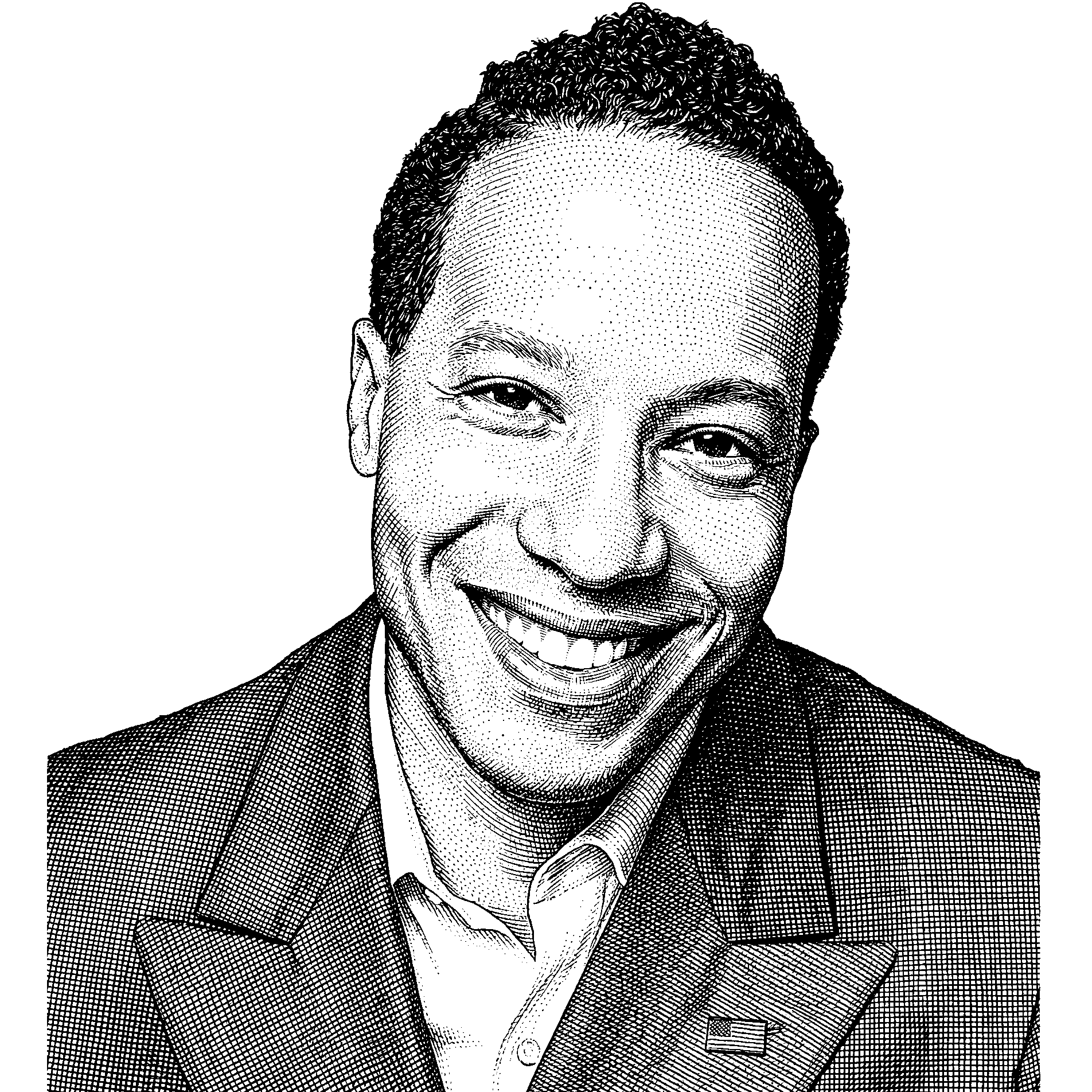
James Felton Keith is an engineer, economist, and author known for his pioneering work in “Inclusionism,” a bio-political philosophy advocating for the economic recognition of every individual’s intrinsic value. His intellectual roots are deeply intertwined with the examination of systemic structures, as highlighted in his MTAConf 2012 presentation, Integrationalism: Spiritual Disincentives for Humanity. Here, he argued against traditional frameworks that hinder human progress, proposing instead an integrated approach that aligns technological advancement with human equity. ¶ Transitioning philosophical theory into economic practice, Keith has become a leading voice in redefining personal data as a natural resource. Through his book Data Is Labor and as the founder of the International Personal Data Trade Association (IPDTA), he posits that the digital information individuals generate constitutes a form of labor essential to corporate productivity. Consequently, he advocates for a “data dividend,” establishing legal and economic frameworks to return value directly to the people who create it. ¶ Bridging the “mind of a CEO and the heart of a social worker,” Keith’s work continues to shape the global dialogue on human rights in the digital age. His efforts to standardize inclusion and monetize personal data seek to ensure that the benefits of the Fourth Industrial Revolution are universally distributed. By treating human life as the ultimate asset, Keith offers a roadmap for a future where economic systems are designed to sustain and empower humanity.
Transcript
James Felton Keith
I run a consulting firm, private equity firm called the Exit Group of Companies. And this is my first time in Salt Lake City. And I’m a bit jealous of the scenery around here.
James Felton Keith
Yeah, I didn’t know you were going to be on Twitter, so I threw my My stuff up there. So hopefully I’ve done a good job of condensing about 15,000 words. about 15 minutes. So I do my best to kind of run through things. Funny slides.
James Felton Keith
So in this era, human ambitions will yield inevitable technological ambiguities. in the realm of ethics, and even the very classifications that our species has understood itself as being for the past 200,000 years or so. In the present, we will be challenged to become as agile in our ideas on humanity as the multitude of innovators. will be in inventing the future.
James Felton Keith
I’m sure you all are familiar with these movies. They just briefly peer in. to kind of what society’s fears are of how technology will affect us in the near or far future. All of them suggest technological catastrophes and they accompany our very poor social interaction. as we have it today.
James Felton Keith
So I’m an engineer and an economics nerd to sum it all up. And you know, have some degrees in in those fields. And my objective is usually To root cause problems and how they exist, and try to figure out what incentivizes those problems, whether they’re political, economic, socio-cultural. Cultural or technological problems.
James Felton Keith
So basically, my greatest fear, and the reason that I write right now and publish the book. Book this past July is that in my generation, I’m a millennial, I was born in 1981. One, sometime during my life, that we have the potential to lose our technological abilities, our technological extensions, as a direct result of our failure to produce some. Reasonable social interaction.
James Felton Keith
And these slides are, you know, test tube Inceptions and you know, war as we’ve known it, a war depiction. And basically Over the past 200,000 years or so, spirituality has dominated the human consciousness, including the identity of a wide array of immaterial theologies, ideologies and mythologies. And humans’ ability to compensate for the unidentifiable and unknown over the millennia have provided some extraordinary philosophical exploration. I’m always impressed and reading back to see what people were thinking about Hundreds and thousands of years ago.
James Felton Keith
But the way I would kind of sum up spirituality is as compensating for our inability to understand how we function in the post-human genome era. Now we’re getting a little bit better.
James Felton Keith
So I sum all this up to say that spirituality in its relative state, you know, as some of you may be Mormons and others may be Muslims. or Christian or have their particular spiritual someone’s on Skype their different spiritual belief systems, they all tend to be relative based on the current economic state. So it all involves Well, it’s all due to the relative scarcity, you know, where we live, how we live and what we have access to.
James Felton Keith
So again, I’m a business guy and value proposition is more of an MBA’s term than a Phil Philosophical term or anything having to do with transhumanism, but in looking at spirituality and trying to explore it on my own, as I used to be I participant in the the Christian Church and the United Church of Christ. And I try to figure out what is the core value proposition of spirituality. And I figure, you know, it’s ultimately to make connections between physical Beings and kind of compensate for the lack of connections that we can identify by the naked eye. You know, I may be brown, you all may. Well, I’ll not be in this room. And, you know, male-female, you know, people have different geographical and other differences that are identified. And you know, so spirituality’s core value proposition is to make interhuman connections and and superhuman uh connections to some greater being to try and figure out uh the meaning of life or and why we’re here. and how we can afford to get along better.
James Felton Keith
So my next question to myself in this exploration was, can the value proposition be achieved? And per the modern understanding of philosophical definitions On spirits and how they exist. Spirits are only stakeholders in a singular physical being. Even as there are theologies that Identify a supreme spirit, the physical being’s understanding of its individual spirit’s interaction with itself is what molds socio-political interaction.
James Felton Keith
So again, I’m Just addressing the incentives and rather disincentives that we have to interact well. So A physical being’s understanding of its spirit existence incentivizes its individualistic sentiment, which in turn incentivizes all sorts of Spin out realities like elitism and protectionism and things of that sort. So these sentiments, as we feel that we are elites or have created some property, or have entitlements to some property or ownership of some property. Property, whether it be intellectual property or land or anything in those circles. We do have incentives to react violently towards each other. And I think it sort of stems from our spiritual understanding of ourselves.
James Felton Keith
This is a really quick incentive model that I put together based on our economic realities and our understanding. Of our spiritual being. So the S obviously represents a spirit and a spiritual being or force, and the P represents a physical being. And up top you have the spiritual and physical being interacting over some scarce resources. And I have desperation over in the left-hand corner.
James Felton Keith
Some of the adverse situations that we read about in the news today are all really a result of Scarce resources, multiple entities fighting over various scarce resources. So if you have a consumer in, say, Dubai buying fruit and they’re consuming a competitor in Duba. Very similar name, very different place in the northwestern part of Saudi Arabia. Because the people of Dubai can afford to buy their goods at such a high premium, they kind of outcast the consumer And Duba, and create a direct socio-cultural rift. At which point, these spiritual beings they find all kinds of incentives to validate their what we what we’re calling terrorism here in the United States. States today, but to validate their aggression towards this more powerful consumer.
James Felton Keith
And then when you go to the bottom of the slide and consider even a situation where resources are abundant. there is still, per spiritual understanding, some incentives for the physical beings to interact aggressively. To procure the majority of abundant resources because of their sense of potential sense of entitlement based on their spiritual understandings of themselves.
James Felton Keith
So I believe that Acknowledgement of spirituality and its direct connection to either some divine being or outside force manipulating our ability to perform well amongst each other. Can create and does create a sense of entitlement, a sense of elitism, and ultimately a sense of protectionism, which is where you get violent interaction between. Physical counterparts, human beings.
James Felton Keith
So it’s necessary to understand where these disincentives stem from. I think the last presenter kind of hit on this well. I call it in a new book I’m working on. The known division.
James Felton Keith
So, as we understand ourselves, maybe not necessarily the people in this room, but as the majority of the human population understands themselves, they are distinctly different from everyone else. And you even see it in something as simple as roll rage. People get pissed off. Excuse my French. And feel entitled to the road as it is, and need you to get out of the way. And so you see all kinds of aggressive actions that come about. And anyway, because of this known division, we tend to interact without any regard for our human counterparts’ ability to exist well.
James Felton Keith
And even our as science has come about over the The millennia, even our understanding of ourselves at the most minute level has been as Distinctly different interacting bodies to come together and create this whole. When about 20 years or so ago, As string theory has started to develop, at least from a theoretical and mathematical standpoint, we’re starting to see and maybe sometime in the near future we’ll be able to have an actual experiment that we can witness with our own eyes. That we are potentially, or as I understand it, we are in fact all directly connected with everything in existence. Including each other. And it kind of takes away from the ill incentives that were brought about from our individualistic being previously.
James Felton Keith
So I’m good, I’m kind of speeding through this pretty fast. Maybe we’ll have some time for some questions.
James Felton Keith
So how do we get better from here? I’m not a believer, so I believe that it is necessary to get rid of the That’s a bad line. I think I I rewrote that. It’s necessary to get rid of the the ambiguities that come about through these relative understandings of morality. So depending on who you are and what your economic state is, in reference to your competitors. Your idea of morality can be totally different.
James Felton Keith
I think the first speaker even referen That morality had to do with becoming more like God, and that can mean a lot of different things to a lot of different people. So the idea of morality as it as it stands today is a bit is a bit ambiguous because of its relativity. And so I don’t think that it’s productive for the human Species to progress in this century and beyond regarding the good as a moral good. I think we should. Specifically, be honoring our mortal being. And to be more redundant, I think that it’s necessary for us to. Figure out how to protect lives because they are what adds value. Our ability to explore things philosophically, our ability to build things. I think over the past 100, 200 years or so, we’ve proven that through adequate education that individuals from vastly different backgrounds can come about to produce very significant Technological goods. And having said that,
James Felton Keith
Here is the the definition of uh the philosophy that my my book is titled on called integrationalism, and it is the mortal stance, political philosophy, ideology, or social outlook that stresses the worth of the group. Integrationalists promote the exercise of the individual’s goals and desires, promote incentivizing them to explore well while not acknowledging their group dependence. Integrationalists acknowledge an infinite loop of external interference upon one’s own interests and uses group designation to incentivize the individual to create value for the group through self-actualization. And technological developments of sorts.
James Felton Keith
I just, I really think that this is important because if you go back to Any spiritual doctrine or how we understand ourselves as existing via spirituality. We have the potential to shut out some extraordinary technological and philosophical and political and socio-cultural thought. inside of our what are we at, six point eight billion individuals existing currently.
James Felton Keith
With that said, that is my best shot to sum up Half of another book project. That’s it.