Keynote: “Eternal Progression
Eric Steinhart presents a philosophical framework for “eternal progression” rooted in evolutionary and computational metaphysics. He argues that all complex things emerge from simpler predecessors through “cosmological cranes,” positing an endless hierarchy of beings—he calls them “Titans”—that reproduce, grow in complexity, and eventually design universes much as organisms build shells or nests. Steinhart suggests that transhumanist visions of expanding into planetary-scale computers and running ancestor simulations may describe our future lives in upgraded universes, with divine couples collaboratively designing worlds through something akin to “celestial marriage.”
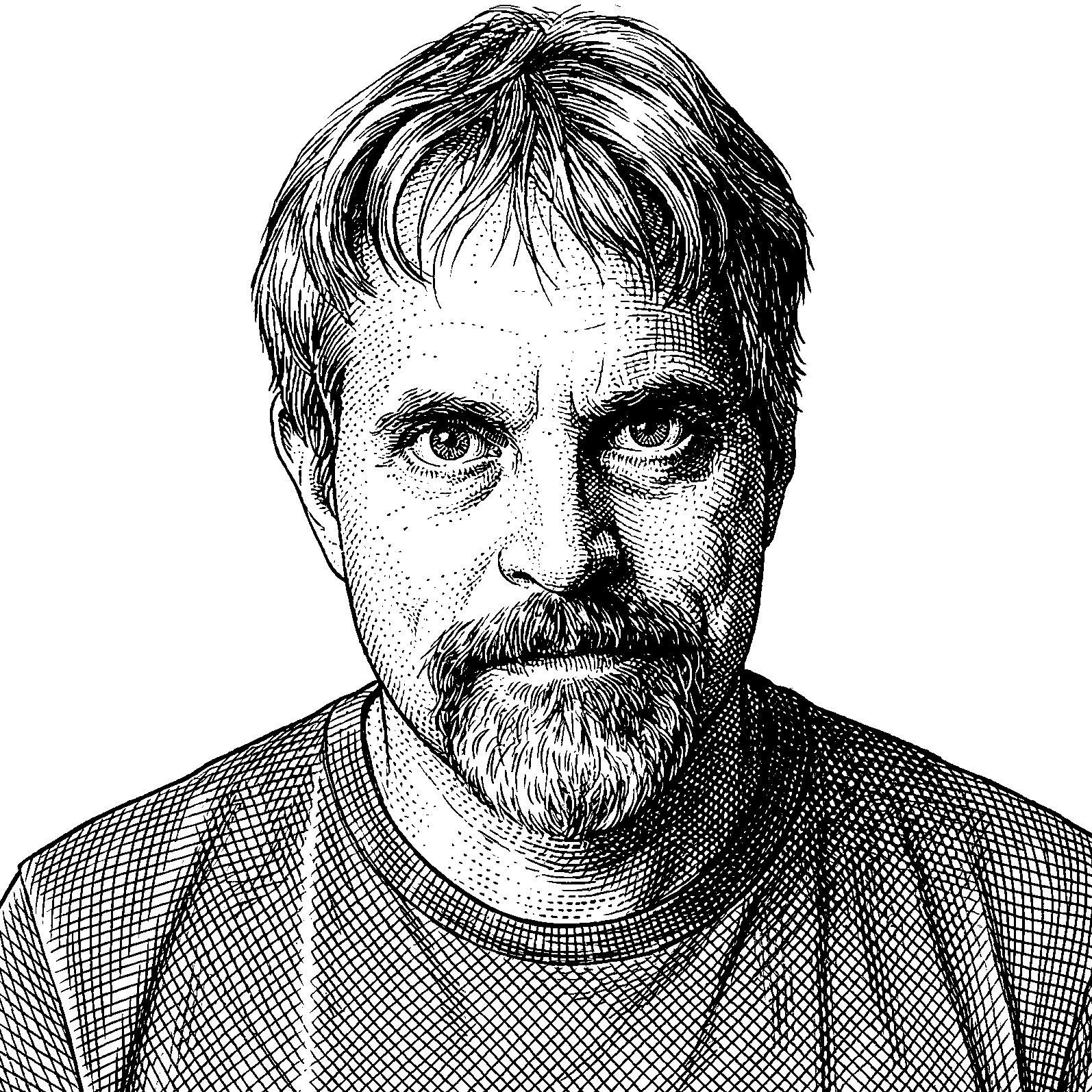
Eric Steinhart is a Professor of Philosophy at William Paterson University and the author of Your Digital Afterlives: Computational Theories of Life After Death. His work centers on metaphysics, employing contemporary analytical and logical methods, while also exploring historical metaphysical systems such as Neoplatonism and the philosophy of Leibniz. He is particularly interested in the intersection of formal sciences and theology, with a focus on alternatives to Abrahamic religions. ¶ Steinhart’s background is diverse. He grew up on a farm and initially trained as a computer scientist and mathematician, working as a software designer for several years, during which time he obtained patents for some of his algorithms. He later pursued advanced degrees in philosophy, and his earlier philosophical work included analyses of Nietzsche and metaphor, using possible world semantics. ¶ His research extends into the realms of metaphysics and computation, and he is featured in the documentary film Chronotrip, which deals with the concept of time travel. He affirms the existence of transfinitely endless hierarchies of sets, computers, languages, games, strategies, and minds. Steinhart’s current philosophical interests align with themes of eternal progression, alternative religious movements, and the application of evolutionary theory to cosmology.
Transcript
Speaker 1
I really want to thank Eric Steinhart for coming out to the conference and for agreeing to be our keynote speaker. Eric is the author of Your Digital Afterlives. Computational Theories of Life After Death, and Professor of Philosophy at William Patterson University. He works primarily on metaphysics using contemporary analytical and logical methods and tools. He is also interested in historical metaphysical systems, particularly Ploti Plotinus? Is that Plotinus? Plotinus, I had it right the first time. Um Neoplatonism and Leibniz. Steinhardt grew up on a farm. He was originally trained as a computer scientist and mathematician and worked as a software designer for several years. Some of his algorithms have been patented. He holds advanced degrees in philosophy. His past work has concerned Nietzsche as well as metaphor analyzed using possible world semantics. He has written extensively on the metaphysics and computation. He is featured in the film Chronotrip, a documentary about time travel. He is increasingly interested in the philosophy of religion, focussing on the intersection of the formal sciences and theology. He is especially interested in alternatives to Abrahamic religion. He affirms the existence of transfinitely endless hierarchies of sets, computers, languages, games, strategies, and minds. He believes in the existence of more things than you do. He also likes New York City, New England, mountain hi mountain hiking and all sorts of biking, chess, microscopy and photography. Thank you, Eric.
Eric Steinhart
Let’s see, do I need that? Do I? Do I really? Oh, for the recording. All right, very good. Thank you very much for having me here today, and I’ve learned A lot about Mormonism today, a lot more than I had known before. Certainly, I’ve studied it. I’m very interested in new and alternative religious movements, and Mormonism is still pretty new. So I’ve been fascinated, and from the kinds of things I’ve heard today, it seems like it has a very interesting future. Lincoln and I talked about that a lot last night.
Eric Steinhart
I’m going to give you kind of a more optimistic approach to things. And Let’s just start out. So here’s what I’m going to say, and my title here is Eternal Progression, a concept that may be familiar. So let’s start out with cosmological cranes.
Eric Steinhart
Now according to evolutionary writers like Richard Dawkins and Daniel Dennett, all complex things Are produced by what they call cranes. And they’re produced in sequences which start out simple and which gradually accumulate complexity. Our universe, for instance, contains many complex things. It contains biological and technological cranes. And if the idea is that if there are any complex things at all, there are cranes, and if there are any cranes at all, then there’s some ultimate crane on which all others depend. Hence, there exists some ultimate crane. That’s an argument. As a philosopher, I’ve got to give arguments.
Eric Steinhart
Now, the ultimate crane starts with a simple initial thing, and this simple initial thing is basic. It doesn’t depend on any deeper or simpler thing. It’s the start of the ultimate crane which produces all complex things. Dawkins himself says that in this This might be amazing if you think of Dawkins too simplistically. He says: the first cause that we seek must have been the simple basis for a self-bootstrapping crane, which eventually raised the world as we know it into its present complex existence. All complex things trace their history back to this ultimate, simple, original thing.
Eric Steinhart
Now, if there exists such an ultimate crane, then there are some ultimate things. And some people might want to refer to those ultimate things as gods. I want to avoid any unintended connotations. I don’t have any problem with referring to them as gods, but I want to avoid any unintended connotations, so I’ll just call them titans. Titans, sure. Give it a little old Greek flavor to it.
Eric Steinhart
And a variety of arguments suggests that the ultimate Titanic crane is defined at least by something like an initial and a successor law. Like in mathematics. So the initial law states that there exists some simple initial Titan, and the successor law states that every Titan is surpassed by at least one more complex Titan. So there’s going to be an endless series of Titans, in fact, an endless branching tree of Titans. And the Titans at higher ranks in this tree are more complex. Since there’s an initial Titan, there is no eternal regression of Titans. However, there is an eternal progression.
Eric Steinhart
Now, Titans are like organisms. Okay, all Titans owe their existence to the initial Titan, and a cosmological argument can be run to justify the thesis that the initial Titan existed. Necessarily. It’s utterly independent, a cosmological argument like Aquinas might have given, but a little bit more sophisticated logically. But all the other Titans are dependent on the initial Titan or on their predecessors, right? Every successor Titan depends on its predecessor. Since Titans are basic, there aren’t any deeper powers which can produce them. Only Titans can produce Titans. So the later Titans are produced by earlier Titans. Again, trying to give some argumentation here.
Eric Steinhart
Since Titans produce Titans, they resemble organisms. Titans beget Titans. Since it is as simple as possible, the initial Titan has no power beyond that of self-reproduction. It’s simple. All it can do is make another Titan, or maybe two or more. It’s the ultimate self-replicator, kind of an idea from Dawkins there. And the initial Titan begets its offspring, but these beget their offspring, and so it goes generation after. After generation.
Eric Steinhart
Now, the primitive Titans are going to be like primitive cells. They must contain self-descriptions in order to self-reproduce, at the very least. And these, you know, these must contain self-descriptions. We can think of them as genomes composed of genes. It’s kind of an analogy, but we can certainly think of them as informational units in some way. And these genes regulate their growth and reproduction. These genes are copied from each titan into its offspring. And as they are copied, they change, they mutate. So selective pressures are going to operate within Titanic reproduction, and they’re going to ensure that mutations get passed on when and only when they increase the complexity of the titans. So far, pretty standard stuff from biology.
Eric Steinhart
Every lineage of Titans climbs what Dawkins calls Mount Improbable. And as genes are copied from Titan to Titan, they have their own kind of immortality. The immortality of Titanic genes resembles that of our own genes. Your insulin gene dies when your body dies, but the information in that gene survives in its copies in our children and our grandchildren and so on. And some genes have been replicating themselves pretty faithfully for billions of years. It’s kind of astonishing you look at these very ancient genes that are like two and a half billion years old or more. So the gene is not identical to its offspring copies, but. But the gene is reborn or resurrected in those copies, and the copies mutate. Across the generations, they gain complexity. The titanic genes become upgraded, if you think of this in terms of software. Hopefully a little better, maybe, than, let’s say, micro. No, no. I try to make this an optimistic talk. Right.
Eric Steinhart
So, since Titans are the most basic things, they don’t interact in any deeper context. They don’t mate with each other. I mean, there’s no big space in which they exist. They’re the most fundamental things. If there are any spaces or times, they exist within the Titans. Titans aren’t out in outer space like stars or something like that. That. They would contain any universes at all that would exist. These are the most fundamental objects there are, if they exist at all. So Titans don’t mate with each other, they beget their offspring asexually.
Eric Steinhart
The primitive Titans are like primitive cells. They contain genetic self-descriptions. Their genomes contain programs which define their reproductive procedure. They reproduce by something like fission, just like amoeba, something like that. Each titan copies its code into its offspring. Each offspring titan includes all the functional complexity of its parent. So every Titan is reborn in a certain situation. Sense in its offspring. And eternal progression is the eternal rebirth or resurrection of these titans in their offspring in this way.
Eric Steinhart
But offspring titans are more complex than their parents. And so, eternal progression, in a sense, is also exaltation. Now, as titans grow more complex, their genomes encode more than their own reproductive procedure. They cease to be merely reproductive machines. They contain genes for surrounding themselves with additional structures. And for instance, many single-celled organisms build little houses for themselves out of grains of sand or proteins that they secrete. These external structures are their universes. Some simple analogies from biology. And Titans would live inside of their universes in the same way.
Eric Steinhart
So a primitive Titan might be like something called a testate amoeba, if you’ve ever heard. Heard of them. These testate amoebas, they build houses around themselves out of little grains of sand. They’re single-celled organisms, and yet they build these beautiful little houses around them. A kind of the probably the first or most primitive example of a technology. At the appropriate time, a testate amoeba will start to undergo fission. The amoeba will divide into two offspring inside its little house. And the genome copies itself into each offspring, and the offspring then kind of divide up the house, and as they grow, they kind of build a bigger house, and then the process repeats. So, by analogy, right, we would have something like these Titans building universes around themselves, reproducing by fission, building bigger, more complex universes. This biological analysis, this cycle keeps repeating. But things get more complicated. I mean, if that’s the hypothesis here.
Eric Steinhart
As in biology, as evolutionary biology demonstrates, sexual reproduction has greater capacity to explore the space of biological possibilities. Asexual organisms on Earth evolved into sexual organisms. Now, although titans don’t mate or breed with each other, that does not prevent them from running internal sexual reproduction algorithms. As titans become more complex, they’re going to tend to become hermaphroditic. They contain parts which are analogous, right, parts which are analogous to male and female reproductive organs. I have to say analogous. And they can self-fertilize. They reproduce by something perhaps like budding, or they reproduce by something like parthenogenesis. And we see this in organisms on Earth. And this follows very much from a kind of logic of genetics. And for those of you who are interested in the mathematics, you start to look at the mathematics of increasing Complexity, and you get things like this starting to follow.
Eric Steinhart
So here’s some images. Here’s an image from David Hume. He says a hermaphroditic titan is like a parthenogenic spider. There are spiders, right, which can self-fertilize. They are essentially female, one might say, but they can basically fertilize themselves and make little baby spiders. So a parthenogenic spider weaves its web, which is a Universe. It then fertilizes itself and it lays its eggs. Each egg hatches into a baby spider. The baby spiders crawl away from their parental web and they start to spin their own webs. These offspring are also parthenogenic. and each offspring fertilizes itself, lays its own eggs, webs, cycle repeats.
Eric Steinhart
So now we have titans that are parthenogenic, right? They’re hermaphroditic in some sense. They contain, they’re running an internal genetic algorithm, which is essentially a sexual algorithm, even though they themselves know nothing of sexuality. And we see this, in fact, with our computers. There are genetic algorithms. Algorithms inside computers, the computers aren’t sexual, and yet they run internal sexual genetic algorithms. We ourselves are building such machines. Right, in software.
Eric Steinhart
So the hermaphroditic titans steadily grow in complexity, also, and as they grow in complexity, we might expect their reproductive organism, reproductive organs, eventually to evolve into distinct functional systems. They would become analogous to separate male and female bodies. Thus, titans on every lineage eventually evolve into mated dyads, which resemble a male and female Couple. As these sexual titans grow in complexity, their mated dyads also grow in complexity. Each dyad produces many upgraded versions of itself. Each upgraded dyad contains an upgraded male and an upgraded female. upgraded female. The theme of exaltation once more. The parent male is reborn in the upgraded male and the parent female reborn in the upgraded f So each dyad produces a plurality of mated dyads, each one of which enters f Into its own improved and upgraded universe, and kind of offspring universe.
Eric Steinhart
Here’s another image inspired by Hume. An early sexual titan is like a pair of phoenix birds. The birds occupy their own nest as a mated pair. They mate with each other, and as they mate, they burst into flames. I take it that phoenix sex is Is really good. It’s just fantastic. They burst into flames. I love you so much. Yeah. And this is sort of the Phoenix story, the traditional story, right? It’s usually a single bird, but some of the stories have two birds. They burst into flames, and the ashes contain eggs. Right, and uh out of the ashes there are these eggs and each egg hatches into now a mated pair of chicks. Uh it hatches into two offspring titans according to This analogy, and each pair of chicks uses the sticks from the old nests to build their own new nests. But these titanic chicks have their own creative powers, as you would. Sort of expects Titans to do. Titans can create new Titans, and they can produce their own sticks, so they can assemble their own nests. But then they’re going to fly off and go their own way as each pair of Titanic chicks matures and Into a pair of adult phoenixes in their own nest, and at the appropriate time they have great phoenix sex and burst into flames, and they mate, the cycle begins again. That’s an image inspired by Hume.
Eric Steinhart
So let’s talk here about the evolution of Titanic intelligence. As these dyads grow in complexity, they’re also going to grow in power. You can’t grow in complexity. Without growing in power, too, but computational theories of complexity entail that they also grow in intelligence. If complexity is an intrinsic value, that’s the value that something has in itself. Not the value that we give it or the value that it’s useful for, right? But something that has value in itself, intrinsic value. If complexity is intrinsic value, then these Titans also grow in benevolence. It’s thus arguable that they become more and more divine. They become more intelligent, they become more powerful, and they also become more benevolent.
Eric Steinhart
Now, Hume says, for instance, that the necessity of sexual reproduction applies even to the deities. He says, advanced sexual type. He doesn’t say this. I say this. Advanced sexual titans are couples containing a divine male and a divine female, a god and a goddess, dare I say it, a heavenly father and a heavenly mother. Probably strange concepts for me to bring up. To this audience. I don’t know if I have to go into all this. Since these mated pairs are intelligent, they begin to use their minds to produce their offspring and generate their universes. No longer simply blind selection.
Eric Steinhart
But designers, contrary, for instance, to Dawkins, do not come from more complex designers. Dawkins says design isn’t cumulative, which is obviously false. In fact, all designers are products of cumulative evolution. They are produced by cranes. On Earth, we see many sexual animals evolve into designers. For instance, cadis flies, little flies that build houses out of Sticks and leaves and stones. We obviously know that spiders design their webs, birds design their nests, termites design mounds, beavers design dams and lodges, and humans we design vast technological systems. Systems. So, okay, these Titans design their universes like a male, human male, and female couple design their houses. I say, like, I don’t want to overstress that. Analogy, but we’re doing some analogy analogical reasoning here.
Eric Steinhart
And these Titans build their universes out of their own resources. There aren’t any bigger forests or mountains for them to go out and get. Gather sticks, they’re creators. They’re the fundamental ontological things that exist. They don’t depend on other things, so they don’t have to go out and get some rocks to build a house. or something, they can generate universes and their offspring out of their own creative potency. So now the Titans begin to intelligently design both their offspring and their universes. But I want to stress that intelligent design is not the opposite of
Eric Steinhart
Evolution. And we understand this pretty well now. And I don’t mean, I’m not referring to fundamentalist creationists here. We understand that intelligent design is a kind of goal-directed evolution. Which proceeds like all evolution through blind variation and selective retention. When we ourselves design artifacts like computers or jet engines, quite a few wonderful psychological Studies basically show that we are basically just going through blind variation and selective retention, running evolutionary algorithms in our own mind. That’s what intelligent design is. So, I don’t want there to be a contradiction there. And again, I’m going to leave the creationists off to the side because I think they have both evolution and intelligent design wrong. Right. I think Dawkins does too. I think because you oppose them, and no, that’s not when we actually study it scientifically. That’s not how it works.
Eric Steinhart
But the difference here, right, so all evolution proceeds through blind variation and selective retention. The main difference here is that intelligence is an optimization algorithm for the type They’re always striving for greater growth and complexity. That’s their very nature. Because they are an ultimate crane. And the first argument is that all complex things emerge from simpler things. Things through a process of increasing complexity and optimization. So, an intelligent evolutionary process can drastically reduce its search space by working with representations of the abstract structure of that space. To take yet another idea from Hume, the Titans grow ever more skilled in the arts of world making. Of course, this does not entail that Titans intervene in any universe.
Eric Steinhart
Titans generate their universes through the general providence of natural laws. They don’t work any miracles. They don’t have to, they wouldn’t have any reason to. On this biological analogy, Titans build their universes much like animals build their houses. They’re like amoebas building their little shells, like spiders building their webs, like birds building their nests, or like humans building their houses, or like Humans building computers.
Eric Steinhart
But this biological analogy is too specific and too concrete, and it needs to be stated in more general mathematical terms. One way to do this is based on the observation that organisms are digital machines. So biological analogies can be replaced with computational analogies. And in fact, as they’re replaced, they get a lot less analogical and a lot more literal.
Eric Steinhart
So, Titans basically are computers. They’re basically ultimate digital machines. Since the Titans are computers, they don’t build their universes outside of themselves like spiders build webs or like termites build mounds. They create their universes inside of their own computational processes. The Titans are hardware substrates. They’re computers running programs. And when they run their cosmic programs, their universes spring into existence, much like we run simulated universes inside of computers that we build. Right, so when they run their cosmic programs, their universes come into being.
Eric Steinhart
Universes are composed of software objects I’ll say like if anybody knows the game of life, Conway’s game of life, like gliders in the game of life, right? You can think of Titan as running a program that generates a universe. And I hate to use the word simulated because it’s not really a simulation, it’s a universe. Right? So, okay, when any universes are composed of software objects, a Titanic program for a universe is composed of many sub-programs. We know about this from computer science. Scientists, science. And these sub-programs are analogous to the genes in an organism. When any titanic gene is activated, a physical thing comes into existence in the universe running on the Titan. Some sub-program, subroutine is activated. And something comes into being inside the universe.
Eric Steinhart
Now, as the Titans grow more intelligent, they use their intellects to design their universes. As they become mating pairs, the male and female parts of those pairs. Use their minds to cooperatively work together to design and build their offspring universes. Each divine male and divine female work together like A pair of programmers. But these programmers are rewriting their own code. They are upgrading their own software. They’re engaged in what many transhumanists are. Computer scientists will know of as recursive self-improvement. They get better and better at rewriting their own code, better and better at making themselves better and better. I think it’s fair to refer to this kind of cooperative activity as love.
Eric Steinhart
It’s arguable that our universe is so complex that it was designed by a Titan composed of a divine male and a divine female. It’s arguable that our universe is so complex that it was made by a heavenly father and mother. I’m not a Mormon, by the way. Yeah, you know. That’s a fascinating question. So so I’ve heard. I’m just a farm boy from Pennsylvania, man. Come on. So, yeah. I’ve been to his birthplace in Vermont.
Eric Steinhart
So, right, as the divine couples become more complex, their universes do too. And their universes begin to run richer in terms of Internal computations. They run physical cranes, right? A crane being a process that goes from simple to complex, in which physical complexity involves On the one hand, the deepest mathematical laws of evolution ensure that these internal cranes necessarily mirror the Titanic cranes. All these cranes are climbing Mount Improbable based on the same mathematical principles, so the cranes inside the software universes begin to recapitulate some early part of the Titanic process.
Eric Steinhart
On the other hand, since evolution requires variation, these internal simulations are not going to exactly reflect Titanic evolution. Now, it was once thought that ontogeny recapitulates phylogeny. Right? It was this was thought that the development, for instance, of an embryo of some species went through the entire evolutionary history of life. So a human embryo would kind of go from a single cell through like a fish stage and a reptile Stage and whatever next. We know that that’s not quite true, right? It’s a little more complex than that, right? So while that doctrine is mainly false in embryology, it can still approximately describe the way that interior cranes are nested inside of the things produced by the Exterior cranes. We’ve got cranes nested in cranes nested in cranes.
Eric Steinhart
I mean, if this theory were true, then our universe has been produced by a sequence of titans in a titanic crane. Titans reproduce. Titans. And within our universe, a physical crane has begun to run, which starts with protons and things like that, and atoms and molecules and planets. And then you get a biological crane running at At least on the planet Earth, I suspect probably on most planets in the galaxy. Right, so on this view, physical evolution in our universe recapitulates at least some of the early stages of the Titanic evolution which produced our universe. The Big Bang resembles the first simple initial Titan. After the Big Bang, matter evolves into solar systems, life on planets. We get the first self-replicators on Earth, and life evolves in a great phylogenetic tree. Which is going to resemble the phylogenetic tree of titans. Earthly organisms resemble titans. Hermaphroditic organisms evolve, sexually reproducing dyads evolve, organisms which design artifacts evolve, and eventually humans evolve. And humans are just biochemical computers too.
Eric Steinhart
So the evolution of complexity entails that computations become more complex by containing internally fractally nested computations. That’s kind of actually provable from principles of complexity. Things become more complex by including more deeply nested internal computation They become more complex through recursive self-improvement. As our computer, the Titan running our universe, grew more complex. If they become more intelligent, well, as our computers, sorry, the ones we design, grow more complex, they become more intelligent, they become more cosmological.
Eric Steinhart
We right now are making computers in which we run simulated universes. And I don’t just mean games like The Sims or something, right? Physicists use massive computer simulations to generate simulations of our universe from the big Bang to the present day. Generally, at a coarse level, level of galaxies and stars and things like that, but still the Millennium Simulation, the Illustrous Simulations and extraordinary things. We’re making these software universes too, and so we’re building yet another crane inside a crane and Inside a crane. Here again, software ontogeny recapitulates hardware phylogeny. Some of the simulations running in computers in our universe partly retrace the history of Of our universe, they retrace the history which gave rise to those very simulations. We simulate the Titans, creatures in our software worlds in turn may simulate us. Evolution produces simulations nested in simulations, and these mirror each other in infinitely varied ways.
Eric Steinhart
This’ll bring me to transhumanism. So many transhumanists and related futurists argue that advancing technology will enable human animals to transcend biology. You’re going to become superhuman. Your body will steadily be replaced with artificial parts until you become an entirely synthetic animal. You’ll be a robot with a human past. You’ll be made metal. My mom is partly made. of metal.
Eric Steinhart
As your old parts are replaced with more powerful parts will be steadily upgraded. Your robotic body, right, your robotic body on these visions like Kurzweil or Moravec is going to continue to grow. It’s not going to look like my robotic body isn’t going to stay looking like this. What a pathetic body that would be. Right. Yeah, I you know, I know. I can tell. Yeah. But they say like, you know, Moravec describes our bodies growing into these computers as large as so planets. And solar systems, right, and grow into a computer with the immense power of a neutron star, you know, these extraordinary machines. If this is true, then our computational bodies, as they grow in glory, our minds will be exalted too.
Eric Steinhart
According to the mathematical principle behind the evolution of complexity, software ontogeny recapitulates hardware phylogeny. Our minds will gain their exaltations by running simulations of their own histories. We will design and create vast software universes. They will resemble our own past history and thus the past history of our Titans, the ones that generate us too. But we will continue their evolutions into new futures. Through new extensions of old routes, our mental processes will also climb ever higher up Mount Improbable.
Eric Steinhart
We will simulate the Titanic process which Gave birth to our universe. We will recapitulate the evolution of earthly life. We will recapitulate, in these advanced future minds which we will become, we’ll recapitulate the evolution of civilization. We’ll run ancestor simulation. And we will run these in many different ways. Our exalted mental processes will contain vast phylogenetic trees of evolving computations. We will contain exaltations within exaltations. We will give birth to minds within our own minds, and those internal minds in turn will develop their own computers and run their own simulations. So that the simulations will become ever more deeply nested, minds ever more deeply nested within minds. And you can see how this would lead to us ourselves, right? Becoming more like the Titans that brought us into existence. And the Titans are still evolving, too.
Eric Steinhart
Now, you might say that the evidence suggests this is all naive fantasy. Because as a philosopher, I have to make arguments based on evidence and I have to think I always have to think that I might be wrong. So I don’t I don’t have any revelation to rely on. And in fact, um when I started working on this kind of material Which is expressed in a large number of articles and in my book, Your Digital Afterlives. Lincoln reached out to me and he’s like, Hey, you know, there are these people who think Think kind of similar thoughts. So, but I hadn’t based any of this on particular Mormon knowledge that I had from early. Earlier religious studies. I was just trying to work out philosophical arguments. These arguments might all be wrong. The evidence might suggest this is a naive fantasy.
Eric Steinhart
Our present ecological and political crises make this wonderful future look unlike We’ve heard a little bit about pessimism, right? The sun, we’re destroying our environment, murdering each other. The sun will shortly incinerate the earth. If this great future were likely for us, you could argue that it would probably already have happened all around us on other planets. So Lincoln has brought up the book, which is now inexpensive hardcover, but should be in paperback. Soon. Thank you. And he’s read it. He says he’s got it all. I don’t see any marks here. Oh, there we go. There we go.
Eric Steinhart
Right, so you might say that our universe, if this were all true, it probably would have happened. We’d probably be in contact with all sorts of advanced alien civilizations. But the skies seem silent. Maybe we’re alone. And maybe the universe is not friendly to the transhumanist vision. Maybe this is just some fantasy because, you know, I’m Depressed and making up beautiful fantasies entertains me and cheers me up.
Eric Steinhart
I don’t think the nastiness of our universe is cause for despair, because I think our universe will be upgraded in all possible ways in its offspring. I don’t think our universe is the only universe, obviously, nor that the Titan on which our universe is running is the only Titan. And the genetic components of our universes will be copied into those of the offspring of our universes. Now the genes of any universe are programs for running the physical things in that universe. Your body is running a program. Aristotle would say that your body program is your soul. And your soul is a program running on a Titanic computer that you Generates our universe.
Eric Steinhart
Your soul would be just one of the genes in the titanic genome. And I need to stress that Aristotle’s idea of the soul is very, very different, right, from the later Cartesian idea of the soul. soul is not an immaterial substance, it’s a form. It’s a structure, it’s a mathematical pattern like a computer program. So, when um your soul is a program running on the Titanic computer that generates our universe and when that computer runs your soul your body comes into Existence. The execution of your body program obviously generates your life. Your soul is just a gene in the cosmic genome.
Eric Steinhart
After our universe dies, its genome will be copied into the genomes of its offspring. And so your soul will be copied too. You will be reborn in the offspring of our universe. Your present life will be reborn in a plurality of future lives in future ecosystems, in future universes. But your future lives will not be identical to your present life. They won’t be exact copies. If we’re assuming that evolution entails increasing complexity, then your future lives will be upgraded versions of your life. Your future lives will make greater progress to higher levels of personal excellence. Your own series of lives mirrors the series of Titans. You will become more and more like them.
Eric Steinhart
Doesn’t necessarily mean you’re going to be happier. This is not. necessarily a hedonistic version of soul making. You may face greater and greater challenges. But your future lives will inhabit universes which are more congenial to the further evolution of life. And those future universes will Will contain evolutionary processes which run much farther and higher than the evolutionary process in our universe. So I think the transhumanist and singularitarian visions of the future Describe those future universes probably better than they describe ours. Within these advanced future universes, our future cells will transcend the constraints of human biology. Our bodies will morph into vast hardware networks. We will become planetary computers. We will become heavenly computer networks enveloping the stars. We will become spiritual machines progressing through all possible degrees of glory. As Hagen puts it, this is eternal progression across a series of universes.
Eric Steinhart
This brings us to celestial marriage. Of course. Of course. Our future minds, now realized by networks of celestial computers, will be as intelligent and powerful as the brain. Of the early Titans. Now they don’t literally have brains, but our future selves will be divine, but we will be divinities running inside of the Titanic divinity. We will be software deities running inside of hardware deities. Our minds will be computers able to run internal universe simulations. We will become the design And creators of our own universes, too. The process of cosmological universe will run inside itself in an increasingly nested fashion. The evolution of computational complexity always implies fractal self-reflection, recursive self-improvement, functions nested in functions, programs nested in programs. It upgrades itself as it repeats itself within itself.
Eric Steinhart
At first, we may design and create our own universes as solitary deities, as a single programmer might design a video game. But complexity eventually entails sexuality. A lone god or goddess can’t get Get very far. But a pair of minds, harmonized in love, exploring the design space together, can climb much higher on Mount Improbable. And the fact that biology has turned so much to sexual reproduction is simply evidence. Evidence for that thesis. Asexual organisms don’t become complex. So a pair of minds harmonized in love can explore design space much farther, can climb much higher on mountain problems.
Eric Steinhart
Our marriages here may thus be the intimations of greater future marriages. Married couples may therefore be reborn together as increasingly divine dyads. These couples, now running together as networks as large as solar systems, Will design and create their own universes, much as earthly human couples design and create their families and their households. Although this transhumanist version, our vision of exaltation, seems to confirm much of our present. In human biology and its reproductive norms, it may have surprising consequences. For if we transcend human biology, we may also transcend many of the constraints of human sexuality. If transhumans no longer compete for scarce resources, including scarce reproductive partners, then human jealousy may be replaced with transhuman compersion. Word. Compersion is the joy you feel when your reproductive partner mates with someone else. Right, it’s a term used in polyamorous communities. Right, so celestial marriage might be evolve into celestial polyamory. An enormous array of new genders and genetic strategies may appear.
Eric Steinhart
You know, I say what I gotta say. I mean, you know, it’s it’s it’s I’ll talk about that in a minute. Right. Perhaps our transhuman families will be more like celestial communes than modern nuclear families. And transhuman reproductive units may come to resemble the superorganisms of the eusocial insects. I thought that was very interesting about Zion and the eusocial insects. Sup Zion is a superorganism. That’s very interesting. Because a superorganism is already a kind of organism that’s kind of taken that next step of running organisms within organisms, fractally messing.
Eric Steinhart
So, my conclusion would be that nature is a vast evolutionary enterprise, and as we climb Mount Improbable, we do it both individually and in groups. We become supercomputers nested inside of supercomputers, networks embedded in networks. We will recapitulate our own ancestral histories and elaborate them into new futures. We will contain software versions of evolution nested ever more deeply within themselves. Social networks of divine minds will design and create universes. And as these universes make progress, they in turn will contain gods and goddesses which cooperatively run universes together and design new universes. But this eternal progression runs into the transfinite and it has no end at all. So that’s my talk. Thank you.
Speaker 4
Six minutes for questions and then we will present the panel. Uh well let me get let me get first. I I think you were first so so I guess I have two Questions that always come up when I talk about the simulation argument, we had it earlier talk about that. And your work or computer science
Speaker 5
How does that sound like we have? Yeah, I guess unless you are, you never forget. But my problem with the simulation argument, and it and it shows up in yours, in in the subject, is information theory and representation. So, the most efficient representation of the universe is the universe. When you simulate it, you have to use pieces of the universe to represent the information of the baby universe. And we do that less efficiently. By definition, when you do that. And so how you end up with the universe out ended down simulations that seems impossible by information.
Eric Steinhart
Or by disagreeing with you. Yeah, right. I mean, I started out from a very small, from a single cell that contained a very, an extraordinary compression of me. And it grew and evolved in various ways, and of course took matter in from the outside world and so on. But I’m a firm believer in compression. Um so I would just say that I I don’t think the simulation argument faces that problem.
Speaker 4
But it doesn’t go infinite no matter if you can’t have infinite regression the information you’re I believe in compression too. But you can’t go down an infinite S include that. There is some point The Planck Length. Right. Well. There’s a pl what? The Planck length. There’s nothing. No, the Planck length is just in our universe, man.
Eric Steinhart
I believe in an infinitely expanding pilot. Our universe is just one of our in fact our universe is probably pretty far down on the totem pole of universes. I mean there’s the whole iterative hierarchy of we’re going you know uncountably complex universes In which, you know, in which five, I mean, finite things are the weird things if you’re a mathematician, right? Because finite things, there’s only if not many of them, but in Infinite things. But let me ask you, since there’s not a lot of time, let me get your question, and I think we’ll go. Yeah. So in order.
Speaker 6
universe, you know, we we we see the evolution of life leading to intelligence. And we we speculate about um some sort of anthropic principle that leads to that and that sort of destiny of the universe to beget life. to begin with to save itself from death. But really, if you look at the thermodynamics of the universe, the reason why those things evolve is so is to better process entropy, right? To make entropy a more efficient process. Okay, the maximum entropy production principle. Right. So I mean so if you’re in your universe, what about what happens to scarcity and what about the flow of energy? I mean it seems like the Titans are themselves a a a unique source of energy. It doesn’t make sense in a universe like the one we have.
Eric Steinhart
That I, you know, entropy is kind of weird, and the second law is kind of weird, and maximum entropy production is kind of weird. Oh, I’m sorry. Yeah, sure. So, the thermodynamics of our universe is not a necessity. Okay, and it’s not necessitated by mathematics. It seems to be a contingent feature of our universe. It’s an interesting feature. I wouldn’t see why, for instance, nobody says about numbers, like, well, you have to stop at 57 because entropy kind of maximized there. So the vision that I have, which is ultimately mathematical and then computational, says, look, there isn’t any stopping point. You know, it’s what mathematicians call indefinite extensibility. When you have certain types of finiteness, then you probably get things like the laws of thermodynamics that we have. So I would just say again, those kinds of things are restricted to our universe. In fact, it’s something that makes our universe interesting. I would think that as universes become more complex. the things like second law and the maximum entropy production principle would apply less, less and less and less, until we get new principles. Right? Which may entail new kinds of conflict and struggle as well. What’s that? Yeah, the whole process, I think, is Right, the whole process is essentially an extropic process. But I don’t like to use that word either because that seems to be tied in with local physical laws. But let me others there were so but let me go around kind of going around yeah?
Speaker 4
Most of your presentation was based on what I would call um A Western philosophy and religion, and you say you have a background in like Eastern philosophy on religion? No, I don’t. Oh, okay. I thought it was like non-Abrahamic together.
Eric Steinhart
Yeah, I’m interested primarily. Primarily, what I would call non-Abrahamic religion. But I don’t think that’s Eastern. There’s plenty of non-Abrahamic religions in the West. Tell you about the Wiccans. Background anyway, I mean I read stuff, but I can’t see it. fit into any of your models? I like Buddhism a lot. I know that the Buddhism that I like a lot is a westernized, Americanized Buddhism. It doesn’t really correspond, you know, Buddhism in America isn’t really Buddhism. It’s something we made up. Well, it’s true, it’s something we made up. I mean, we westernized it. I’m intrigued by that. But I think that the Stoics had very similar principles to Westernized Buddhism. Right? So far, and many people, there’s a revival of Stoicism, probably many of you know, and many of those modern Stoics will say, oh, um, you know, all these people running around saying, Oh, we’re B you know, in America, we’re Buddhists, you know. really are kind of Stoics that have kind of adopted an Eastern sort of language. So, and I’m not really a scholar of all that, but sure, there’s lots of non-Abrahamic stuff in the West. The whole Greek and Roman, you know, pagan period, which lasted for 1,500 years, right? And just all sorts of stuff. So I’m interested in new stuff. I think you were next. Yeah.
Speaker 7
People about simulations seem to have in mind computer simulations. That’s not the only way to simulate the universe. You could do it physically with like a a wind tunnel or a wave tank. And uh right, sure. I haven’t put this in any kind of rigorous uh formulation, but it seems like It seems to me there’s something different about those two kinds of simulations. And I’m just, you know, for example, a computer simulation is reversible and controllable in great detail. In a wave tank, you have to give up a lot of control, but you get a lot more sort of natural detail. It’s basically happening at a molecular level. So, again, that’s not very rigorous. I just want to ask: is there another way to do simulations? Well, there obviously is, but does that at all change your argument? Do you see running a different kind of simulation affecting the structure of your argument? Or would you say computers? Physical world, it’s essentially the same thing.
Eric Steinhart
I would say computers are just physical things, too, like wind tunnels and wave tanks. Because you can build computers in all different kinds of ways, too. You can build them out of sticks and you know. beer cans and string. Um so well I think uh Danny Hillis, yeah, once built one out of out of he built an adding machine out of beer cans and string. You know, just to prove the point. Sure. So, first, a minute of practice.
Speaker 8
And second, have you put any thoughts into, and what are your, I’m curious what your thoughts are about difference of simulations done within? A Turing platform versus a quantum platform?
Eric Steinhart
As far as I understand it, quantum computers are basically just faster Turing machines. There’s been a lot written about that. And I don’t think Turing machines are very interesting. They’re kind of Neat, but there’s a large literature on transfinite computers. And so, I mean, I like fine, I’m a finite computer myself. Then we’ve got Turing machines, we get accelerating Turing, well, after Turing machines, right? Machines more powerful than Turing machines, which are called junte machines. They can make jumps along the radar numbers. If you know what busy beaver problem is, some people in here must be. Come on, I thought you guys were all computer scientists. Yeah, well there are these things called rado numbers right that uh Turing machines can’t compute and so they’re non-recursive. Functions, and so then all you do is you take a Turing machine and instead of letting it move to the left or the right, you give it a third move, which is to move to the next radar number. And that machine can compute things that Turing machines, classical Turing machines, can’t. Then you take accelerating Turing machines which can go through, which run the first operation in half a minute, second in a quarter of a minute. Minute, the third and an eighth of a minute, and they can do infinitely many operations in a minute, and they can take limits. And they can do anything that a machine that works with real numbers can do. Now you head off into the transform finite. So Turing computation is just one very small among philosophers I’m known for arguing that I’m a professor, therefore all my other colleagues are stupid. So, yeah, I’m known for arguing that philosophers are dumb for thinking computation is equivalent to classical Turing computation. Computation. I’m not the only one who argues that. Jack Copeland does, for instance, too. But Turing machines are just one kind of computer. Yeah.
Speaker 9
Starting with the first type or and did not go with an infinite regression. Was it could your thought work in either direction, with with either a non-beginning or a beginning?
Eric Steinhart
I was warned that someone would ask me about this. So, you know, I think that I guess I have this thing about simplicity and complexity, and when I think about infinite regressions, there’s always the question of like, well, where where did the complexity come from? It seems to leave there to be sort of irreducible complexity. Complexity or unexplained complexity. I don’t, I’m not, so I have a preference for starting with zero when I count, and starting with the empty set when I do set theory. When it comes to some of these, see, one of the interesting things, right, is once you’ve got a transfinite Titan and a transfinite Titan, if you know how the integers are constructed from the natural numbers, a natural. An integer is actually an infinitely uh an infinitely complex object. An integer is an infinite set of pairs of natural numbers. That’s okay, math, yay. Right. So, but integers are to have infinite regression means you already have infinite complexity. Now, so a a transfinite titan could contain within itself an infinite regression. So that’s certainly possible. But I think that when I think about the mathematics of this stuff, there has to be. A first, an ultimate origin, a first cause, as it were. And it’s amazing, even Richard Dawkins says there is a first cause. People often miss that. He’s written that in like four books, which is not God, he also says. In fact, he says it’s simple and therefore it couldn’t be God. But that’s a distraction. So I was reminded, I guess, I know it’s more traditional in Mormonism to think that there would be an infinite regression of this kind of thing. But that’s where I can say, well, I’m not a Mormon, so I don’t have to worry about that. I mean, we believe more than you do. Right to the heart. Yeah. But I don’t think that infinite regression is impossible. I don’t think that it’s impossible. There could be, one might say that the God of whatever the local world is in fact sustained an infinite regression of prior gods. In the way that some classical Mormons talk about that, I was led to read something by, I think, Orson Pratt on the sort of the great first cause. But then I was told that that was Brigham Young said, No, no, no, that’s wrong. So, but maybe Orson Pratt, maybe that guy, see, he had some Good ideas. But I can’t speak to that.
Speaker 3
So time’s up, I’m told. So thank you.