Welcome to the 21st Century: the Uncharted Future Ahead
David Bailey, Chief Technologist at Lawrence Berkeley Laboratory, argues that Mormons should embrace technological progress rather than resist it. Drawing on the remarkable advances in computing, artificial intelligence, and medical technology over recent decades, he contends that progress—both scientific and moral—is undeniable. Bailey highlights how Mormon theology uniquely supports this progressive worldview, citing teachings from Brigham Young, B. H. Roberts, and Hugh B. Brown that emphasize eternal learning and the compatibility of scientific truth with religious revelation. He concludes that despite real dangers ahead, humanity has many reasons for optimism in managing technology for good.
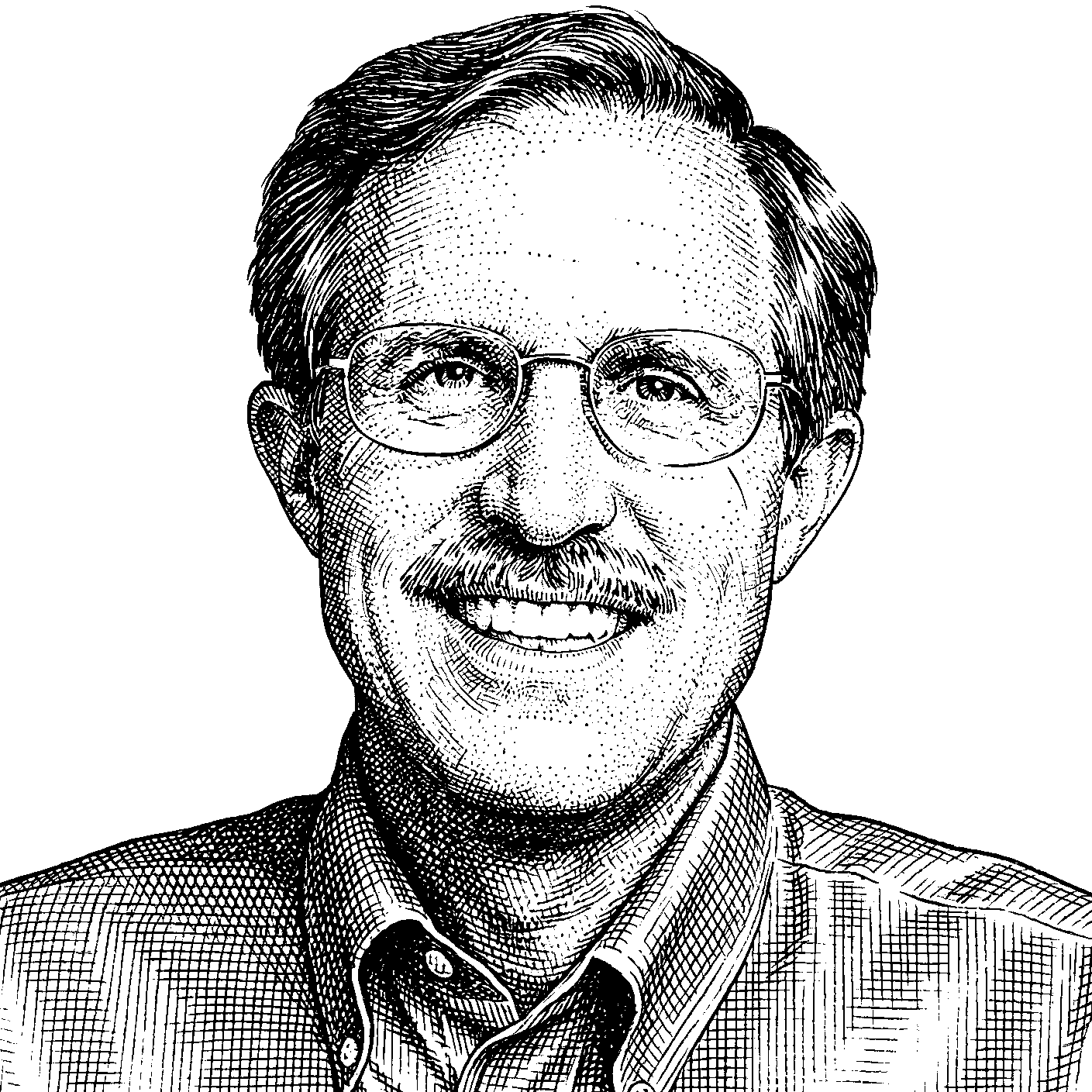
David Harold Bailey is a distinguished American mathematician and computer scientist whose work has fundamentally altered the landscape of computational number theory. A pioneer in the field of experimental mathematics, Bailey is perhaps best known for co-discovering the Bailey-Borwein-Plouffe (BBP) formula, an algorithm that allows for the calculation of the n-th binary digit of pi without calculating the preceding digits—a feat previously thought impossible. ¶ Born in 1948, Bailey pursued his education at Brigham Young University, where he received his B.S. in mathematics in 1972, followed by a Ph.D. from Stanford University in 1976. His career spanned decades at the forefront of high-performance computing, including fourteen years at the NASA Ames Research Center and fifteen years as a Senior Scientist at the Lawrence Berkeley National Laboratory. ¶ Bailey’s most famous contribution, the BBP formula, was published in a 1997 paper co-authored with Peter Borwein and Simon Plouffe. This discovery not only revolutionized how irrational constants could be computed but also provided deep insights into the question of “normality”—whether the digits of constants like pi are statistically random. Beyond pure mathematics, Bailey has made significant strides in numerical analysis and parallel computing. He is a co-author of the NAS Benchmarks, a standard metric for assessing the performance of supercomputers, and has conducted critical research into financial mathematics, warning against “pseudo-mathematics” and statistical overfitting in financial markets. ¶ A devoted member of the Church of Jesus Christ of Latter-day Saints, Bailey actively works to bridge the gap between scientific inquiry and religious faith. He operates the website Science Meets Religion, where he advocates for the harmonization of modern science—including evolution and cosmology—with theology. He argues that scientific truth and religious truth are complementary parts of a greater whole, a perspective that resonates deeply with the transhumanist pursuit of truth through both spiritual and technological means.
Transcript
Speaker 1
So let me introduce David. David is the Chief Technologist of the Computational Research Department at the Lawrence Berkeley Laboratory. He received a BS in mathematics from Brigham Young University. His PhD is in mathematics from Stanford University. David has published three books and over 100 technical papers in the general area of high-performance scientific computing and computational mathematics. He has also published some papers in the area of science and religion. So today, David is going to talk about. I don’t know if I get to the right one. In the past few decades, there’s been breathtaking advances in science and technology, as we’ve heard from some of the mentions of You know, the approach to this quote-unquote singularity. And our daily living patterns and social institutions and religious institutions have all been affected. Unfortunately, for those who dislike change, the forecast is for more of the same. It’s going to be unrelenting, even accelerating change for decades to come. Nanotechnology, biotechnology, information technology and medical technology are all poised for dramatic advances. And I’ll let I’m not going to read the whole abstract, but David’s going to let us in on what that has in store for us as far as dangers that we need to look out for, and how can we direct these developments for good and not evil. So I’ll let David go.
David Bailey
Thank you. I might mention here that The Berkeley lab wanted to do a promo for some of the scientists, and so I actually was selected and got my My photo here on the side of a shuttle bus that went between the Berkeley BART station and the lab. And so this was featuring some of some stuff I Some papers I wrote about pie. So, in the background, those are real digits of pi.
Speaker 3
Can I ask you to speak into the mic, please?
David Bailey
Sure, sure, very much. Thank you. Yeah, okay. So, anyway, that’s what this is. I might mention, if any of you are interested in this, I have put both the paper and these actual PowerPoint slides on my website. No one ever has to actually attend any of my talks. They just go to my website. You can read it. Okay, so
David Bailey
I was just speaking with talking with Catherine Haglund at lunch over our sandwiches and we were Talking about this curious trend where in some academic circles over the past few decades it was fashionable to To question whether science really makes progress. And even some notable figures, such as Thomas Kuhn. questioned, you know, whether the scientist really was science really was making any progress to fundamental truth. And this, I think, really started to get a lot of momentum. A lot of postmodern writers were involved in this. A lot of this was punctured with this Sokol hoax, where this physicist, Alan Sokol, wrote an article with a lot of this jargon and actually got it that was complete spoof. nonetheless, and actually got it published in a leading postmor modern journal. But nonetheless, there’s still a lot of this mentality out there. That’s really surprising how often you hear it. And even like this Will and Ariel Durant, some of you have their, you know, that 11-volume story of civilization. And in sort of an additional volume they wrote called Lessons of History. One of their questions was, is progress real? And I think perhaps most concern to me is sometimes I even hear talk like this, even in some of our church meetings. Say, oh, society is just going to hell in a handbag and nothing we can do about it. And they always see everything in terms of decline. But to me as a scientist and a technologist, this talk like this is just incomprehensible. I can’t even relate to it, much less agree with it. And because everything we see in the scientific world and in modern technology is just one of relentless and frankly inspiring progress. What I would like to argue here in this talk is that progress is not something we should fight against or But it’s something that we as Mormons should embrace, that we should not only embrace, but identify with. doesn’t mean that there aren’t challenges and problems, but I think Mormonism at its core is a progressive religion.
David Bailey
So anyway, just a very brief history of the past, say, 50 or 100 years. I think we have to agree that It’s been really a remarkable period. More people than ever before have had opportunities for higher education, far more than in previous decades or centuries. We have the media, radio and television, which in spite of it being a mixed blessing, nonetheless, it really helps a lot of people stay abreast of modern what’s happening in the world. Uh the computers, I I still remember the time when computers were some uh very expensive uh things in large cabinets in a big room in a government laboratory. And then they some started to appear, say, in some larger universities. and businesses. And then finally, I I remember the time of the the Apple II first, and the Apple started to come and appear in the Home and the IBM PC. And now uh we you know I have one in my uh a nice uh Apple iPhone here in my pocket. And You might say, well, that’s not really fair to compare my Apple iPhone with a supercomputer, say, of past year, some of the Because, you know, I mean, after all, but uh after all, my my iPhone has a lot more memory than those supercomputers. So uh and is a lot faster, too. But so anyway, all of these, the Internet, and we’re just starting to see now a whole new wave of medical technology and pharmaceuticals. And science has not stood still. Every week, there’s some new development, some new discovery. We’re pushing forth the frontiers. No one can deny that that there is progress going on.
David Bailey
And I would say there’s even moral progress. People that follow long-term trends have noted that The number of armed conflicts, in spite of what we may sort of have the impression from reading the news, is actually declining. sharply. And part of it is that this phenomenon that our worldwide economic system has made warfare among major trading partners unthinkable because it would disrupt our economies.
David Bailey
Nonetheless, there are downsides. There’s no doubt about it. We a lot of people are getting left behind. We’re producing trash and pollution as prolifically as we’re producing products and services and this business of global warming and fossil fuel dependency, this has really reared its head in the last few years. The Internet. Many millions of new jobs have been created with the Internet, but on the other hand, Ninety percent of all email is spam and the the pornography and viruses. Clearly, there’s just an awful lot of trouble there, too. I think it’s also important to note that a lot of particularly more fundamentalist conservative religions, I’m thinking like a lot of some of the evangelical sects, have been greatly challenged, particularly by findings in modern science. They were used to thinking more of the Bible as being a complete description of the world, and they’re very troubled but to see Scientific developments that weren’t described in the Bible. And the whole business of creationism is reared its And it continues to be a challenge. These are groups that are continuing to try to pressure state legislatures to bring creationism into the classroom. So there’s been a lot of downside.
David Bailey
What’s the current hold? What will the future hold? Well, like my introducer mentioned, there’s unfortunately going to be more of the same. There’s Recent developments in things like nanotechnology and is sure in his that this Moore’s law of computer technology is going to continue unabated for probably for decades to come. It’s just astounding. Here in some ways the computer processors, maybe individual cores are not getting faster. but there are more cores on a chip. So we can still get multiple times more work done. And as software starts to become written to take advantage of all of these, we will continue to see this this increase in power. And certainly, memory continues on this same curve.
David Bailey
Artificial intelligence is making great strides. Just in the past few years, there have been a lot of some real great improvements in some of these intelligent softwares. I put here just a little list of some of the lingo of the modern era. How many know what all of these terms are? Ah, we have one, two, two hands, three, four. I myself just have to continually be, you know, keep up to try to keep up with things. Here. I had to a couple of years ago, I had to ask someone what Facebook was. You know, well, uh So again, just a very brief here. I won’t go into some of these developments, but
David Bailey
Things like that, at one time it was just thought that computers would never be able to match a human playing chess. Well, we all know that’s ten years ago now. a world champion was soundly defeated by a computer program. In my business, scientific supercomputers, it’s just up, up, up. We continue, you know, every year there are more and more powerful computer systems that continue to press the outer envelope of what we can do with these large scale scientific simulations. so much that many people now are saying that these scientific simulations are a third fundamental mode of scientific discovery after theory and experiment. We create so many of our phenomena that we can simulate on the computer that are too expensive or too dangerous. to do an experiment with or things like the Earth’s climate or an exploding supernova that we can’t really do at all, but we can study on the computer. And medical technology is really starting to take off. Some of the people have mentioned that some of the developments that they some of the optimists are are boldly predicting one hundred to one hundred twenty year lifespans, and those are some of the more conservative ones. Other people are just boldly saying that the whole we will start extending life indefinitely.
David Bailey
And so here’s just a a graph that’s in in my line of work in scientific supercomputers. It’s called the top five hundred list. It’s updated every six months of the world’s most powerful five hundred computer systems. And if we look at the number top the number 500, that’s this center curve. And right now we just recently went above one petaflops, which means ten to the fifteenth or a million billion floating point operations per second, where a floating point operation is like a say a sixteen digit uh add or multiply. So uh We’re on this curve, it’s just relentlessly upward. No sign at all that, that’s leveling off or that we’re coming to an end there.
David Bailey
So, what are some of these issues about these developments? Certainly, there are a lot of dangers here, and even some of the optimists are acknowledging there are some real dangers ahead. I mean, you you know, insert your favorite uh sci-fi movie uh here, you know, it’s uh just about anything you want to imagine, from uh computers getting smarter than their masters to uh to Gray Gu of Nanotechnology running amok. Some of you have heard this article, Why the Future Doesn’t Need Us. by this computer technologist, Bill Joy. And even some of the very more more optimistic observers like Ray Kurzweil, that’s been mentioned a couple of times here already. Even he knowledge is there’s some real dangers. We’ve got to be careful. We’ve got to carefully manage what’s ahead. Unfortunately, I think everyone also agrees we can’t do much to stop it. You know, how are we going to tell someone who’s handicapped that they can’t use some great new artificial arm that can be controlled by certain thought impulses? Just because some of us who have all of our faculties are just a little uneasy with that. Or how are we going to tell some Chinese farmer that He can’t plant some great new rice strain just because a few overweight Americans are a little uncomfortable. You can’t. The best we can do then is to manage the advance of this technology and make sure that it is for good and not for evil.
David Bailey
Here are just a few issues that we, you know, sample issues that we might think of. How can we encourage constructive use of technology and yet make sure that some of the bad things don’t happen? Someone gave the example of a parent wanting to design a deaf child. How can we legally and in our society, how can we have laws and regulations that would prevent this type of thing from happen. And what about this digital divide between the haves and have-nots? A lot of people are getting left behind. A lot of people are being a lot of students are being graduated without the level of education that they need to really be functional in this future society. Clearly, that we need help there. Someone has mentioned how will in the future, when we have intelligent computers, enhanced humans and conventional humans, how can all of these three races of people peacefully and respectfully coexist.
David Bailey
So it’s mentioned education. I think this is clearly a top priority. The U. S. is not moving ahead. It’s falling behind by numerous measures. In the meantime, we are overcoming this deficit by importing a lot of very bright people from China and India. But now they have opportunities in their own countries, and they are returning to their home and not coming here. So we can only use that card so long. We’ve got to fix our educational system. Fortunately, the LDS Church has always had a strong tradition of education.
David Bailey
Let me just mention here, I think that it’s interesting to note that this some of the earlier speakers have already talked about this idea of progress in LDS thought. and how this has really been a central aspect of our religion that’s really quite unique. I’m always struck by this our statement of the ninth article of faith. And I was reading this book called The Idea of Progress by Robert Nisbet, and he said, Mankind has advanced in the past, is now advancing, and will continue to advance for the foreseeable future. So, whoa, you know, I’ve heard this before, but there really is a real resonance here. that I think is just not widely appreciated in the church.
David Bailey
Here are just a few quotes that I’ll just go through here while just We have a few more minutes. Brigham Young mentioned that the great the mainspring of all action is the principle of improvement And it says that we have this principle within us to continue to increase and to treasure up truth until we become perfect. Or he says that if we have lived for millions of years in the presence of God and angels, will we cease learning? No, we’ll continue. This is very much different than a lot of the Traditional Christian view of what heaven is all about. And he specifically emphasizes how our religion encompasses all of the truth in the world, whether it be scientific or religious.
David Bailey
B. H. Roberts, much in the same vein. He even argued that with the Restoration, it was part of this great awakening of modern science. In one of his writings, he just says, he really recommended, he says, to give attention to and credence to scientific research is to link the Church of God with the highest increase of human thought and effort.
David Bailey
More recently, Hugh B. Brown, in a book that was published with some of his writings, he mentions how we should be in the forefront of learning in all fields. And he says, Revelation doesn’t just come through a prophet of God or directly from heaven, but it also comes in the laboratory, in the test tube, and out of the thinking mind and the inquiring soul. Already, I can see a lot of us are thinking in similar terms.
David Bailey
We’ve already had mention of this philosopher, Pierre Tlr de Chardin, I believe is how he’s pronounced. He mentions how that if we would incorporate this idea of progress into our world view, that how that this would immediately and radically put an end to this war between science and religion that’s been been such a a problem.
David Bailey
And to mention the the transhuman humanists, I’ve read some of their writings. Mark Geddes, who’s one of the leading transhumanists, he said the following. He pointed out that this desire for immortality is not something not only something that has been taught in all major religious traditions and and through history, but he notes how that It’s really the fundamental principle behind morality. Because if you know that you are going to have to be Responsible for something, you know, five years, ten years, a thousand years, a million years into the future. then doing something that’s wrong or unethical is unthinkable. And that I think that’s a really interesting thought, that the immortality itself is the basis of morality.
David Bailey
Just one more quote here by Albert Schweitzer. Just a really inspiring quote. He says, To affirm life is to deepen and to someone who affirms life, experiences life as his own, and he accepts as being good to preserve life, to promote life. to raise it to its highest value and also to destroy life or to repress life is is This is the fundamental principle of morality. I won’t read it all. You can read it there. But just, I think, a very, very important principle that That immortality and eternal life really is the basis of religion, and to the extent that we we identify this and see the progressive view in Mormonism of advancing to that our current life is just part of an immortality where we are eternally progressing. This is just such a wonderful and beautiful principle that I think we should shout it to the world.
David Bailey
So just in spite of the many dangers and challenges. I think there are a lot of reasons to be optimistic. This is a great time to be alive. And I’m really glad that I am here here and now. I don’t look to the past with nostalgia. I want to be here now. Thank you.
Speaker 1
So uh we have a few um minutes for questions.
Speaker 4
Um you mentioned the statistic that Utah stated that church areas, churches, the group is had a very high proportion of the people with higher education in this group. specific. So I’m really concerned that many of those people who’ve been educated or trained because of the Mormon culture to not question authority, not question doctrine, to really be non-creative in their thinking. So my question is You may not know that I’ll link it as a wrong proportion. What would be the proportion of LES people who really do creative thinking of single ideas versus the world in general?
David Bailey
I don’t know how we measure that, but it’s an interesting question. Yes.
Speaker 3
Well, I do know of Stephen Jones, who’s an LDS who worked at the University of Utah, which is around the same time that Pons and Fleischer were working on cold fusion. There was a big controversy. about that, but there has been new uh sightings in uh journals in China and Japan having positive results late uh lately. And so it’s kind of like a an example of an LDS of scientist being in the midst of new creative Yes.
Speaker 5
Partly in response to that question, for you, one of the recent studies, not recent, but a decade ago or so ago, it looked at education level. Versus activity and faith. And it was found that in most cases, in one education your personal was. The lessatory they were in their faith. How was it the LDS declined?
David Bailey
Yes, that’s very interesting. Now, there’s what he’s saying: that there’s a study that showed that the LDS Church. bucks the normal trend that higher education less leads to lower levels of religious activity and faith. Yes.
Speaker 8
One of the difficulties you mentioned at the top but didn’t discuss was the problem of keeping some of this advanced technology out of the hands of those who would misuse it. How do you do that?
David Bailey
By other technical methods. In other words, we have to apply technology to keep technology private, or in other words, to restrict its access. And so it there are no easy there’s no easy answer, but it’s just something we have to be aware of all the time. I think if we’re redesigning the Internet, and we may have to, we would design it from ground up for security. You know, the people that originally designed it didn’t have any idea of the sort of, you know, uh malware, the stuff that would go on.
Speaker 9
Our ethics have not very often kept up with our technology. It doesn’t take much more to clone a human than it does to clone a goat.
David Bailey
Then it hasn’t happened yet. It might. I know. That’s a big issue. I don’t know what the answer is there.
Speaker 1
Okay, we’d like to thank David for coming.