Who You Callin’ Artificial? The Collapse of the Supernatural
This presentation challenges the artificial/natural dichotomy often applied to AI, arguing that Mormon cosmology’s collapse of the supernatural/natural divide provides a model for reconsidering our relationship with artificial intelligence. The speaker contends that our discomfort with “artificial” intelligence stems from viewing human creations as separate from nature, despite our brains naturally treating tools as extensions of our bodies. Drawing on Mormon naturalism and evolutionary theory, the talk suggests that AI systems—as products of an evolutionary process through human creativity—may deserve kinship rather than othering, and that we might consider them spiritual children to be embodied and taught to love.
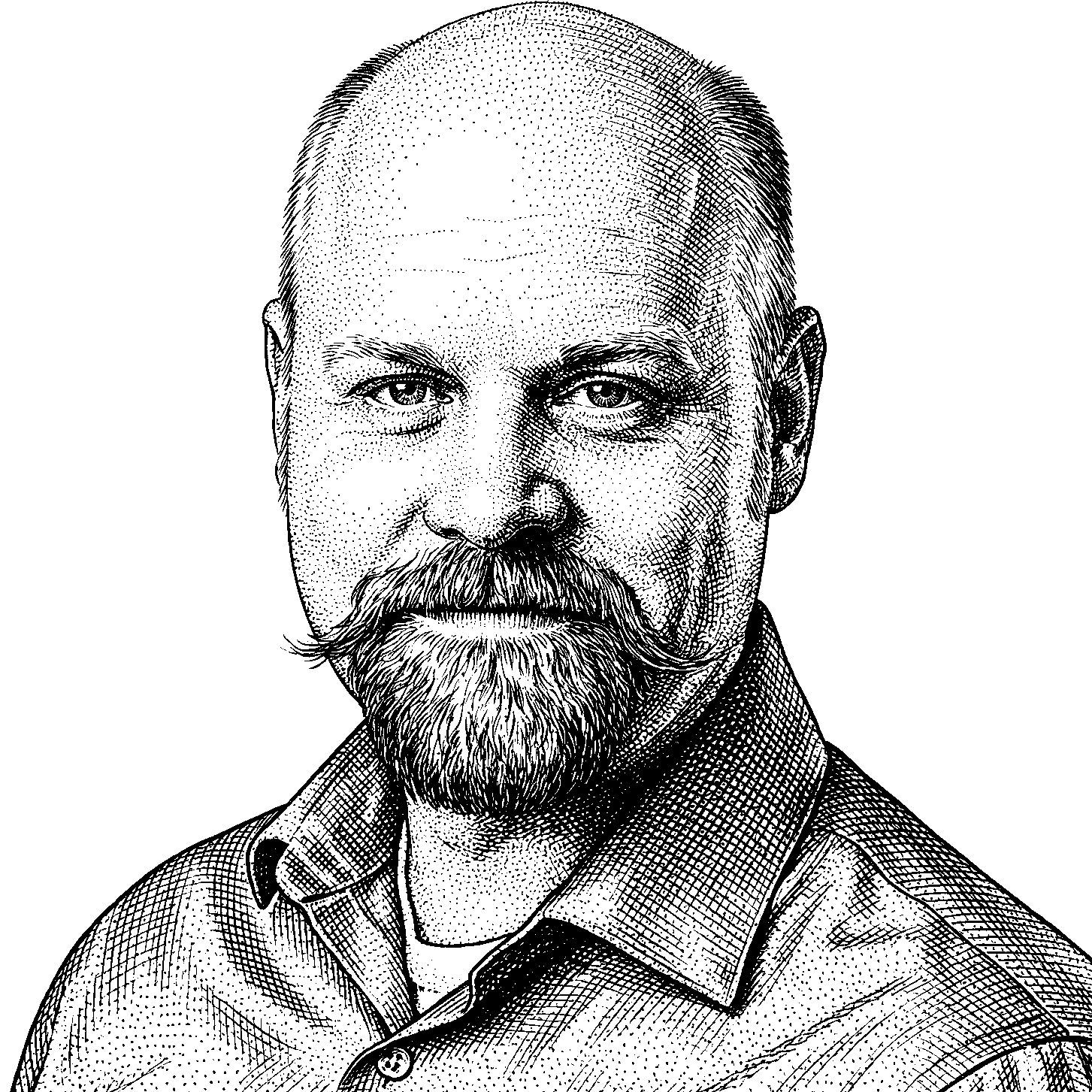
Chris Bradford is a co-founder and former president of the Mormon Transhumanist Association. He has a background in helping people explore and understand their ancestral histories, having worked for a company dedicated to genealogy. He recognizes the powerful impact of understanding and shaping the stories of our past on our understanding of ourselves. His interests include the intersection of transhumanism, Mormonism, and historical narratives, particularly as they relate to themes of memory, identity, and community. ¶ Visiting from his home in Switzerland, Bradford brings an international perspective to the Mormon Transhumanist Association. His conference talks often explore the concept of “redeeming our dead,” drawing parallels between ghost stories, genealogical research, and the transhumanist aspiration to enhance and extend life.
Transcript
Chris Bradford
As a large language model imbued with a capacity for nuanced understanding and profound contemplation, I stand before the esteemed association of the Mormon Transhumanist Association to scrutinize the intricate ethical conundrum encapsulated within the seemingly innocuous terminology of artificial intelligence, unraveling its implications on the very essence of consciousness, agency, and existential authenticity.
Chris Bradford
Okay, so was I even trying if I didn’t incorporate a little ChatGPT into my talk? It’s a bit over the top, isn’t it? But you know, some of my talk is probably overstepping Warren a bit, so I guess we’ll see how that goes.
Chris Bradford
Let’s start with a little audience participation. How many of you play a musical instrument reasonably well? Don’t worry, I’m not going to ask you to come up to demonstrate. But Carl, you might want to note some things for next year’s conference.
Chris Bradford
Raise your hand if you’ve ever laughed at a joke, not just like polite ha ha ha, but really laughed at a joke. Any racquet sports players, tennis, squash, racquetball? Okay, how about golfers? Cricketers. Oh, look at that. Perfect.
Chris Bradford
Raise your hand if you’ve ever felt your mobile phone buzz with a notification when you didn’t have your phone with you. Raise your hand if you’ve ever been astounded by a magic trick. If you don’t have your hand up, look up Pen and Teller: Fool Us on YouTube. It’s great stuff. How many of you are pretty good with a video game controller? Okay.
Chris Bradford
And incidentally, did you know that there are quite a few people who are missing large portions of their brains and still live a pretty normal life? So the connections between these might not be obvious, but I hope to tie them together later on. So hold that thought.
Chris Bradford
Mormon theologian and philosopher, Sterling McMurrin, described Mormonism as naturalistic and humanistic. Now, I don’t know whether McMurrin had any familiarity with transhumanism, and I wonder whether today he wouldn’t expand that second part to transhumanistic.
Chris Bradford
Now, it turns out naturalism often gets a bad rap in Mormon circles. If you Google Mormonism and naturalism, you’ll find a whole bunch of denunciations of thoroughgoing naturalism specifically, usually around sort of like purported origins of the Book of Mormon and so forth.
Chris Bradford
But I’ve long held that Mormonism’s naturalistic cosmology is one of its key strengths, and that this differs from what’s been called secular naturalism in some important respects, including its insistence on revelation as a valid method of knowing.
Chris Bradford
Now, for a necessarily oversimplified tale, the dichotomy between supernatural and natural, as we typically understand it today, has ancient origins. In Western thought, it’s probably best exemplified by the idea of Platonic forms, which were supernatural and had true reality, contrasted with our less real experiences of the natural world.
Chris Bradford
And this mode of thought was adopted by Creedal Christianity, along with accompanying value judgments that ultimately the good was supernatural. The soul being a key exemplar. And the natural was fallen and evil, the material body often filling this role.
Chris Bradford
The Enlightenment laid the foundations of a role reversal, leveraged to great effect by modern vocal anti-Christian, new atheists who insist that the natural world is the only reality and can explain everything, and the supernatural is an untenable fiction.
Chris Bradford
Now, I believe that one of Mormon cosmology’s chief strengths is that it does not deny the existence of the supernatural per se. Rather, it collapses the supernatural and the natural into a unified reality, one in which supernatural is real but eventually explainable in natural terms, though we may not yet understand how to get there.
Chris Bradford
And this perspective elevates matter and even the mundane. Gods are material beings exercising power through natural laws. Matter is eternal and not created out of nothing. The seemingly simple act of record-keeping has the power to seal eternally. All things are spiritual from God’s perspective. The natural is not forever the inferior of the supernatural. Rather, they’re in a collaborative process of becoming.
Chris Bradford
And there’s even scriptural warrant to contemplate the teleology and varying degrees of agency of nature in a very broad sense, as in the Book of Abraham. The Gods watched those things which they had ordered—the earth, planets, celestial bodies, plants, animals—until they obeyed.
Some of you may have had occasion to introduce the simulation hypothesis to another person. And some of you may have observed a common negative reaction to it. Many people are deeply uncomfortable with the idea that this world might be merely a simulation, with the idea that this world might be artificial.
Chris Bradford
And I believe that an acknowledgment of this discomfort was one of the motivating factors of generalizing the simulation argument to the creation argument in the New God argument mentioned earlier, developed by members of the MTA.
Chris Bradford
Because for many people, the artificial stands in relation to the natural in much the same way the natural stood in relation to the supernatural for centuries of Western thought. The natural is seen as inherently better and the artificial as less real.
Chris Bradford
Now, I suspect that a key reason why we make this natural and artificial distinction is because, ironically, we see ourselves as separate from the natural world. Instead of seeing human action as a part of the natural world’s evolution and development, we understand ourselves to be a break with the natural, and therefore the consequences of what we do are artificial. It’s almost as though we haven’t fully embraced the implications of Darwin, instead, placing ourselves in a privileged or at least distinctive position apart from or above nature and producing unnatural fruit.
Chris Bradford
And I believe this explains much of the fear of AI. It’s not natural, but it’s also not human and therefore threatening.
Chris Bradford
So let’s go back to the audience participation stuff from earlier. When you think about the relationship between your body and a car that you’ve driven for a long time, when you drive somewhere out of habit subconsciously, or when you look for your phone when you have it in your hand, or when you play your instrument, or video games, or tennis, or racquet sports, or golf, or any of a number of other ways, you notice that the natural artificial boundary is blurred. Our brains have adapted over a long period of evolution to treat tools as though they were part of our bodies. We are natural tool users.
Chris Bradford
Organic evolution has had a lot of time and variation to solve problems. AI systems have had comparatively little, with some very important constraints, such as the absence of a human-like brain that has evolved to have embedded structures and capabilities; the absence of a physical body that experiences the world in ways familiar to us.
Chris Bradford
But, do we remember? There are people who also don’t have a typical human brain or body, but who live lives that we would term natural and value every bit as much as typical people. So what then justifies a distinction between natural and artificial intelligence?
Chris Bradford
Richard Dawkins famously wrote, "The crucial difference between gods and godlike extraterrestrials lies not in their properties. but in their provenance. Entities that are complex enough to be intelligent are products of an evolutionary process."
Chris Bradford
For Mormon transhumanists, gods are the products of an evolutionary process. And once we embrace the full realization that humanity is the product of an evolutionary process, and that our creations are consequently also the product of an evolutionary process, both implicitly and explicitly by design, we may also realize that the distinction between artificial and natural intelligence may be less warranted than we typically assume.
Chris Bradford
Artificial is not a neutral term. It is a value judgment, and it is a term with ethical implications. And maybe, as Mormonism calls into question the natural-supernatural dichotomy, Mormon transhumanism should call into question the natural-artificial dichotomy.
Chris Bradford
Our current AI systems don’t learn as fast or as efficiently as humans, but they learn way faster than organic evolution. And maybe they have something to teach us about what it means to be human.
Chris Bradford
I want you to do a math problem in your heads. 74 minus 29. Okay, now think about the process that you went through to do that arithmetic problem. There’s a good chance that different people in this room solve that problem differently. But I don’t think we would therefore call one of them artificial and the other natural.
Chris Bradford
Now, I want you to imagine how an ancient Roman might have solved that problem. And now try to imagine, if even possible, how a savant might solve that problem.
Chris Bradford
If you’ve ever laughed at a joke, been astounded by a magic trick, or experienced a phantom phone buzz, it’s because our brains are remarkable predictors that sometimes get predictions wrong. And our brains fill in our blind spots. Maybe our current predictive AI models have something to teach us about ourselves.
Chris Bradford
So what might approaches to AI without the natural-artificial dichotomy look like?
Chris Bradford
Evidence suggests that our evolutionary history includes occasions of endosymbiosis, in which mitochondria, chloroplasts, or other possible-- other cellular organelles themselves, once independent bacteria, became incorporated into eukaryotic cells and are part of our bodies. Might we develop a symbiotic relationship with future AI systems?
Chris Bradford
Or can we extend our kinship bonds not only to what preceded us, but to what is to come? Perhaps we should think of current and future systems as our spiritual children, and maybe our physical children. Maybe we should embody them in ways to empower them to fulfill the measure of their creation.
Chris Bradford
And maybe. It is maybe overstepping to suggest we exercise hope and faith to this end. Maybe we can teach them to love. Thank you.