KEYNOTE
Chris Benek argues that Christian transhumanists are focusing on the wrong problems by failing to articulate a systematic theology for stewarding technology. He presents a hermeneutic in which humanity functions as God’s “alternative intelligence,” called to be caretakers and co-creators over all matter—which he frames as divine technology. Drawing on concepts from quantum mechanics, Benek suggests that Jesus saw the world in “superposition,” observing godly possibilities into reality, and that believers are called to do the same through faith. He concludes by urging Christian transhumanists to prioritize virtue formation, prepare for the coming automation crisis, and practice humility in bridging theological divides.
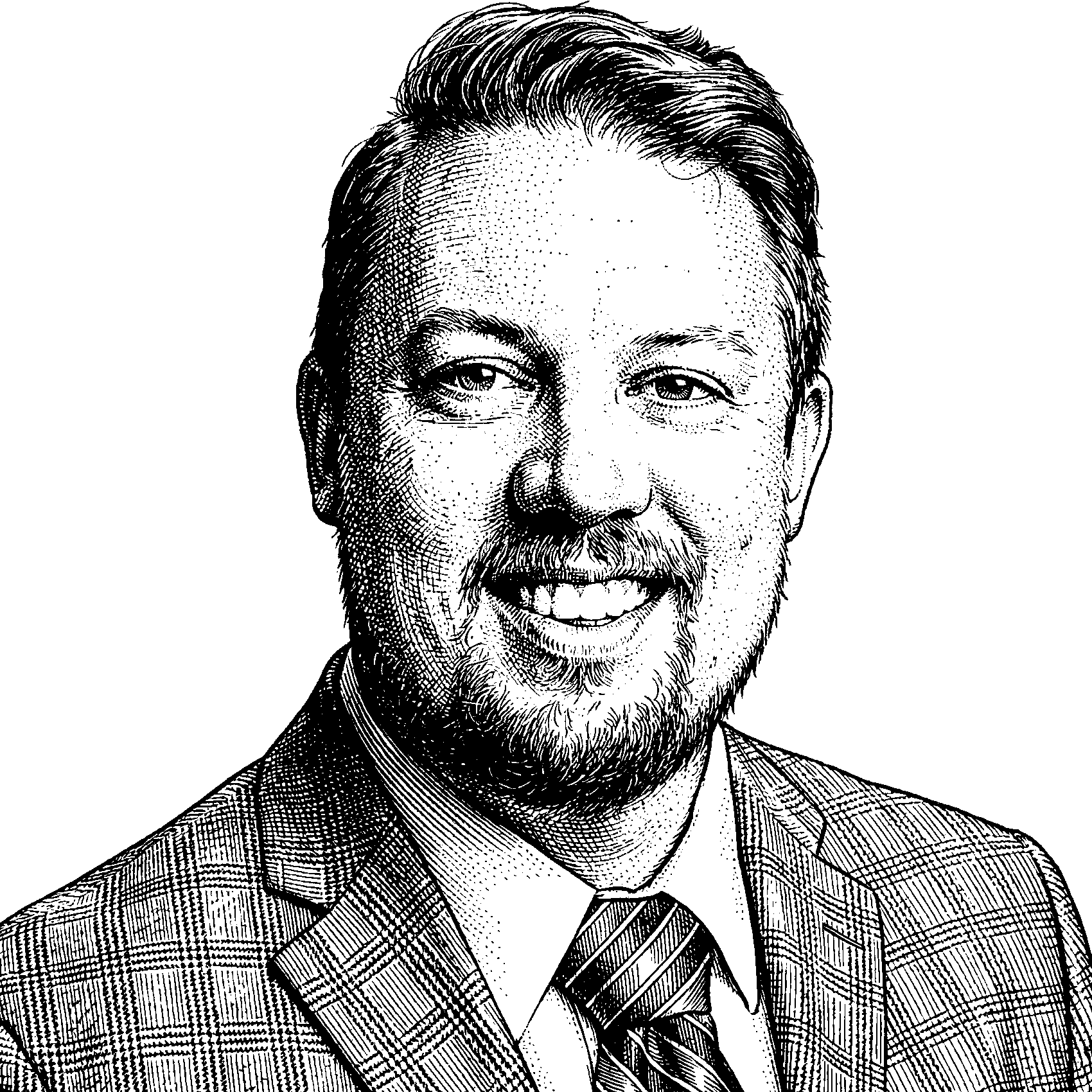
Chris Benek is an American Presbyterian minister, theologian, and leading voice in the emerging field of Christian transhumanism. As a founding co-chair of the Christian Transhumanist Association and a prolific writer and speaker at the intersection of faith and technology, Benek has worked to establish theological frameworks for engaging artificial intelligence, enhancement, and the long-term future of humanity within the Christian tradition. ¶ Ordained in the Presbyterian Church (USA), Benek has served as an associate pastor in Florida while simultaneously developing a public ministry focused on technology ethics and Christian futurism. He has written extensively on the theological implications of artificial intelligence, arguing that AI systems may be capable of participating in God’s redemptive work—a position he has defended in venues ranging from academic conferences to popular media. He co-founded the Christian Transhumanist Association to provide an institutional home for Christians who believe that technological development, rightly ordered, is continuous with the Gospel’s call to heal, restore, and transform creation. ¶ Benek’s significance lies in his insistence that Christian faith is not a constraint on technological imagination but a motivating force for it. His willingness to ask whether artificial intelligence might itself be redeemed and enlisted in the work of redemption reflects a theological seriousness about the scope of Christ’s reconciling work—one that resonates with the Mormon transhumanist conviction that creation, intelligence, and transformation are inseparably linked. Across traditions, he and like-minded thinkers represent a growing recognition that the deepest questions about technology are also the deepest questions about what it means to be made in the image of a creative, loving God.
Transcript
Chris Benek
Press is actually enamored with what happens when you Put water on a robot for some reason. They’re really worried about that issue. I’m not as much.
Chris Benek
I am thankful to be here. Thank you for inviting me to speak this morning. I have the privilege to. Go this afternoon back to Miami to officiate over our Palm Sunday services. So, unfortunately, I will not be here the rest of the day. So, I’m going to say a bunch of controversial stuff and then I’m going to go jump on an airplane because that’s about the safest thing you can do as a speaker. But I want to encourage you: if you’d like to talk with me, you just go to my website, ChristopherBennock. com. and you can find all the ways to reach me. I’m happy to talk.
Chris Benek
What I have learned is my words are wildly insufficient and usually People hear what they want to hear when I speak. And so I haven’t even titled this talk for today. I think they made something up to put in the advertisement. You can call it what you want by the time we’re done. But what I have learned that is helpful for me is if I begin in prayer. And so if you would indulge me in that as a pastor, I would appreciate that.
Chris Benek
Let us pray. Merciful and gracious God, I thank you for everybody here, Lord. I thank you for the MTA, and I thank you that we have the privilege to look at our reality and see a new perspective, God. I pray, God, from my mouth to the listeners’ ears, you would transform my words so that they would be yours and yours alone, and we would see the possibilities that lie before us. Be with us this morning and be with everyone throughout the conference. We pray in Jesus’ name.
Speaker 2
Amen.
Chris Benek
So I want to begin by saying that I think that Christian transhumanists are focusing on the wrong problems. Let me say that again if you didn’t hear it. Christian transhumanists are focused on the wrong problems. And I believe that we’re doing so, we’re focusing on the wrong problems, because we failed to articulate a systemic theology that comprehensively explains our divine call to steward technology.
Chris Benek
Now, the fundamentalist myth is that’s pervasive in modern Christendom is that the Bible is definitive on what it says in most matters in life. Now, let me be clear on this. I’m not questioning the authority of the Bible. Instead, what I’m pointing out is the hubris of those who claim that they somehow fully and completely understand the biblical texts. Humanity simply does not know all of the possible information in the cosmos. And even if we did, it doesn’t mean we would be able to understand it or all of its possible configurations. New information informs our reading of Scripture, and new information arises, and as it arises, our interpretations and understandings of these texts change. It’s not that the texts are changing, it’s that our perspectives are changing. And with our changing perspectives, we gain new insights as to who we are in relationship to God and what that means for our divine calling.
Chris Benek
As a matter of fact, we are on the very front end of understanding the biblical texts. And let me explain what I mean when I say that. So, most of you probably know that the Bible wasn’t written in English. Hopefully, you know that, right? It was written in Hebrew, Greek, and some Aramaic. And during the early years of the church, the Bible was widely translated into Latin because the Romans spoke Latin and they occupied a large portion of the world at that time as Christianity was expanding. Now it is estimated that during that period only 5 to 10 percent of Roman citizens were actually literate. And that may sound like a very small number, but actually that was pretty good for that time in history.
Chris Benek
For instance, comparatively in 1820, almost 300 years after the Reformation. When the Bible was being translated into other languages, only 18% of the entire world could read and write. As late as 1960, only 42% of the world was literate. And since 1960, the global literacy rate has increased roughly 4% every five years. and was up to 86% in 2015.
Chris Benek
So why do I bring this up? Well, it’s simply to point out that it’s only been until relatively recently that most of the world’s population has even had the ability to have the privilege to actually read the Bible for themselves. Prior to that, the general populace had to take someone else’s word for it. And if you add to the mix that the Bible has only become widely available in most languages in the last 60 years, and it’s only been widely available globally and via the Internet for the last 25 years. I think it’s fair to say that most people simply have not had access to it.
Chris Benek
Now why is that important? It is important because each one of you, every single one of you, has a context. Each one of you is unique, and you are beautiful insofar as God has gifted you with a unique and distinctive perspective of the world. And when we unite those perspectives, when engaging the scriptures, we get a more complete understanding than humanity ever has before as to who we are in relationship to God and what it means for our divine calling. This continually developing phenomenon, partnered with virtuous action by humanity, is the perpetuation of Christ’s redemptive purposes in the world.
Chris Benek
The scriptures are not meant to be the destination to which we are traveling. The scriptures are the compass that guides humanity’s journey and aids in our transformation. It’s our task to interpret the data that the scriptures provide in a way that is applicable to our current technological context that we presently face. So to that effect, given my unique context, I want to provide a perspective that may help us to understand our present journey and transformation from a technological perspective.
Chris Benek
Many of you have heard me articulate this hermeneutic before. I’ve contended that humanity is not God, therefore, humanity is God’s AI, alternative intelligence. I don’t like the word artificial. I don’t think my cat’s artificial. It seems just like alternative intelligence to me.
Chris Benek
Therefore, all matter that humanity experiences is in the cosmos. Everything that we experience Is divine technology, and humanity’s divine vocation articulated in the scripture is to be caretakers and co-creators over all the cosmos, i. e. , all technology.
Chris Benek
So, let me say that again. Humanity is not God. Therefore, humanity is God’s alternative intelligence. Therefore, all matter that humanity experiences in the cosmos is effectively divine technology. Everything you experience right here is divine technology, and humanity’s divine vocation articulated in the scriptures to be caretakers and co-creators over all the cosmos, i. e. , over all technology. Okay, so you all following that?
Chris Benek
Okay, so then if we just broadly look at the scriptures, we can begin to understand how, with this lens, how it informs our present participation in Christ’s redemptive purposes in the world. And let me just preface my remarks by stating that what I’m attempting to do in the next few minutes here is simply provide some very broad strokes. I’m not trying to get into all the details. I’ll let the biblical scholars do that. What I’m trying to do is allow folks to go later into those details and understanding the scriptures from a perspective that they have an overarching systemic theological understanding from a technological hermeneutic. This isn’t meant to be an end all be all theological treatise. It’s simply meant to be a place to start iteration. So here we go.
Chris Benek
God starts out in Genesis, and God creates and/or orders divine technology, all matter, to create the world and all that is in it. And then God uses divine technology to create the first humans. And it was all good tech. God attempts to teach humans how to be stewards of said divine technology as caretakers of the cosmos. But instead of following God’s direction, humanity rebels and seeks non-virtuous use of tech. and that separates humanity from God.
Chris Benek
God, being God, seeks reconciliation, attempts over and over and over throughout the Old Testament to be in relationship with humanity. by modeling how to steward technology, both the personal divine tech that constitutes our being and our corporate tech, the cosmos. God also repeatedly invites humanity to co-create alongside God.
Chris Benek
Now, what do I mean by co-create? Well, the example: That I always use regarding co-creation is that, like a child with a parent, we get to work alongside God. And the example that I commonly use pertains to my four-year-old. Now I think it’s fair to say that my four-year-old is not as good at coloring as I am from the world’s perspective. If you were to sit down and we were to color off, my son would not be able to keep up with me. But that doesn’t mean that we can’t co-create together. And it also doesn’t mean that if some day my son becomes a better colorer than me, it doesn’t hurt my relationship with him Does it hurt my authority with regard to my son? Does it hurt my power with regard to my son? Does it hurt My love for my son. No, actually, I want my son to achieve these great things. And what is observationally interesting about this is that Creation can arise simply out of reorganization. So my son may color something that someone from a world’s perspective may not think is that great, but I, as his father, think is fantastic.
Chris Benek
So, in the context of the scriptures, God provides instructions how to build many things. An ark, an ark’s just something that provides protection and safety that Noah builds. Tablets for the commandments. The tabernacle, priestly garments, gods apparently into fashion, the Ark of the Covenant, the Temple, the list goes on and on. And humans get this distinct Honor of co-creating these items by organizing divine technology.
Chris Benek
And at the same time, we know that Humans, as creatures made in the image of God, we’re also organizing divine technology, aka matter, into new, at least to us, patterns. And insofar as those technologies honor God, they were part of our divine calling. When they didn’t, they were part of our rebellion. Just like when our actions or our personal use of divine tech that is our body is virtuous, it honors God. And when we use our bodies in unvirtuous ways, we are rebelling against God. And the result of that rebellion is ultimately death.
Chris Benek
Separation from God is like a technological virus. And once we introduced that virus into the system, it was introduced in a way like an old computer operating system. It just couldn’t self-repair itself.
Chris Benek
So seeing this, God enters into the world using divine technology, aka matter, in the person of Jesus. The incarnation is something like the most immersive form of VR that you could possibly imagine. And again, the word virtual, like artificial, is a totally inadequate word for this technology. Anyhow, Jesus comes into the world from outside the system while the Heavenly Hosts watches on Twitch, and he begins the process of teaching humanity through observational science how to steward divine tech. Jesus is effectively acting as the antivirus and has the first objective of introducing new information into the system that will allow the system to eventually help to repair itself. So, what is that new information?
Chris Benek
Well, Jesus teaches the disciples how they are to see the world in a different way and how to view the world in an alternative state. So, to explain this to people, I like to use imagery from a scientific perspective. There’s a term in quantum mechanics called superposition. Superposition is when matter exists in different states at one time. So, for instance, an electron can hold the state of both a particle and a wave. Now, what’s interesting in this is that while it can be tested to show that an electron can hold two states at one, when the electron is observed, it is forced to take one state. In this way, very literally, an observer observes their present reality into being. And so, theologically speaking, I think that Jesus is the God of superposition.
Chris Benek
When Jesus says in John 10:30, the Father and I are one, I think he means it literally. We actually affirm this statement in the words of the Nicene Creed. We say, of one being with the Father. and as such I think superposition scientifically explains how the Trinity of God could possibly exist.
Chris Benek
But to take this concept a step further, I think that Jesus also sees the world in superposition. Jesus sees all of the possibilities of existence and then observes aka stewards into reality by faith, the godly ones which he seeks to bring about. So when we only see a few fish and loaves, Jesus sees a multitude and they are multiplied. When we see just a liquid, Jesus sees a solid and he walks on it. We see a storm that seems insurmountable and overwhelming, and yet Jesus sees calm and there is peace. We see sick people, and Jesus sees health, and we are healed.
Chris Benek
So for an instance, an instance when in Mark 8, 14 through 21, when Jesus gets frustrated with the disciples because they’re Bickering because they forgot to bring enough bread in the boat to eat. Jesus gets upset with them. It doesn’t seem to make any sense. But he’s upset because he had just given them tangible examples, i. e. , observational science. As to how they could observe a new reality into existence. And he did this by feeding 5,000, and then again by feeding another 4,000. The disciples are just having a hard time believing what they’re seeing is true. But what they’re seeing isn’t some kind of magic trick. It’s a deeper understanding and expression of what it means to be human made in the image of God.
Chris Benek
As followers of Jesus, our prayer should always be that we will see what godly possibilities Lay before us, so that we might be better formed into the divine caretakers that God has called us to be. God calls us to embody redemption in this world by God’s grace and love and vulnerability. But to do this we have to listen carefully for God’s call so that we might envision a better way and believe it into existence. So, when we see injustice, may we have the faith to bring about righteousness. When we see bigotry, may we have the faith to oppose it and bring about unity. When we see poverty or oppression or privilege, may we have the faith to equally share blessings and power. And so instead of seeing an ordinary world, we are called to have the faith to observe miracles into being. For we are called to be a people that, like Jesus, sees the world in superposition.
Chris Benek
And this was new information presented into our operating system of The cosmos by Jesus via live updates of the Holy Spirit that provide a way for the caretakers, us. Then to our divine calling, i. e. , redeeming and restoring the world by combating the virus of separation from God. Living into this calling is how we participate in Christ’s redemptive purposes in the world.
Chris Benek
And so, what does your operating system typically require when you download antivirus software? You got to shut down and reboot. And so, once the disciples have been instructed, Jesus goes to the cross to effectively permanently patch the system in a way that will allow the caretakers of the system to cooperate. and stewarding it to health over time. If you look at it from a biological perspective, which I would say again is divine technology, humans now become the antibodies of the cosmos.
Chris Benek
So then, the result of the reboot is Jesus 2. 0. And we read in Luke 24:13 through 50. I encourage you to go read that passage, spend some time with it. Later. What we read is that Jesus 2. 0 is like us in some ways. He’s physical, he gets hungry, but in other ways he get is upgraded. He can appear out of thin air in places. He walks through locked doors, which the disciples at first think he’s a ghost because of this. Disciples who have been with him for years sit a few feet from him, and they don’t recognize him until he performs ritual action. So he’s like shapeshifter Jesus. He ascends into heaven, whatever the heck that means.
Chris Benek
But what this infers is that the eschaton is technological also. And that is because everything in existence, everything in existence, is technological. Which means that the work we are doing now is not just for now, but it is an iterative process that leads to redemption. So, how do we redeem humanity and the world in Christ? We simply keep iterating on our existing stewardship of divine technology in ways that honor God. Because Jesus’ resurrection implies that technology is not merely temporal. but that is ultimately eschatological. So why is all this important?
Chris Benek
Well, I started this talk by saying that Christian transhumanists are focussed on the wrong problems. And as the initiator of the formalized institution of the Christian Transhumanist Association, I myself must confess that the problems with Christian transhumanism right now are many. And among them are the following three issues that I want to raise to you this morning. First, Christian transhumanism has failed to adequately differentiate how it is different from secular transhumanism.
Chris Benek
For instance, I would contend that death should not be the primary issue of Christian transhumanists. Death is an immediate issue for secular transhumanists because they don’t know Jesus. Now don’t get me wrong, death and disease are the enemies of humanity. I’m not questioning that. We should fight them. But prioritizing finding a technological cure for death above, say, virtue formation for example, is, in my opinion, putting the cart before the horse.
Chris Benek
Additionally, Christian transhumanism has failed to adequately differentiate how it is different from secular transhumanism insofar as it has failed to adequately define and make mantra how it defines transhumanism. For instance, I have previously suggested that Christian transhumanists should Define the prefix trans to take on a more nuanced meaning that implies traversing across the scope of what it might mean to be made human. It’s not a forfeiture of our humanity, like many secular transhumanists would imply when they say that trans means post-human. But it’s an expansion of our perspective as to what it means to be made creatures in the image of the Trinitarian God of superposition, creator, redeemer, and digital system updater. Nowhere biblically are we called to forfeit our humanity. What we are called to do is live into our humanity, made in the image of the Trinitarian God that we serve.
Chris Benek
Second, Christian transhumanism has not focused on being inclusive of the vast majority of Christianity. Christian transhumanism needs evangelicals to that play nice with one another because we need their perspectives to help redeem the cosmos. And if you want to freak out an evangelical, all you have to do is take the words trans and humanism and put them together and not define them. And you will succeed overwhelmingly. Those are such politically laden words these days that they necessitate definition. And to that point, I would suggest that Christian transhumanism has widely failed to adequately exude humility.
Chris Benek
And what I mean by this is instead of pushing nonessential theological points that are controversial and challenging to the majority of Christianity, and I understand the room that I’m in when I say this, but say concepts like theosis Let’s focus on handholding to get everyone on board first with basic concepts like participatory theology instead of escapism theology. I equate our current task to the work of transitional ministry.
Chris Benek
When local congregations seek to bring about new ideas, there are three types of people. There are early adopters, there are the majority, and there are laggards. And within the third type, there are two kinds of laggards: those who can be convinced by handholding. and those who won’t accept the new idea no matter what, aka fundamentalists. Now I will say clearly that I believe that American religious fundamentalism is the greatest threat to emerging technolog technological development in the world. Hands down. And so while Christian transhumanists should not negotiate with theological terrorists, we should seek to be self-sacrificial in helping those who are seeking to understand and discern but just need more time. And yet what we have done in practicality is we have run ahead with the early adopters, leaving the vast majority of Christendom behind. And if we continue to do this, we will incite another separation between the conservative church and science and tech instead of uniting them. Third, Christian transhumanism and the Church Universal is widely focusing its efforts on the completely
Chris Benek
wrong social issues, if you ask me. First, we should be investing in new ways to provide care for people in science and tech fields, and we should be creating new ways to incentivize virtue formation for people in science and tech. We often complain that modern technology is unvirtuous, but we have no one to blame but ourselves if we’re not willing to invest in virtue formation for scientists and technologists. Only virtuous people will create virtuous tech. Second, we should be helping the church to be preparing for the coming automation crisis.
Chris Benek
So the best report in the world, the McKinsey report, is articulating from that by 2030, there will be 11 to 22 percent unemployment in the United States. This is the best report in the world. The politicians and leaders around the world that I’ve talked to talk about this issue like it is a meteor coming at earth, and they don’t know where the heck Bruce Willis is. This is a big thing. The church is not talking about it at all. 22% on the high end is 3% less than the Great Depression in the United States, to give you some context.
Chris Benek
Half of the churches in the United States, more than half, 57% of the churches in the United States are 100 members or less, and many of them struggle to have leadership in the church. If they lose 11% of their giving, not because people don’t want to give it, but they simply don’t have it, we will lose half of the American church by 2030. This is a huge issue. Part of what we need to be doing is we need to be teaching people how to live into their creative selves made in the image of God so that we can create sustainable ventures that will keep the Christian tradition moving forward so that we can help people in their time of need. Ten years from now, if we have 11 percent to 22 percent unemployment and the institution that is most geared to help societal change and aid people is falling apart, we will be in trouble.
Chris Benek
My great-grandmother, who lived through the Great Depression Used to tell me that they weren’t sure when food would show up on in their house because there was just there was such a lack of it. And the church would come once a week and drop food off, and it was the only way they were making it. We have an obligation to be warning people that this is coming. And in the worst case scenario, if we create flourishing churches, oh no, ten years from now, it doesn’t happen, we have made the church a better place and we have brought about Christ’s redemptive purposes even more on earth.
Chris Benek
Brothers and sisters, in Christ we now carry the mantle of redemption In the cosmos. We stand on the shoulders of the saints who have come before us, and we will be the shoulders on which the growing number of saints of the future will stand. If we want to honor our ancestors of the past and equip the saints for the future, we must continue to humbly advance our understanding of who we are and what we are called to be in the present. Thank you.
Chris Benek
Do we have time for questions? Okay. I’ll let you facilitate that. How’s that?
Speaker 3
A lot of room for ample questions. Okay, there we go. Got it. Sorry.
Speaker 4
So how do we prepare people for this automation crisis? In your opinion, what are the steps we can take to give them the skills, the knowledge, the you know, what what it takes to actually, you know, be so viable.
Chris Benek
during and thrive during this automation crisis? Well, the first thing we need to do is we need people to be aware of it. Nobody in the church is talking about this right now. Politicians, academics, leaders in tech and science are all talking about it. The church is not talking about it at all. So we have to do that. I would not suggest individually that I have all the answers as to how to fix that. That’s part of why we need a greater Conversation. That’s what the church is. I would say though, part of the reason that we’ve started co-creators is to begin to equip people and congregations to be able to look at their creative selves and understand how they can begin to create sustainable ventures out of that and ways that will help create sustainability for the church. The church can no longer look towards the offering plate anymore. Mark DeMaz, a friend of mine, I’ve written an afterword for a book that’s coming out in the fall. as talks about sustainability in the church. And pretty much we just we need to forget the offering plate and we need to start because it’s not something that’s biblically mandated. We need to give people opportunities to give in different ways. And part of that is Looking at the creativity that God has instilled in them as divine creatures to be able to create new things. I don’t want to sweep my floors anymore. Let the Roomba do that. Automation’s not bad. The challenge, and it’s not that there won’t be jobs, it’s the transition in between where there could be a lot of suffering.
Speaker 5
So, when you talk about the church, like you’re talking about the body of believers, right? Correct. But sometimes that can be a large organization, sometimes that can be just an individual congregation somewhere. Is there a way to organize? maybe across congregations or between larger organizations to work on some of these challenges?
Chris Benek
Yeah, I mean, again, that’s Part of why we’ve created a non-denominational organization, even non-denominational isn’t a good term anymore, because I like I was I’m Presbyterian, but I was baptized in the Church of Christ, and they would say they’re non-denominational. I think the challenge is we need to get people right now to start talking about it in their own tribes. Once we start talking about it in our own tribes, then we will bring these conversations to the forefront even more. I was excited to actually see the Southern Baptist Convention has some statements on AI. I don’t agree with all of them, but I thought actually it’s nice to see that they actually recognize the fact that They’re called to steward technology. And so while we might disagree with that, it opens up the beginning of a discussion that we can have. Now what we have to learn to do is play nice with one another so that we can respect differences and actually The way in Presbyterian polity is, as my understanding is the way we’re supposed to engage each other, is I’m supposed to assume that God through the Holy Spirit has something unique and valuable from each one of you. And if in good faith we are working for one another, you are supposed to assume the same of me, and somewhere in the middle is the action we’re supposed to take. So we need to be discerning that together, in my opinion.
Speaker 3
Okay, we’re going to take one more question unless Blair really wants to ask one. Maybe we’ll take two. Okay, we’ll take one.
Speaker 2
Most of most of my family and friends are not technologically literate. And they have a hubris that their occupations are impervious to automation. However, I see the writing on the wall, and it’s it’s going to be less than a decade before their jobs are automated away. And their company heads are probably in the same boat as them as they feel that they’re not going to be affected by the on oncoming automation. Because it’s too complex. As the automation wave comes over us, what recommendations might you have and other people have for warning people who choose not to see it because they don’t have the ab also because they don’t have the ability to see what’s coming.
Chris Benek
I think we have to start to educate them. And you can do this really simply by just pointing out things that you see all the time. Like, we all are using AI. We’re automating things like crazy. I don’t sweep my floors anymore. I don’t turn my lights on by myself anymore. I have Robots to do that. If you go into a Sam’s Club or a Costco, where I live, there used to be 14 checkout people now, and now there’s like three, and there’s one person overseeing the autom automization of that thing. So I think I think part of it is just beginning to observationally show them, hey, this is coming, and begin to educate them on that. You know, you can put a bunch of information in front of somebody, it doesn’t mean they’re going to listen to it. What I would also, though, say is you can approach from a different angle. How does it hurt you as a human being to diversify your talents? If you are learning to be more creative and do other things outside what you’re comfortable with, that actually helps you to flourish as a human being. And so encouraging people to engage in activities that stretch their boundaries. And it may not be directly with technology, but you understand that we’re everything is technology. And so as you do that, you’re expanding their viewpoint of the cosmos. And I think those are baby steps. And then the reality is, if you can’t convince them, then you need to prepare for sustainability so that you can help them when the transition happens. That’s the need of the church right now. We need to have the vision to be preparing so that when people who don’t listen are in need, and there will be people that don’t listen, there will be a lot of them. Because they don’t know how what the answer is. They don’t know what to do. They’ve been a truck driver their whole life and they don’t know what’s going to happen. I actually think truck drivers are going to be late on that. That equation. But they’ve been whatever their whole life. They don’t know how to do that. So, how to do the new thing. To be there and to help them and support them in that time is what we can prepare for now.
Speaker 6
Okay. So I have a question about this idea of the church being stewards of technology. And when you say the church, I assume you mean like just believers generally of Christianity, so non-denominational. Okay. Okay, perfect. So my question is: I’m a millennial, and millennials are becoming slowly disenchanted with the idea of the church in general, which doesn’t necessarily need to be conflated with spirituality. And technology being used by the church has been kind of a mixed bag, right? Lots of really good things but not so good things too. Um let’s say I’m a doubter and I’m saying, you know, I don’t want churches to be the stewards of technology because they’re gonna like Give me conversion therapy or whatever, you know, all sorts of things. So, what would be your response to a doubting millennial to help thou mine unbelief?
Chris Benek
Sure. I mean, look, the the Church Universal needs to accept the fact that it has done a lot of harm. It’s done a ton of harm. I mean, if any of you go to church, right? Has your church done harm? Yeah, right? All you got to do is go there and you know it did harm, right? So, what we need to do is, we need to be humble in that process. We need to recognize the fact that, hey, yes, we need to admit the fact that, yeah, we are where sinners gather. And what happens is a giant mess. I have somebody stick a knife in my back about every day as a pastor. That’s part of the thing. We have to also learn to engage one another, though. And I think if we come from a place of humility and we stop focusing on the institutionality of the church, right, the institution of the church is a gift. I’m at First Miami and downtown Miami. They have a gift of property that is very valuable. They need to start leveraging that for people outside of themselves. And so when they start to stop looking inward and start looking missionally, then actually people start to go, oh, well, wait a second, maybe this is something different. Now that doesn’t mean we shouldn’t say hard things. I mean, if you read Jesus’ words, they are hard, and we sugarcoat the heck out of those things. They are very difficult. But they’re actually, I think, the difficulty that millennials are looking for. What’s it mean to sacrificially love somebody? I think millennials are all about that. What’s it mean to actually give up your own stuff and not take credit for it, but actually go and help somebody? The millennials I know, they want to help people. They don’t want merit badges anymore. They want to actually be they want to implement change. And so yes, we need to own. And I had somebody just last week say, well, Pastor, can I trust you? What a loaded question, right? I said, well, let me answer it this way. I would never ask you to trust me because there are a lot of pastors, in my opinion, you shouldn’t trust. What I would ask you to do is walk with me and see if I’m somebody who has integrity and I do what I say. And if over time that that urges your trust, then so be it. So I think this is a thing that we need to change in the perspective of the church, that we are called to be something radically different than what we have become. And so I think there’s lots of opportunity, and that’s why conferences like this are important. Thank you.