Appropriating ‘But if not’
The speaker reexamines the biblical phrase “but if not” from the story of Shadrach, Meshach, and Abednego, cautioning against interpretations that slide from steadfast faith into complacent inaction. While praising the unconditional commitment expressed by the three Hebrews, he argues that faith should not be indifferent to outcomes—particularly concerning justice, immortality, and the redemption of the dead. Rather than passive waiting for divine intervention, he calls for practical action as a sacred expression of worship, concluding: “Our God will deliver us. But if not, know this—we will.”
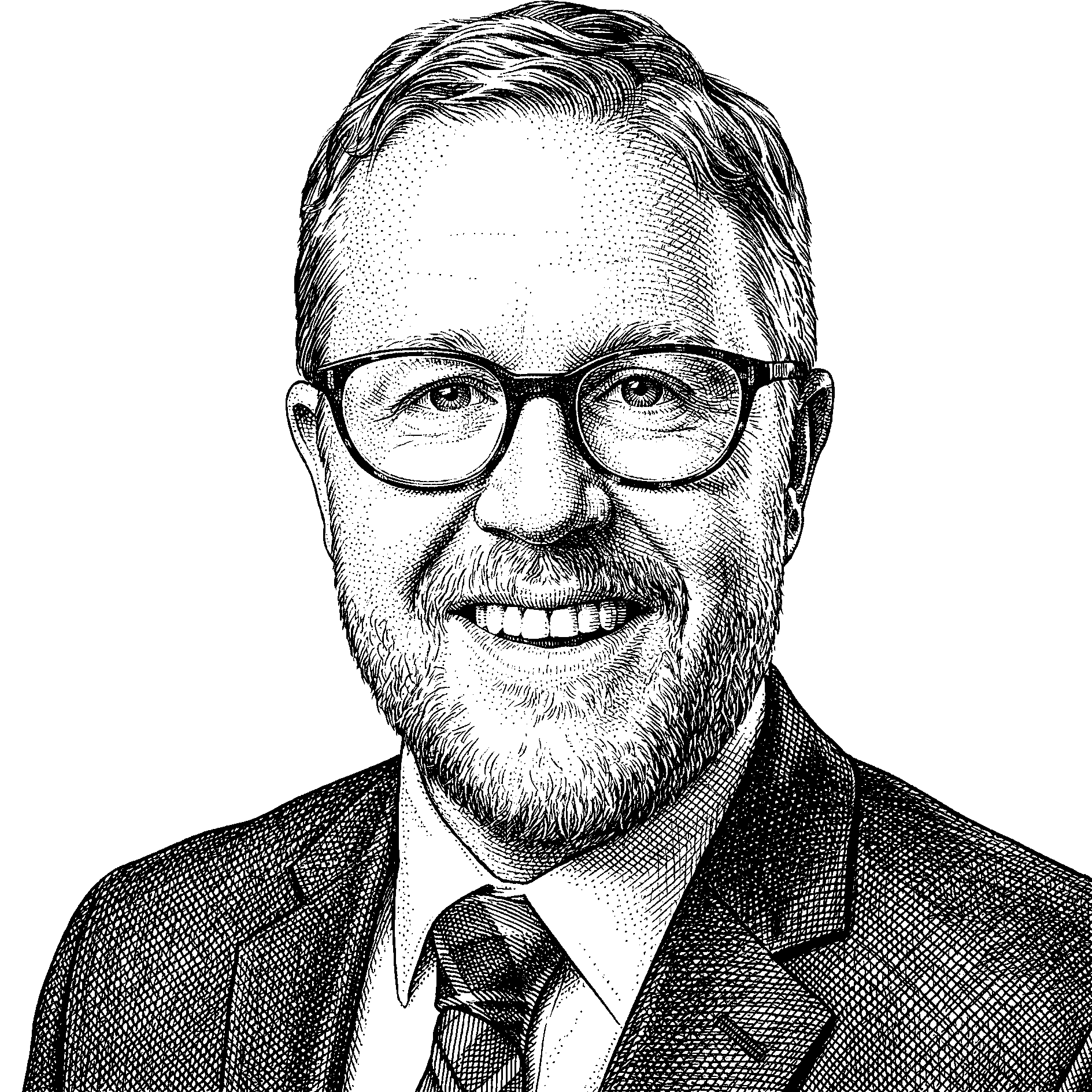
Ben Blair holds a PhD in philosophy and education from Teachers College, Columbia University. He is the co-founder of Newlane University—a platform focused on deinstitutionalizing education. ¶ An active member of the Church of Jesus Christ of Latter-day Saints, Blair’s work and perspective explore the intersection of religious community and secular ideals. He is particularly interested in how religious and post-religious communities can work towards shared goals, and he questions the equation of any particular organization with the broader concept of the ‘kingdom of God’. ¶ Blair, along with his wife, Gabrielle Blair, resides in France and they are the parents of six children. He presented at Sunstone West and is an attendee and speaker at Mormon Transhumanist Association conferences, where he explores the philosophical implications of faith, community, and progress.
Transcript
Um so I’ll try to continue the theme to work to brace against The inevitable disbelief and disappointment by our descendants. So the world is changing, waking up from the weight of atmospheric, generational, social, sexual, racial, ethnic, and economic violence. If we listen, we may hear the heating, trembling earth pleading for better stewards and a radical redistribution of justice.
The extremely wealthy continue to stack the deck. The extreme inequality highlighted and amplified in our generation if left unchecked and unaddressed, will surely be a black mark on all of us if we fail to act for the generations in the future. This recognizable injustice is getting more obvious, embarrassing, and indicting.
Our religious visions anticipate a future world that is radically more just. I believe that a radically more just world is an inspiring aim, and I think it is inevitable that there are major shifts toward this in the near future. But this is not just a religious vision. Our religious visions also anticipate a future where the dead are redeemed and raised to immortality and eternal life. I believe that Such redemption is an inspiring aim, and I think it is inevitable that there will be some major shifts toward this in the near future. There already are. Likewise, this is no longer just a religious vision.
But to realize these visions will require unshakable resolve. The story of Shadrach, Meshach, and Abednego is among the most famous and oft repeated stories in all of Scripture. Confronted with certain death unless they worship an image, they choose instead fidelity to their God expressed as a resolute choice to not bend a knee, to do nothing.
Nebuchadnezzar challenges Now if ye be ready, that at what time ye hear the sound of the music, ye fall down and worship the image which I have made, well But if ye worship not, ye shall be cast the same hour into the midst of a burning fiery furnace. And who is that God that shall deliver you out of my hands?
Shadrach, Meshach, and Abednego answered, O Nebuchadnezzar, we are not careful to answer thee in this matter. If it be so, our God is able to deliver us from the burning fiery furnace, and He will deliver us out of Thine hand, O King But if not, be it known unto thee, O king, that we will not serve thy gods, nor worship the golden image which thou hast set up.
Their resolute posture in the face of Nebuchadnezzar’s threat is captured in the famous three words, But if not. Their God has power to and will deliver them. But if not They will still not act contrary to God’s commandments. These three words express an unconditional commitment.
This resolute stance is a heritage of a religious outlook. It is inspiring, trusting, and resolute, even in the face of frightening odds, extreme stakes, and a changing world. Let’s examine this orientation. It conceives of faith as strident, immovable, steadfast resolve, and such a stance is inspiring. It is notably not results oriented, not contingent or dependent on consequences. And this makes sense.
After all, what kind of patty cake taffled faith is it that only persists when the sickness is healed or the keys are found. To worship God according to this outlook is to not seek ends. It appears to be indifferent to ends. All ends are manifestations of the will of God. This posture in orientation to God is unwavering no matter the outcome. The posture is resolute, resilient, immovable.
But a faith in different outcomes can morph into a complacent faith. And I do have concerns with this complaisant faith. God’s will becomes a tautology. Whether or not circumstance X or any other circumstance obtains, it is the will of God. This closes our eyes to the world. A faith that takes inaction as the greatest act or manifestation of faith and worship is problematic. And we can discern a slippery slope in this movement from steadfast resolve to complacent inaction.
We start, I’m steadfast and resolute in my faith and worship. Nothing can turn me. I trust God. In trusting God, I don’t seek particular ends. I’m indifferent to ends. I view all possible ends as equal manifestations of the will of God. If anything is to happen, God will do it. My role in faith and worship is inaction, or passive admiration and awe at God whose will is manifest under the outcome. I embrace visions of a radically more just world, along with visions of immortality and eternal life, but I refuse to practically contribute or lift a finger to realize them.
Obviously, this slippery slope isn’t implicit in the phrase but if not, but it’s not hard to detect a negation of life that is inspired by this phrase that takes inaction as a value. Nietzsche gives us an aid to oppose such complacency and negation of life, that embraces the present and future, and the resolute posture captured in but if not. Your love of life shall be love of your highest hope, and your highest hope shall be the highest thought of life. Your highest thought, however, you should receive as a command, and it is Humanity in a world that does not live up to our ideals is something that shall be overcome. I didn’t actually format it like that.
To oppose such complacency, I want to embrace the same resolute posture captured in But If Not. but shift to a deliberate effort towards specific ends and recognize that not all ends are manifestations of the will of God. To worship God is not to be indifferent to ends, or to revere certain ends, but to actively seek and work towards certain ends, such as a radically more just world, immortality, and eternal life.
We can compare these alternative approaches as we what it might mean to redeem the dead. To do this, I’ll contrast the two outlooks that I’ll call the Resolute Actor That see practical action toward aims as expression of faith, and the steadfast bystander that doesn’t.
If the resolute actor is right, we’ll experience the thrill of practically contributing to the redemption of the dead. If the steadfast bystander is right, we won’t waste our time trying to do what only God could ever do anyway. If the resolute actor is wrong, we may start a zombie apocalypse. This may be part of the process anyway, and I was talking with Lincoln about this yesterday. And perhaps the best we can hope is that the zombie phase of redeeming the dead is short. But if the steadfast bystander is wrong, we may delay and perhaps miss our chance to redeem the dead.
It’s hard to pinpoint the likelihood that the resolute actor is correct, but we seem to be making progress that is communicable to outsiders. I think that the proportion of people who see substantial life extension as likely in the next 50 years is bigger today than it was, say, three or five years ago. And maybe everyone who’s here today is convinced now, too. The likelihood that the steadfast bystander is correct is low, especially if it needs to be communicable. And by that I mean that supposing we agree this is a desirable end, trying to persuade someone outside your community that God is going to sweep in and do it all will be difficult.
The risks for the Resolute Actor include the aforementioned zombie apocalypse, but note that if the steadfast bystander is right, the Resolute Actor can’t jeopardize the actual redemption of the dead. The risks for the steadfast bystander, if they are wrong, include the difficulty of justifying inaction. Admittedly, this may be more difficult for issues of justice than efforts at immortality. Future generations may be more willing to forgive us for not attaining immortality versus gorging ourselves while thirteen percent of the world is food insecure. But maybe not.
Another important risk is contrary to the reverse another important risk is contrary to the reverse case, this stance can actually jeopardize the actual redemption of the dead, if the steadfast bystander has his way. Another important risk is that we miss out on contributing to formati to formative conversations happening today.
And to give you a taste for these conversations and the importance of working toward particular aims, consider this introductory comment from Nick Bostrom. Some possible post human modes of being would be very good just as some possible human modes of being are wretched and horrible, so too are some of the post human possibilities. Yet it would be of interest if we can show that there are some post human possibilities that would be very good. We might then, for example, specifically aim to realize those possibilities. Contributing to these conversations in good faith, pun intended, is important for current and future religion.
So, working towards specific aims, including immortality and eternal life, is how we manifest our faith and how we worship. I’m still taken by the power of the phrase but if not, but want to avoid the pitfalls of interpretations that may read inaction or indifference to ends as key expressions of faith. So I’ll revisit the original Scripture but adapt it somewhat.
We begin with the threat that death is the inevitable end, and the question, who can deliver us? And may we respond, We are not careful to answer in this matter. We trust that God can and will deliver us from that awful end. We understand our own work toward that delivery as meaningful, if not necessary. Indeed, we approach it with a sacred resolve as if it were synonymous with God’s hand, leaving plenty of room for as yet unknown technology and grace. We are unconditionally committed to this vision of the dead redeemed, and express this commitment through practical action. Our God is able to deliver us from death and the grave, and our God will deliver us. But if not, know this, O king and people everywhere, we will.
I believe that this is the resolve and oneness of will that God expects. And a bit of an afterword.
I know that some of us may feel double minded about pursuing some of the technological features of godhood or post humanity, immortality, resurrection, etcetera. But surely we’re not hesitant about pursuing other features such as the elimination of poverty, the radical expansion of justice and equality. If these are all part of our understanding and of our prospective world, and we agree that we have some role to play in the realization of that world, the burden is on us to tease out why we should actively pursue some elements and not others. And if we succeed in establishing the the conditions for a radically more just world, but make no progress toward immortality and eternal life, that is a fantastic step, but we would not be done.
Thank you.