Gordon B. Hinckley on Human Potential

Gordon B. Hinckley

Gordon B. Hinckley

The element of selfishness crowds in upon us constantly. We need to overcome it, and there is no better way than to go to the house of the Lord and there serve in a vicarious relationship in behalf of those who are beyond the veil of death. What a remarkable thing this is. In most cases, we do not know those for whom we work. We expect no thanks. We have no assurance that they will accept that which we offer. But we go, and in that process we attain to a state that comes of no other effort. We literally become saviors on Mount Zion. What does this mean? Just as our Redeemer gave His life as a vicarious sacrifice for all men, and in so doing became our Savior, even so we, in a small measure, when we engage in proxy work in the temple, become as saviors to those on the other side who have no means of advancing unless something is done in their behalf by those on earth.

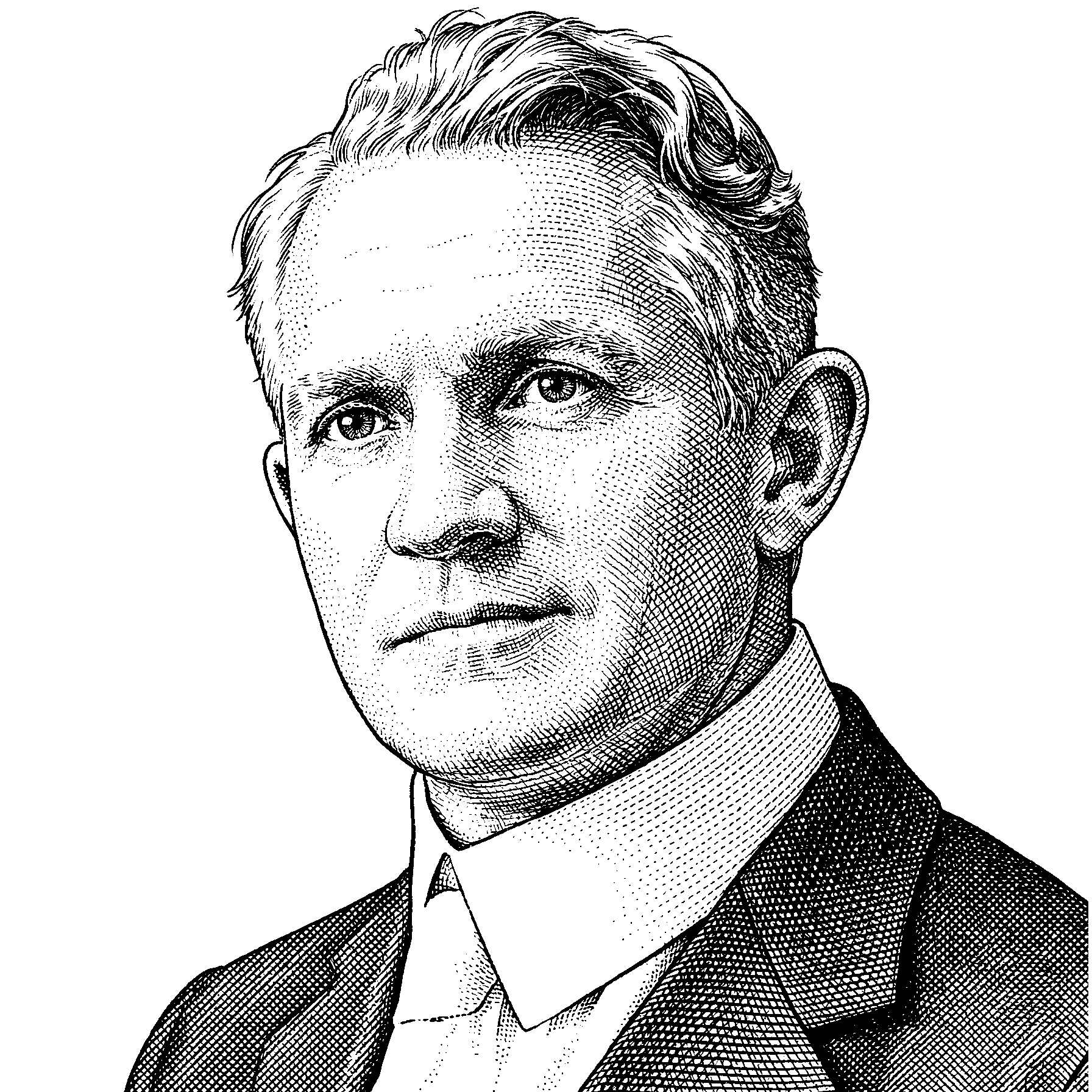
“Closing Remarks,” General Conference, 2004.10

Related Quotes

Brigham YoungBrigham Young

How gladly would we understand every principle pertaining to science and art, and become thoroughly acquainted with every intricate operation of nature, and with all the chemical changes that are constantly going on around us! How delightful this would be, and what a boundless field of truth and power is open for us to explore!

David O. McKayDavid O. McKay

Among the generalizations of science, evolution holds foremost place. … A creature which has traveled such distances, and fought such battles and won such victories deserves, one is compelled to say, to conquer death and rob the grave of its victory.

The time of creation has ever been a subject of much comment and dispute. Yet I challenge anybody to produce from the Bible itself any finite limitation whatsoever of the periods of creation. By strained inferential references and interpretations men have sought to set the time in days or periods of a thousand years, but I feel sure that no justification of such limitations is warranted by the scriptures themselves.

More from Gordon B. Hinckley

But in a larger sense this has been the best of all centuries. In the long history of the earth there has been nothing like it. The life expectancy of man has been extended by more than 25 years. Think of it. It is a miracle. The fruits of science have been manifest everywhere. By and large, we live longer, we live better. This is an age of greater understanding and knowledge. We live in a world of great diversity.

Few American theologies are more complex than that of the Church of Jesus Christ of Latter-day Saints, but its flagship Brigham Young University teaches off-the-shelf, industry-standard evolution. That has been the case since 1931, when the church officially said: “Leave biology, archaeology, and anthropology, no one of which has to do with the salvation of the souls of mankind, to scientific research.” . . . What the church requires is only belief “that Adam was the first man of what we would call the human race,” says Gordon Hinckley, the church’s living prophet. Scientists can speculate on the rest, he says, recalling his own study of anthropology and geology: “Studied all about it. Didn’t worry me then. Doesn’t worry me now.”

Joseph F. Smith was the son of Hyrum Smith, who was the brother of the Prophet Joseph and was martyred with him in Carthage. Joseph F. was born at Far West, Missouri, on November 13, 1838. He came out of Missouri as an infant. As a lad not yet six years of age, he heard a knock on the window of his mother’s home in Nauvoo.

David Ransom: As the world leader of the the Church, how are you in touch with God? Can you explain that for me?