Authors

Adam Davis is a physicist and educator. He received his degree from Case Western University and currently teaches physics at Wayne State College. His academic pursuits extend beyond conventional physics into areas that bridge science and theology, particularly within the context of Latter-day Saint beliefs. Davis’s interests lie in exploring the concept of “spirit matter,” a topic central to Mormon theology. He approaches this subject through a scientific lens, seeking to develop models and frameworks for understanding its nature and properties. His work examines the theological necessity of spirit matter and considers its implications for human advancement and the attainment of divine potential. At the Mormon Thought & Engineering Vision conference held in 2009, Davis presented his perspectives on spirit matter, acknowledging the limited understanding currently available while emphasizing the importance of continued exploration. He examined scriptural and anecdotal accounts, including descriptions of spirit bodies and the spirit world, to inform his approach and stimulate further discussion on this complex topic—ultimately suggesting that no current models are completely adequate. Davis served on the MTA Board of Directors for several years.
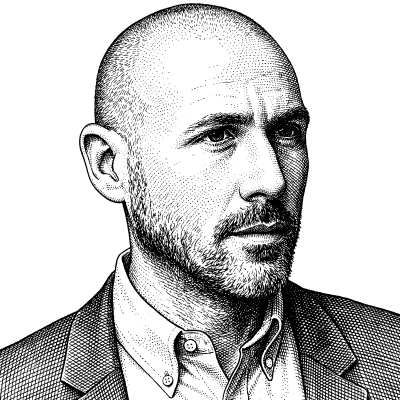
Adam Miller is a philosopher, educator, and author whose work serves as a bridge between contemporary continental philosophy and Latter-day Saint theology. He holds a bachelor’s degree from Brigham Young University and earned his master’s and PhD in philosophy from Villanova University. Miller currently serves as a professor of philosophy at Collin College in McKinney, Texas, where he also directs the college’s honors program. Miller is a leading voice in the “new Mormon theology” movement, characterized by a rigorous yet accessible approach to religious thought that often operates outside traditional institutional hierarchies. His scholarship draws heavily on the work of French philosophers such as Alain Badiou and Bruno Latour to re-examine Mormon metaphysics. In works like Speculative Grace: Bruno Latour and Object-Oriented Theology , Miller explores an “object-oriented” ontology, proposing a theological framework where grace and agency are embedded within the material relationships of the world—a perspective that resonates with discussions regarding the nature of matter and intelligence found within transhumanist discourse. A prolific writer, Miller has authored numerous influential books that challenge readers to engage deeply with scripture and tradition. His Letters to a Young Mormon is widely regarded for its candid and pastoral approach to questions of faith and agency. He has also produced a series of “urgent paraphrases” of biblical texts, including Grace Is Not God’s Backup Plan (Romans) and Nothing New Under the Sun (Ecclesiastes), which seek to unveil the tremendous power of ancient scripture for modern audiences. His engagement with secular culture is evident in The Gospel According to David Foster Wallace , a text praised by The New York Times for its “incantatory and gorgeous” prose. Beyond his writing, Miller has played a pivotal role in shaping the infrastructure of modern Mormon studies. He co-founded Salt Press, an independent publisher of Mormon theology later acquired by Brigham Young University’s Maxwell Institute. He also founded and serves as co-director of the Latter-day Saint Theology Seminar, an annual colloquium that fosters collaborative, close readings of scripture. Through these efforts, Miller has cultivated a space for rigorous theological experimentation, emphasizing a “theology of the present” that calls for active, transformative engagement with the divine in the here and now.

Albert Einstein
Albert Einstein (1879–1955) was a German-born theoretical physicist whose work transformed humanity’s understanding of space, time, energy, and matter, making him one of the most consequential scientific minds in recorded history. Einstein developed the special theory of relativity (1905) and the general theory of relativity (1915), the latter offering a geometric account of gravity that replaced Newtonian mechanics at cosmological scales. His famous mass-energy equivalence, expressed as E=mc², opened new vistas in physics and eventually in energy technology. He was awarded the Nobel Prize in Physics in 1921 for his discovery of the law of the photoelectric effect, a cornerstone of quantum theory. Einstein held positions at the Swiss Federal Patent Office, the University of Zurich, the German University in Prague, ETH Zurich, and the Prussian Academy of Sciences before emigrating to the United States in 1933, where he joined the Institute for Advanced Study in Princeton until his death. Beyond equations and thought experiments, Einstein was a deeply reflective thinker on the relationship between human intelligence and ultimate reality. He resisted the label of atheist, describing his orientation instead as a posture of humble wonder before a universe marvelously arranged and obeying certain laws—laws our limited minds only dimly understand. He held that science without religion is lame, and religion without science is blind, insisting the two must work hand-in-hand. This is not the posture of a secularist who has set metaphysics aside; it is the posture of someone who treats the intelligibility of the cosmos as a moral and spiritual provocation. That sensibility finds natural resonance with the Mormon transhumanist conviction that creation, intelligence, and Godhood are continuous rather than severed—that the universe’s deep order is something we are called to investigate, participate in, and ultimately embody. Einstein did not share Mormon theology, but his insistence that wonder before the cosmos is practically indistinguishable from religious seriousness, and that the advance of knowledge is bound up with something larger than mere utility, speaks across that distance. His life’s work stands as a testament to the proposition that rigorous intelligence and reverent imagination are not opposites but partners in the long, unfinished project of understanding our place in a universe of staggering complexity and beauty.
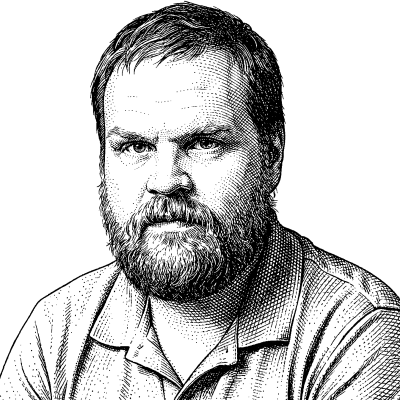
Allen Hansen was raised in northern Israel within the LDS faith, an experience that has profoundly shaped his academic and personal interests. His interdisciplinary scholarship spans a wide range of subjects, reflecting his diverse background and intellectual curiosity. Hansen’s research interests are particularly focused on the intersection of Mormonism, Judaism, and Biblical studies, with a keen interest in late antiquity. He also has scholarly interests in journalism, as well as Eastern European and Middle Eastern studies. This breadth allows him to explore unique connections between seemingly disparate fields. Hansen also brings a practical dimension to his scholarship through interests in business management and positive psychology, both of which he frames through the lens of Zion — exploring how organizational design and individual well-being might serve a larger communal vision. This thread of his work aligns naturally with the Mormon Transhumanist Association’s broader project of bridging faith and posthumanism.

Allen Leigh is a veteran software engineer, electrical engineer, and author whose work seeks to harmonize the rigors of technical science with the principles of Latter-day Saint theology. With a professional career spanning forty-four years in the software industry and a background in electrical engineering, Leigh brings a pragmatic, systems-based perspective to religious inquiry, focusing on the structural mechanics of creation and eternity. Leigh’s intellectual contributions are best encapsulated in his book, One Mormon’s View of the Science-Religion Debate and the Quest for Eternity . In this text, he navigates the often-contentious boundary between empirical evidence and spiritual belief, arguing that the two disciplines are not mutually exclusive but rather complementary frameworks for understanding the universe. His work suggests that the perceived rift between science and religion often stems from a misunderstanding of the methodologies inherent to both. A key figure in discussions on Mormon Transhumanism, Leigh has applied his technical expertise to theological cosmology. His presentation at the MTAConf 2009 entitled “God, the Perfect Engineer” focused on the concept of “engineering design cycles”—the iterative processes used to plan, build, test, and refine complex systems. Leigh proposed a model in which God functions as a Master Engineer, utilizing similar design cycles in the creation of the earth. This framework raises profound questions regarding the nature of divine omnipotence and the practical realities of creation. By drawing parallels to earthly engineering projects—which are subject to constraints, iterations, and the risk of failure—Leigh investigates whether the creation of the earth followed a similar, non-linear path. He challenges his audience to consider if a divine creation project could, in theory, fail, and what the implications of such a failure would be for our understanding of God’s plan. Through this lens, Leigh encourages a view of the cosmos that appreciates the intricate, perhaps even experimental, nature of existence.

Athanasius
Athanasius of Alexandria (c. 296–373 AD) was one of the most influential theologians in Christian history, serving as the twentieth Pope of Alexandria and playing a decisive role in the development of Trinitarian doctrine. His lifelong defense of the Nicene Creed against Arianism earned him the title ‘Father of Orthodoxy,’ while his writings on the incarnation articulated a vision of human transformation that continues to resonate in Eastern Orthodox theology and beyond. Born in Alexandria, Egypt, Athanasius received a thorough education in Greek literature, philosophy, and Christian scripture. As a young deacon, he accompanied Bishop Alexander to the Council of Nicaea in 325 AD, where he witnessed the formulation of the creed that would define Christian orthodoxy. Three years later, at approximately thirty years of age, Athanasius succeeded Alexander as bishop of Alexandria—a position he would hold for forty-five years despite being exiled five times by various emperors sympathetic to Arianism. Athanasius ’ s most enduring theological contribution appears in his treatise On the Incarnation , written when he was still a young man. In this work, he articulated the doctrine of theosis—the belief that God became human so that humans might become divine. This concept, sometimes expressed as ‘God became man that man might become god,’ became central to Eastern Orthodox spirituality and has profound implications for understanding human potential and destiny. Throughout his tumultuous career, Athanasius faced opposition from Arian bishops, imperial persecution, and periods of exile in the Egyptian desert, Rome, and elsewhere. Yet he persisted in defending what he understood as apostolic faith against theological compromise. His friendship with the desert monks, including Anthony the Great, influenced his biography of Anthony, which became foundational for Christian monasticism and hagiography. Athanasius’s doctrine of theosis resonates profoundly with transhumanist themes. His vision of humanity’s potential for transformation and participation in divine nature anticipates contemporary discussions of human enhancement and transcendence. The idea that humans are destined for a radical elevation of their nature—not merely moral improvement but ontological transformation—connects ancient Christian theology with modern aspirations for human flourishing beyond current limitations.

Augustine of Hippo
Aurelius Augustinus Hipponensis (354–430), commonly known as Augustine of Hippo or Saint Augustine, was a theologian, philosopher, and Bishop of Hippo Regius in Roman North Africa. He is widely regarded as one of the most influential figures in the development of Western Christianity and Western philosophy. Augustine’s major works include Confessions , a pioneering spiritual autobiography, and The City of God , a monumental defense of Christianity against pagan criticism following the sack of Rome. His theological contributions shaped doctrines on original sin, divine grace, predestination, and the nature of the Trinity. Before his conversion to Christianity, he explored Manichaeism and Neoplatonism, and his synthesis of Christian doctrine with classical philosophy profoundly influenced medieval thought, the Protestant Reformation, and modern philosophy alike. Augustine’s concept of deificatio (divinization) — the idea that humanity is called to participate in the divine nature — resonates with Mormon Transhumanist themes of theosis and the elevation of human potential. His emphasis on humanity’s restless longing for God (“Our hearts are restless until they rest in You”) speaks to a vision of human beings as fundamentally oriented toward transcendence. However, significant tensions exist between Augustine’s theology and Mormon Transhumanist thought. Augustine’s doctrine of original sin and total human depravity, his skepticism of unaided human will, and his emphasis on predestination stand in marked contrast to Latter-day Saint affirmations of human agency, moral capacity, and an optimistic anthropology. Additionally, Augustine’s commitment to creatio ex nihilo and the absolute ontological distinction between Creator and creature diverges from Mormon theology’s more materialist and continuity-oriented understanding of God and humanity. Nevertheless, Augustine’s enduring call to seek wisdom, his insistence that faith and reason are complementary, and his vision of humanity’s ultimate union with the divine ensure his lasting relevance to conversations at the intersection of faith, philosophy, and human flourishing.

B. H. Roberts
Brigham Henry Roberts (1857–1933) was a historian, theologian, and General Authority of The Church of Jesus Christ of Latter-day Saints, widely regarded as one of the most rigorous and intellectually ambitious thinkers Mormonism has produced. Born in Warrington, England, and emigrating to Utah as a child, Roberts rose from a difficult, impoverished youth to become a missionary, editor, congressman-elect, and a member of the First Council of the Seventy from 1888 until his death. Roberts’s career bridged ecclesiastical leadership and serious scholarship. He served missions in the American South and presided over the Eastern States Mission, and he was elected to the U.S. House of Representatives in 1898, though he was denied his seat in a national controversy over plural marriage. He devoted decades to writing and editing, producing the six-volume Comprehensive History of the Church , editing the seven-volume History of the Church , and authoring theological works including The Mormon Doctrine of Deity , The Truth, The Way, The Life , and Studies of the Book of Mormon . In these works he engaged geology, biology, biblical criticism, and comparative religion with a candor unusual for his time and office. Roberts’s legacy resonates deeply with themes of human potential, intelligence, and the entanglement of faith with progress. He read the nineteenth and early twentieth centuries—railroads, electric light, wireless telegraphy, aviation, the spread of liberty—as “collateral rays” of the same light that opened the heavens to Joseph Smith, suggesting that the millennium might already be quietly underway in the works of human hands. He insisted that scientific research, including evidence of life and death long before Adam, belongs on the side of “development” rather than “contraction,” and that to engage such inquiry is “to link the church of God with the highest increase of human thought and effort.” Equally striking is Roberts’s generosity toward other traditions and his impatience with mental laziness. He refused to identify any particular church—Catholic, Protestant, Greek, Buddhist, Muslim, or even the societies of deists and atheists—as the “church of the devil,” reserving that phrase for the kingdom of evil wherever it appears, and affirming that wise teachers and prophets are raised up among all peoples. Against “simple faith” understood as ignorant acquiescence, he championed an intelligent, rational faith that strives “up to the very limit of man’s capacity” to know. In his confidence that intelligence is the glory of God and of humanity, that revelation invites rather than forecloses inquiry, and that the children of men are “moving up to a higher and truer conception of the things of God,” Roberts remains a vital voice for those who see in technology, science, and expanding moral imagination the natural shape of a divine future.

Basil the Great
Basil of Caesarea (c. 330–379), known as Basil the Great, was a bishop, theologian, and monastic reformer whose intellectual and institutional labors helped shape the foundations of Eastern Christianity. Born into a devout Christian family in Cappadocia (present-day Turkey), he studied at the finest schools of his age—Athens and Constantinople—before returning to establish a monastic community and eventually serving as Bishop of Caesarea from 370 until his death. Basil’s achievements were as practical as they were theological. He founded what historians regard as one of the earliest organized charitable complexes in the ancient world, a compound outside Caesarea that included a hospital, a hospice for travelers, and care facilities for the poor—a concrete expression of his conviction that faith without compassionate action is hollow. As a theologian, he contributed decisively to the articulation of Trinitarian doctrine and authored influential monastic rules that still govern communities of Eastern Christian monks today. Together with his brother Gregory of Nyssa and their friend Gregory of Nazianzus, he formed the Cappadocian Fathers, whose synthesis of Greek philosophy and Christian revelation became a cornerstone of classical theology. Basil’s deepest legacy may lie in his vision of human transformation through divine participation. In his treatise On the Holy Spirit , he described a soul indwelt by the Spirit as one that becomes spiritual itself, capable of “foreknowledge of the future, understanding of mysteries, apprehension of what is hidden”—a soul that advances through illumination toward what he did not hesitate to call “the being made God.” This is the doctrine of theosis : the idea that created intelligence, shaped by virtue and suffused with grace, can ascend toward genuine likeness to—and participation in—divinity. For Basil, that ascent was not a flight from the material world but a transformation of the whole person: mind, moral life, and communal practice included. His combination of rigorous intellectual formation, institutional care for the vulnerable, and fearless theological aspiration about humanity’s divine potential makes him a persistent and generative voice in any serious conversation about the relationship between intelligence, virtue, and the destiny of human beings.

Blaire Ostler is a philosopher, author, and artist whose work explores the intersection of Mormon theology, transhumanism, and human identity. A ninth-generation Latter-day Saint, she has been a notable voice in conversations about the synthesis of religious tradition with technological progress and expanding theological inquiry. Ostler holds a Bachelor of Fine Arts in Design from the International Academy of Design and Technology–Seattle. Her background as an abstract modern artist deeply informs her philosophical work. Her paintings, characterized by their exploration of aesthetics and form, can be found in residences and businesses throughout Seattle. This artistic sensibility extends to her writing, where she examines the boundaries of traditional categories to explore a more expansive understanding of divinity and humanity. Ostler is the author of Queer Mormon Theology: An Introduction (2021), in which she engages with Mormon doctrinal concepts such as the nature of the divine, the significance of Heavenly Mother, and the potential for technological resurrection. Her involvement with the Mormon Transhumanist Association has been significant; she served on the Board of Directors for six years and as CEO from 2016 to 2018. Her transhumanist vision emphasizes active discipleship, where humanity participates in the work of God through morphological freedom and cognitive liberty. Blaire continues to write, paint, and speak on themes of identity, truth, and beauty, exploring the relationship between the human and the divine.