Authors

Carl Sagan
Carl Edward Sagan (1934–1996) was an American astronomer, planetary scientist, cosmologist, and one of the most influential science communicators of the twentieth century. His ability to convey the wonder of the cosmos to a broad public audience made him a defining figure in popular science. Sagan spent much of his career at Cornell University, where he served as a professor of astronomy and director of the Laboratory for Planetary Studies. He contributed significantly to planetary science, including research on the atmospheres of Venus and Titan, and played a key role in NASA's Mariner, Viking, Voyager, and Galileo missions. He helped design the Pioneer plaque and the Voyager Golden Record—messages from humanity launched into interstellar space. His 1980 television series Cosmos: A Personal Voyage became one of the most widely watched programs in public television history, and his novel Contact (1985) explored humanity's first encounter with extraterrestrial intelligence. Sagan was a passionate advocate for scientific literacy, critical thinking, and the search for life beyond Earth. While he identified as an agnostic and approached questions of God and transcendence through a scientific lens, his work resonated deeply with themes central to transhumanist thought: the aspiration to transcend present human limitations, the ethical stewardship of technology, and a profound reverence for the potential of conscious life in the universe. His famous declaration that "we are a way for the cosmos to know itself" echoes theological ideas of humanity's participatory role in creation and theosis—the notion that intelligent beings may grow toward ever-greater understanding, compassion, and capacity. Sagan's legacy continues to inspire those who see science and wonder as complementary paths toward human flourishing.

David Brin
David Brin (born 1950) is an American scientist and science fiction author widely recognized for his explorations of technological progress, accountability, and the future trajectory of human civilization. A physicist by training, with a PhD from the University of California, San Diego, Brin has become one of the most prominent voices in contemporary science fiction, celebrated for works that grapple seriously with the responsibilities that accompany advancing knowledge and power. Brin is perhaps best known for his Uplift series, which imagines a galaxy in which elder species genetically elevate (or “uplift”) younger species to sapience, creating complex webs of patronage and obligation. The series earned him multiple Hugo and Nebula Awards and introduced themes that resonate deeply with transhumanist thought: the idea that intelligence and consciousness can be cultivated, expanded, and shared across species, and that such uplift carries profound moral responsibilities. His standalone novel The Postman (1985), later adapted into a film, explores how communities rebuild civilization after catastrophe through acts of hope and civic trust. His nonfiction work The Transparent Society (1998) argues that openness and mutual accountability, rather than secrecy, are the best safeguards for freedom in an age of pervasive technology. Brin is a self-described advocate of the Enlightenment tradition, championing science, democratic governance, and an optimistic but critical view of human progress. He has been vocal in futurist and transhumanist circles, generally supporting the idea that humanity can and should use technology to improve the human condition, overcome biological limitations, and expand into the cosmos. His vision of “otherness”—the moral imperative to consider perspectives beyond one’s own—aligns with broader transhumanist commitments to expanding empathy and capability. From the perspective of Mormon Transhumanism, Brin’s work offers rich resonances: his uplift narratives echo themes of theosis and compassionate creation, wherein more advanced beings extend their capacities to others—a pattern the New God Argument finds deeply meaningful. His emphasis on accountability and transparency complements the Mormon Transhumanist commitment to ethical stewardship of technology. Where Brin’s views may diverge is in his secular, Enlightenment-centered framework; he generally frames progress in terms of human reason and democratic institutions rather than divine grace, prophetic authority, or the restored Gospel. He has at times expressed skepticism toward religious institutions as arbiters of truth. Nevertheless, his abiding faith in humanity’s capacity for moral growth and his insistence that advanced power demands advanced compassion place him in substantial sympathy with the Mormon Transhumanist vision of becoming compassionate creators.

David Deutsch
David Elieser Deutsch (born 1953) is a British-Israeli physicist at the University of Oxford, widely regarded as one of the founding fathers of quantum computation. A Fellow of the Royal Society, Deutsch has profoundly shaped our understanding of the physical world and the nature of reality itself. Deutsch earned his PhD from the University of Oxford and has spent much of his career at the Clarendon Laboratory. In 1985, he published a landmark paper describing the first universal quantum computer, demonstrating that a quantum mechanical system could simulate any physical process—a breakthrough that launched the field of quantum computing. He further contributed to the development of the Deutsch-Jozsa algorithm, one of the earliest demonstrations of quantum computational advantage. His intellectual framework draws heavily on the many-worlds interpretation of quantum mechanics championed by Hugh Everett. Beyond his technical contributions, Deutsch is renowned as a public intellectual and author. His books The Fabric of Reality (1997) and The Beginning of Infinity (2011) weave together quantum physics, epistemology, the theory of computation, and the theory of evolution into a unified worldview. In The Beginning of Infinity , he argues that problems are soluble through the creation of knowledge, and that there is no fundamental limit to human progress—a deeply optimistic vision of unbounded human potential. Deutsch’s philosophy resonates with transhumanist themes central to the Mormon Transhumanist Association’s mission. His conviction that human beings are not cosmically insignificant but are instead “universal explainers” capable of unlimited understanding and transformation of reality echoes theological ideas of theosis and humanity’s divine potential. His insistence that the reach of human knowledge and creativity is genuinely infinite offers a scientific and philosophical foundation for hope in humanity’s capacity to transcend current limitations.

Felix Clairvoyant is a molecular biologist and prominent voice within the International Raelian Movement, advocating for a synthesis of “atheistic intelligent design” and transhumanist philosophy. Born in France and raised in Montreal, Canada, he cultivated an early passion for the sciences that led to a fifteen-year career in the biotechnology industry. This scientific rigor deeply informs his theological perspective, grounding his metaphysical claims in materialist biology rather than spiritual mysticism. As a leader in the Raelian Movement, Clairvoyant articulates the belief that life on Earth was scientifically engineered by an advanced extraterrestrial species known as the Elohim. Distinguishing his views from both traditional theism and evolutionary chance, he proposes a model of “scientific creationism.” In this framework, the Elohim are not gods but flesh-and-blood beings who have mastered the very technologies—such as genetic engineering and space travel—that humanity is currently developing, serving as a template for our future evolution. Clairvoyant gained recognition in the broader futurist community for his presentation at the Religion and Transhumanism Conference organized by the MTA back in 2014. There, he argued that Raelism is inherently transhumanist, viewing immortality not as a supernatural afterlife but as a technical problem solvable through cloning and memory transfer. He posits that acknowledging our extraterrestrial designers is a crucial step toward humanity’s maturation, framing peaceful technological advancement as a mandate for joining the galactic community. Beyond his philosophical advocacy, Clairvoyant has applied his analytical skills to a successful career in real estate in the San Francisco Bay Area. He maintains a disciplined lifestyle centered on meditation and chess, viewing these practices as complementary to his pursuit of mental clarity. He continues to serve as a bridge between the Raelian worldview and the wider transhumanist movement, promoting a future defined by scientific mastery and longevity.
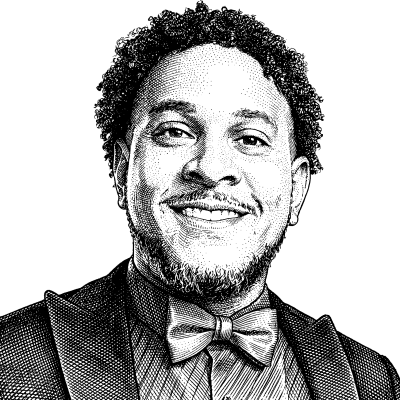
Gabriel Rothblatt is a prominent figure within the transhumanist movement, particularly known for his involvement with the Terasem movement, which he represents. Terasem espouses a secular approach to religious transhumanism. He is a member of the Mormon Transhumanist Association, attending their conferences for at least two years, starting no later than 2023. He considers himself a Futurist Philosopher. Rothblatt holds a bachelor’s degree in political philosophy. He experienced a “spiritually transhuman experience” at the 2023 Mormon Transhumanist Association conference, further fueling his drive to achieve more. This experience coincided with the publication of his first piece of Futurist Philosophy by the Institute for Ethics and Emerging Technologies. Beyond his involvement in transhumanism, Rothblatt is also active in politics. He resides in Florida with his wife and four children. In 2024, he announced his candidacy for U.S. Congress, running in Florida’s eighth district, which encompasses the Kennedy Space Center. He views his transhumanist identity as a significant influence on his decision to seek public office.

Giulio Prisco is a writer, technologist, futurist, and transhumanist. He is based in Budapest and is a frequent speaker and writer on topics related to science, technology, and the future. A former manager in European Science and Technology Centers, Prisco’s interests span a wide range of subjects, including information technology, emerging technologies, virtual worlds, space exploration, and future studies. He is especially interested in the convergence of science, technology, and spirituality—a theme he explores through his work with the Turing Church of Transcendent Engineering. Prisco is deeply interested in concepts like mind uploading, cryonics, and brain preservation, and how these technologies intersect with philosophy and religion. He is an advocate for the potential of technology to transcend human limitations and explore spiritual possibilities, dedicating his work to advancing these ideas within the broader transhumanist community.
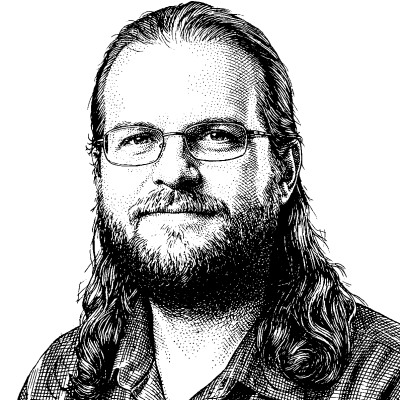
James Carroll is a speaker and thinker focused on the drivers of technological progress and their implications for the future. He presented at the MTAConf 2014, examining the rate of technological change and questioning whether it is linear or exponential. His 2014 presentation sought to temper overly confident singularitarian views, such as those proposed by Raymond Kurzweil, suggesting that an exponential trajectory was uncertain at best. Building on his previous work, Carroll’s subsequent research has extended the discussion to include additional paradigms for innovation, specifically invention and specialization, trade, and the economics of scale (referred to as the ‘scale’ paradigm). He explores the relationships between these paradigms and population growth, arguing that technology impacts population size by enabling larger populations through advances in food production, reduced epidemics, and lower infant mortality rates. Carroll’s work considers both the impact of technological progress on society, and the societal factors that drive innovation. He argues that understanding these forces is crucial for assessing the potential for transhumanist visions to be realized, and for navigating the future of humanity in a rapidly changing world.

Johannes Kepler
Johannes Kepler (27 December 1571 – 15 November 1630) was a German mathematician, astronomer, and natural philosopher who fundamentally transformed humanity’s understanding of the cosmos. Born in Weil der Stadt, Germany, to a soldier father and an herbalist mother who was later accused of witchcraft, Kepler studied at the University of Tübingen under Michael Maestlin, who taught him the Copernican heliocentric system. In 1596, Kepler published Mysterium Cosmographicum ( The Cosmographic Mystery ), the first published defense of Copernicus’s sun-centered model. After being forced out of his teaching position in Graz due to his Lutheran faith, he moved to Prague in 1600 to work for the renowned astronomer Tycho Brahe. When Tycho died suddenly in 1601, Kepler succeeded him as imperial mathematician to Holy Roman Emperor Rudolf II. Kepler’s greatest achievement was his three laws of planetary motion: that planets move in elliptical orbits with the sun at one focus (1609); that a line connecting a planet to the sun sweeps equal areas in equal times; and that the square of a planet’s orbital period is proportional to the cube of its mean distance from the sun (1619). These laws, published in Astronomia Nova (1609) and Harmonices Mundi (1619), laid the foundation for Newton’s law of universal gravitation. Called the “founder of celestial mechanics,” Kepler was the first to identify natural laws in the modern sense. His fusion of physics and astronomy created modern astronomical science, demonstrating that the same physical principles governing motion on Earth apply throughout the universe—a revolutionary insight with profound implications for understanding humanity’s place in the cosmos.
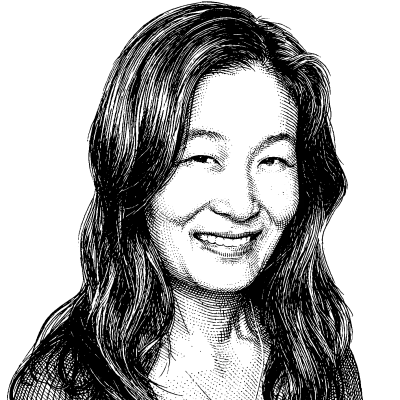
Laura Shin is a prominent crypto journalist and the host of the popular podcast, Unchained . Her work focuses on the intersection of technology, finance, and decentralized systems, making her a relevant voice for the Mormon Transhumanist Association conference. She brings an understanding of DAOs (Decentralized Autonomous Organizations) and their implications for collective action and individual empowerment—a topic relevant to transhumanist ideals of distributed governance and community building. Shin was a senior editor at Forbes, where she distinguished herself as the first mainstream journalist to cover cryptocurrency full-time. She is the author of the book The Cryptopians: Idealism, Greed, Lies, and the Making of the First Big Cryptocurrency Craze , offering a deep dive into the early days of the crypto world. Her insights into DAOs, blockchain technology, and the future of decentralized systems are well-informed by her work. Laura Shin graduated Phi Beta Kappa with honors from Stanford University and earned a Master of Arts from Columbia University School of Journalism. Her academic background combined with her practical experience in the fast-evolving world of crypto positions her as an insightful commentator on the technological and societal trends shaping the future.

Matthew Lehmitz is a researcher focused on astrobotany, specifically the cultivation of plants in space environments. His work centers on developing sustainable methods for incorporating plant life into space missions and habitats, addressing the challenges of resource constraints and the need for self-sustaining ecosystems beyond Earth. Lehmitz’s current project involves utilizing Tillandsia ionantha (air plants) within a 3U CubeSat to simulate a micro-habitat in orbit. This approach aims to circumvent the complexities and weight limitations associated with traditional soil-based cultivation methods. By demonstrating the viability of air plants in space, he hopes to pave the way for more efficient and cost-effective strategies for creating plant-based ecosystems in extraterrestrial settings—a key consideration for long-duration space travel and colonization.