Authors

Allen Leigh is a veteran software engineer, electrical engineer, and author whose work seeks to harmonize the rigors of technical science with the principles of Latter-day Saint theology. With a professional career spanning forty-four years in the software industry and a background in electrical engineering, Leigh brings a pragmatic, systems-based perspective to religious inquiry, focusing on the structural mechanics of creation and eternity. Leigh’s intellectual contributions are best encapsulated in his book, One Mormon’s View of the Science-Religion Debate and the Quest for Eternity . In this text, he navigates the often-contentious boundary between empirical evidence and spiritual belief, arguing that the two disciplines are not mutually exclusive but rather complementary frameworks for understanding the universe. His work suggests that the perceived rift between science and religion often stems from a misunderstanding of the methodologies inherent to both. A key figure in discussions on Mormon Transhumanism, Leigh has applied his technical expertise to theological cosmology. His presentation at the MTAConf 2009 entitled “God, the Perfect Engineer” focused on the concept of “engineering design cycles”—the iterative processes used to plan, build, test, and refine complex systems. Leigh proposed a model in which God functions as a Master Engineer, utilizing similar design cycles in the creation of the earth. This framework raises profound questions regarding the nature of divine omnipotence and the practical realities of creation. By drawing parallels to earthly engineering projects—which are subject to constraints, iterations, and the risk of failure—Leigh investigates whether the creation of the earth followed a similar, non-linear path. He challenges his audience to consider if a divine creation project could, in theory, fail, and what the implications of such a failure would be for our understanding of God’s plan. Through this lens, Leigh encourages a view of the cosmos that appreciates the intricate, perhaps even experimental, nature of existence.

Amit Goswami is a scientist and researcher who challenges mainstream scientific materialism, particularly in its application to consciousness, health, and healing. He advocates for the integration of spirituality with medicine and seeks to demonstrate the importance of consciousness in these areas—a view often dismissed by conventional scientific paradigms. Goswami draws heavily on the principles of quantum physics to argue for a reality where consciousness plays a fundamental role. He posits that the prevailing materialistic worldview, which treats the body and mind as mere machines, inhibits our understanding of health, healing, and the human experience. He believes that quantum physics offers an alternative perspective, one that acknowledges the subjective aspect of consciousness and its potential impact on our well-being. At a 2013 conference jointly organized by the Integrative Health Network and the Mormon Transhumanist Association, Goswami presented on “Quantum Physics, Consciousness and Health.” He emphasized the disconnect between the implications of quantum physics and its public perception, suggesting that media and academia have perpetuated materialistic concepts to the detriment of a more holistic understanding of consciousness and its potential for influencing health and personal agency. His work attempts to bridge the gap between scientific inquiry and spiritual understanding, encouraging a reevaluation of the role of consciousness in our lives.

Charles Sanders Peirce
Charles Sanders Peirce (1839–1914) was an American philosopher, logician, mathematician, and scientist, widely regarded as the founder of pragmatism and one of the most original minds in the history of Western philosophy. Though he spent much of his career in relative institutional isolation—he held no permanent academic post and much of his work was published only posthumously—his influence on logic, semiotics, epistemology, and the philosophy of science has proven immense. Peirce was educated at Harvard and worked for decades with the U.S. Coast and Geodetic Survey, conducting pioneering research in geodesy and the measurement of gravity. In parallel, he developed a sweeping philosophical system he called “synechism”—the view that continuity is a fundamental feature of reality—alongside “tychism,” the doctrine that genuine chance is real and irreducible in the cosmos. These were not idle speculations but part of a rigorous effort to understand how mind, matter, meaning, and evolution are woven together. His theory of signs (semiotics) proposed that all thought is mediated by signs, making inquiry itself a kind of living, self-correcting process oriented toward truth. Peirce’s cosmological vision is among the most theologically resonant in the American philosophical tradition. He argued that the universe itself is a process of mind coming to know itself—that evolution, continuity, and the growth of reasonableness are not merely biological or physical facts but expressions of a cosmic tendency toward greater intelligence, order, and love. He described this tendency with the term “agapasm”: evolutionary love as the animating force of the universe. In this light, his remark that creation’s purpose, in its highest expression, is “God’s movement toward self-reproduction” is not a peripheral aside but a central conviction—that the cosmos is oriented toward the emergence and amplification of mind, and that intelligence, creativity, and moral aspiration are participations in something genuinely divine. For those who hold that humanity’s destiny is theosis—transformation into ever greater intelligence, compassion, and creative power—Peirce’s cosmology offers a richly consonant philosophical foundation.

D. H. Fowler
David Henry Fowler was an American educator, writer, and civic leader in the state of Utah, known for his decades of service in public education and his editorial contributions to early twentieth-century Latter-day Saint periodical literature. Born on May 8, 1879, in Hooper, Weber County, Utah, Fowler was the son of Samuel Fowler and Rachel Taylor. He was raised in a pioneer Latter-day Saint household during a formative period in Utah’s territorial and early statehood history, and from an early age demonstrated an aptitude for study that would shape the trajectory of his life’s work. In 1906, Fowler was called to serve a proselytizing mission for The Church of Jesus Christ of Latter-day Saints in the Northern States Mission. His capabilities as a writer and communicator were soon recognized, and he was transferred to the mission headquarters in Independence, Missouri, where he was appointed Associate Editor of Liahona, the Elders’ Journal . This publication—one of the principal periodicals serving missionaries and members outside the Intermountain West—provided doctrinal instruction, mission news, and devotional literature to a wide readership. Fowler’s editorial labors placed him among a small circle of early twentieth-century Latter-day Saint writers helping to amplify the voice of the Church during a period of expanding national presence. Fowler pursued higher education at the University of Utah, completing his degree in 1919. His academic pursuits translated directly into a career in public education, where he rose to serve as both a high school principal and a superintendent of schools in Emery and Summit counties, Utah. In these roles, Fowler shaped the educational foundations of two rural communities at a formative moment in Utah’s development as a state, helping to build institutional structures that would serve generations of students. Fowler’s career reflected a lifelong conviction that education, faith, and community progress were inseparable. As an administrator, he worked to extend the reach of secondary schooling into communities whose economic realities often competed with classroom attendance, and as a writer and editor he helped articulate the intellectual and spiritual aspirations of his religious tradition for a dispersed readership.

John A. Widtsoe
John Andreas Widtsoe (1872–1952) was a Norwegian-American scientist and apostle who brought a unique synthesis of scientific rigor and religious faith to his Church service. Born on an island among fisherfolk in Norway, he emigrated to Utah after his mother’s conversion. He graduated from Harvard with the highest honors and earned his doctorate from the University of Gottingen in Germany. Widtsoe became renowned for his expertise in irrigation and dry farming, serving as director of the Utah Agricultural Experiment Station and later as president of both Utah State Agricultural College and the University of Utah. He was called to the Quorum of the Twelve in 1921 and later served as president of the European Mission. A prolific author, Widtsoe wrote A Rational Theology and Evidences and Reconciliations , which addressed common questions about faith and doctrine. His marriage to Leah Dunford, granddaughter of Brigham Young, united him with a distinguished Church lineage. Despite personal tragedy, losing four of his seven children in infancy, he maintained a life of faithful service.
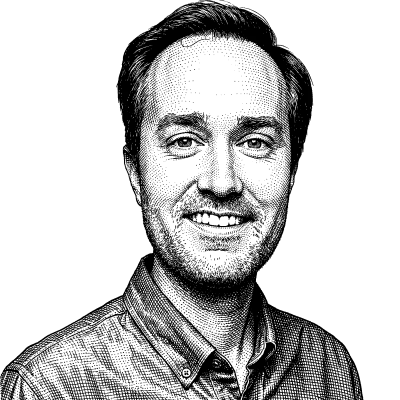
Jon Ogden is an author, educator, and entrepreneur focused on the intersection of faith, family, and technology. He is the co-founder of Uplift Kids, a platform providing families with a lesson library and curriculum designed to foster spiritual health and well-being within the home. Ogden is also the author of When Mormons Doubt: A Way to Strengthen Relationships and Live a Quality Life , a work that explores themes of faith, doubt, and community within a Mormon context. His exploration of religious belief as a potentially modular system, similar to an API, suggests an openness to integrating diverse philosophical and spiritual traditions—a perspective that aligns with the Mormon Transhumanist Association’s interest in exploring how technology and innovation can enhance human experience and spiritual development. He holds a Bachelor’s degree in English, Literature, and a Master’s degree in Writing and Rhetoric, both from Brigham Young University. Ogden lives in Provo, Utah, with his spouse and two children and writes regularly at johnogden.com.

Jonathan Jardine holds a bachelor’s degree in economics from Brigham Young University (BYU) and an MBA from Harvard Business School. He is the Chief Operating Officer of Blue Cloud Pediatric Surgery Centers. Prior to Blue Cloud, he served as CEO of Believe Dental, a San Antonio-based organization focused on expanding oral healthcare access for individuals with intellectual and developmental disabilities. Earlier in his career, Mr. Jardine served as Executive Director of Product Supply at Valero Energy Corporation, and as Country Manager for Valero’s Latin America business, based in Lima, Peru, where he also served as a board member of the AirBP | PBF Aviation Joint Venture. His career spans multiple sectors, including healthcare services and finance, with previous positions at Goldman Sachs and Dodge & Cox in San Francisco. Jardine draws on principles from influential thinkers like the late Harvard professor Clay Christensen, exploring concepts of emergent and deliberate strategies. His presentation at MTAConf 2022 focused on the potential of decentralized strategies within the church, particularly in its practical application, drawing inspiration from Joseph Smith’s emphasis on individual agency and governance.

Jordan Harmon is a psychotherapist and social worker who considers himself an “accidental transhumanist.” His journey into transhumanism began after encountering the Mormon Transhumanist Association (MTA) through a podcast and subsequent interactions with members. Initially drawn by a misunderstanding—thinking it was the “Mormon Transpersonal Association” due to his interest in transpersonal psychotherapy and its implications for spiritual growth—Harmon initially approached transhumanism with some hesitation. However, after engaging with the ideas of transhumanists like Lincoln Cannon and Carl Youngblood, Harmon became increasingly interested in the movement. His work now explores the intersection of psychology and transhumanism, particularly focusing on our relationship to pain and problem-solving. He delineates two types of problem solving: the primitive, reactive response rooted in evolutionary survival, and the evolved, meaning-making response of the prefrontal cortex, which can sometimes exacerbate emotional and psychological pain. At the MTAConf 2015, Harmon discussed the “problem of problem solving,” examining how our evolved capacity for rational thought and planning can inadvertently trap us in our minds, hindering our ability to live fully. He also touched upon the internal experience, characterized by a vast array of thoughts, emotions, urges, and moral judgments, and how these elements interact to shape our perceptions and actions, highlighting persistent challenges in self-governance and interpersonal relationships.

Karl Popper
Karl Raimund Popper (1902–1994) was an Austrian-British philosopher widely regarded as one of the most influential philosophers of science of the twentieth century. His work on the demarcation problem, epistemology, and the philosophy of the open society left a lasting mark on intellectual life across multiple disciplines. Popper is best known for his principle of falsifiability , which holds that for a theory to be genuinely scientific, it must be capable of being tested and potentially refuted. This criterion, articulated in his landmark work The Logic of Scientific Discovery (1934), fundamentally reshaped the philosophy of science and challenged the prevailing inductivist tradition. He spent much of his academic career at the London School of Economics, where he served as professor of logic and scientific method. His political philosophy, most notably developed in The Open Society and Its Enemies (1945), offered a vigorous defense of liberal democracy and a critique of totalitarian ideologies rooted in historicism. Popper’s epistemology carries deep resonance with transhumanist and theological themes. His vision of knowledge as an unending, self-correcting pursuit—forever open to revision and growth—aligns with the transhumanist commitment to ongoing human improvement. His concept of critical rationalism suggests that humanity progresses not by claiming certainty but by humbly identifying and correcting errors, a posture that echoes religious traditions emphasizing humility, faith in future understanding, and the aspiration toward greater light and knowledge. For the Mormon Transhumanist Association, Popper’s insistence that an open society fosters human flourishing, and that our reach should always exceed our grasp, resonates with the vision of theosis—the idea that humanity is called to grow toward the divine through both reason and faith.
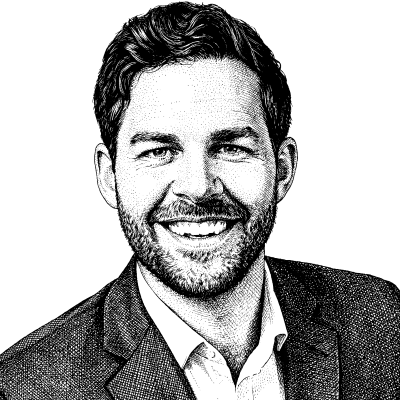
Kurtis Lockhart is an urban development leader, researcher, and the Founder and Director of the Africa Urban Lab (AUL). He holds a PhD in political science from the University of Oxford, where his research examined the impact of institutional reforms on public goods provision in sub-Saharan Africa. He also obtained an MSc in Development Management from the London School of Economics—where he graduated top of his class—and a BA in Economics and Development Studies from McGill University. While at Oxford, he taught both quantitative methods and African politics, seamlessly bridging rigorous academic theory with real-world development challenges. Before focusing on urban innovation, Lockhart built extensive on-the-ground expertise managing developmental research and randomized control trials. He served as a Research Manager for the International Growth Centre and Warc Africa in Sierra Leone, and for the ELIMU Impact Evaluation Center in Kenya. These early roles across varied sectors solidified his understanding of the complex bottlenecks facing developing regions and underscored the urgent need for scalable, structural solutions. A prominent advocate for innovative governance, Lockhart previously served as Executive Director and Head of Research at the Charter Cities Institute (CCI), a Washington, D.C.-based think tank. There, he championed the development of charter cities—new urban centers granted special jurisdiction to enact institutional reforms—as a mechanism to address Africa’s rapid urbanization. Expanding on this mission in 2024, he launched the Africa Urban Lab in Zanzibar. Operating as a “teaching hospital” for urban professionals in partnership with the African School of Economics and CCI, AUL trains the next generation of municipal leaders and planners to transform urban growth into economic prosperity. Lockhart’s broader vision aligns deeply with themes of human progress, emphasizing how institutional evolution can lift communities out of poverty and foster long-term resilience. At the MTAConf 2022, he made a presentation on Charter Cities: Empowered Cities for the Urban Age, illustrating how decentralized, empowered cities can overcome traditional development hurdles. By reimagining city governance as a catalyst for human flourishing, Lockhart continues to shape the future of urban resilience and economic freedom across the Global South.