Authors

Antoine de Saint-Exupéry
Antoine de Saint-Exupéry (1900–1944) was a French aviator, writer, and moral philosopher whose work stands among the most enduring explorations of human meaning, courage, and the relationship between solitude and community in the twentieth century. Born into an aristocratic family in Lyon, he pursued aviation at a time when flight was still a frontier art, serving as a commercial and military pilot across Europe, North Africa, and South America. His cockpit became a laboratory for existential reflection, and the sky a medium through which he interrogated what it means to be fully human. Saint-Exupéry’s literary output is inseparable from his vocation as a pilot. Night Flight (1931), Wind, Sand and Stars (1939), and Flight to Arras (1942) drew directly from his aerial experience to trace the moral dimensions of responsibility, sacrifice, and fraternity under risk. The Little Prince (1943), written during wartime exile in New York, became one of the best-selling and most-translated books in history—a deceptively simple fable about perception, love, and the invisible bonds that give life its weight. He disappeared on a reconnaissance mission over the Mediterranean in July 1944, never to return; the mystery of his end deepened the mythic quality already surrounding his life. Saint-Exupéry’s lasting significance lies in his insistence that technology—the airplane above all—does not diminish humanity but can, rightly inhabited, enlarge it. He understood flight not as escape from the earth but as a vantage from which human solidarity becomes visible in a new way. His writing returns persistently to themes of creative discipline, the cultivation of inner life, the obligation of the living toward the lost, and the kind of love that sees what is essential rather than what is merely present. These concerns resonate naturally with the Mormon Transhumanist conviction that the proper work of intelligence and technology is to deepen relationship, expand moral vision, and orient human striving toward the fullest possible flourishing of every soul.

Benjamin Peters
Benjamin Peters (born 1980) is an American media scholar, author, and professor known for his work on the history of communication technologies, information theory, and the social dimensions of digital networks. He serves as the Hazel Rogers Professor of Communication at the University of Tulsa and has held affiliations with several prominent research institutions. Peters is best known for his book How Not to Network a Nation: The Uneasy History of the Soviet Internet (2016), which explores the failed attempts to build a nationwide computer network in the Soviet Union and examines how social and political systems shape technological development. The work received widespread acclaim for its interdisciplinary approach, bridging media studies, history, and science and technology studies. He has also edited Digital Keywords: A Vocabulary of Information Society and Culture (2016), contributing to critical discourse around the language and concepts underpinning the digital age. Peters’s scholarship carries resonance for those interested in the intersection of technology, human potential, and collective aspiration. By investigating how societies envision and fail to realize transformative technological projects, his work illuminates the deeply human—and often ideological—dimensions of networked communication. His research reminds us that the tools we build to connect and elevate humanity are always embedded in moral, political, and even spiritual frameworks. For communities exploring themes of theosis and the cooperative pursuit of transcendence through technology, Peters’s insights into the promises and pitfalls of networked societies offer valuable perspective on how human aspiration and systemic constraints interact in the ongoing project of building a better world.

Bernardo Vicente is an economist and researcher deeply interested in the intersection of economics, technology, and culture. He holds a degree in business administration and accounting from Lisbon Polytechnic Institute, along with a specialization in business analytics. Driven by a desire to leverage technology for societal betterment, he has developed an innovative economic theory known as “Harberger Georgism.” Harberger Georgism builds upon the principles of Georgism and Harberger taxation, exploring how Web3 technologies can sustainably develop the digital era and enhance the physical world. This theory aims to potentiate development in the physical world using economic strategies. Currently, Bernardo volunteers as a researcher at the Ethereum Foundation, contributing his expertise to the advancement of blockchain technology. His work explores the teleology and utility of emerging technologies like NFTs and the metaverse, aiming to ensure their positive impact on society.

Carver Mead
Carver Mead (born 1934) is an American engineer, physicist, and pioneer of modern microelectronics whose foundational contributions to semiconductor theory and very-large-scale integration (VLSI) helped make the silicon age possible. A Gordon and Betty Moore Professor Emeritus of Engineering and Applied Science at the California Institute of Technology, Mead spent decades at the frontier of what computation could become, both as a theorist and as a practical builder of systems. Mead’s career achievements span an extraordinary range. He developed key models for understanding transistor behavior at the nanoscale, co-authored (with Lynn Conway) the landmark 1980 textbook Introduction to VLSI Systems , and essentially invented the methodology by which engineers design the dense integrated circuits that now inhabit every corner of modern life. He also pioneered neuromorphic engineering—the design of circuits that mimic the computational architecture of biological neural systems—and founded companies that applied these principles to sensory processing and analog computation. In 2022, he was awarded the Harold Pender Award; earlier recognition includes the Lemelson-MIT Prize and the National Medal of Technology and Innovation. What distinguishes Mead as a thinker is not only what he built but how he understood the act of building. He insisted that Moore’s Law is fundamentally a story about human belief: “Moore’s Law is really a thing about human activity, it’s about vision, it’s about what you’re allowed to believe. Because people are really limited by their beliefs, they limit themselves by what they allow themselves to believe about what is possible.” In this reading, technological progress is not an autonomous material force but a function of expanded imagination—a civilizational act of faith in possibility. This framing resonates deeply with traditions that locate human creativity within a larger divine economy, where intelligence, rightly directed and disciplined by moral courage, participates in the ongoing work of creation. Mead’s insistence that the boundary between what is and what could be is first a boundary of belief, and only second a boundary of physics, echoes the Mormon transhumanist conviction that humanity’s divine future is not given passively but willed, practiced, and built—one hard-won increment of understanding at a time.

Cyprian
Cyprian of Carthage (c. 200–258 CE) was one of the most influential bishops and theologians of early Christianity, whose writings on ecclesiology, martyrdom, and the nature of the Church shaped Latin Christian thought for centuries. Born in Roman North Africa, likely to a wealthy pagan family, Cyprian converted to Christianity around 246 CE and rose rapidly to become Bishop of Carthage within two years. His episcopate was defined by crisis: he led his community through the Decian and Valerian persecutions, navigating fierce debates over how to treat Christians who had lapsed under imperial pressure. His treatises—among them On the Unity of the Church , On the Lapsed , On Mortality , and On Works and Almsgiving —combined pastoral urgency with theological precision, establishing principles of communal discipline, sacramental life, and episcopal authority that would echo through Western Christianity. He was martyred in 258 CE under the Emperor Valerian, becoming one of the most venerated figures in the early Church. Cyprian’s theological legacy is most vivid where it touches the question of human transformation. His conviction that Christ assumed the fullness of human nature so that humanity might ascend to share in the divine—captured in the axiom that what humanity is, Christ was willing to become, so that humanity might become what Christ is—places him in the ancient tradition of theosis, the teaching that the divine-human gap is not a fixed boundary but a trajectory of becoming. This vision of participation in the divine life, grounded in incarnation and sustained by community, finds deep resonance with the Mormon transhumanist intuition that human potential is genuinely open-ended, that the relationship between humanity and God is one of shared nature and increasing likeness rather than infinite ontological distance. Cyprian did not frame this hope in technological terms, but his insistence that moral transformation, communal practice, and the grace of Christ collaborate in making humanity more than it currently is speaks across centuries to anyone who takes seriously the possibility that the divine future of the human person is real, not merely symbolic.

Elizabeth Parrish is the CEO of BioViva, a biotechnology corporation focused on combating cellular aging through the development of regenerative therapies for muscle and tissue. Driven by a humanitarian vision, BioViva strives to make these potentially life-saving therapies accessible to all. Parrish is recognized as a humanitarian entrepreneur, innovator, and a prominent voice advocating for genetic cures. As a strong proponent of education and advancement in regenerative medicine, she is a motivational speaker within the life sciences community and actively engages in international educational media outreach. She is also a founding member of the International Longevity Alliance. Further demonstrating her commitment to scientific discourse and discovery, Parrish is an affiliated member of the Complex Biological Systems Alliance (CBSA), a platform for highly gifted individuals. The CBSA’s mission is to advance scientific understanding of biological complexity and the origins of human disease. She also founded BioTrove Investments, LLC, and BioTrove Podcasts, initiatives dedicated to facilitating learning and funding research in the field of regenerative medicine. Though not raised religiously, Parrish expresses a reverence for nature and emphasizes the importance of self-reliance and action in achieving progress, urging individuals to actively utilize the tools available to them rather than waiting for others.
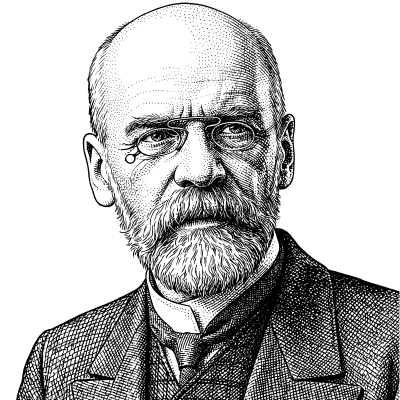
Emile Durkheim
Emile Durkheim was a pioneering French sociologist and philosopher, widely recognized alongside Karl Marx and Max Weber as one of the principal architects of modern social science. Born into a devout Jewish family in Épinal, France, Durkheim descended from a long line of rabbis. However, he broke with this tradition at an early age to lead a thoroughly secular life, dedicating his intellect to the scientific study of society rather than theology. A precocious student, Durkheim entered the prestigious École Normale Supérieure in 1879, where he studied alongside future intellectual luminaries such as Jean Jaurès and Henri Bergson. Dissatisfied with the abstract nature of traditional philosophy and the lack of a social science curriculum in France, he turned to the positivist theories of Auguste Comte and Herbert Spencer. He sought to establish sociology as a rigorous, empirical science, distinct from psychology and philosophy, capable of diagnosing social pathologies and guiding human progress. Durkheim’s academic career was defined by a prolific output of foundational texts. In 1893, he published his doctoral dissertation, The Division of Labour in Society , which introduced the concept of “anomie”—a breakdown of social norms resulting from rapid modernization. He argued that as societies evolve from primitive “mechanical” solidarity to complex “organic” solidarity, the interdependence of individuals becomes the new social glue. Two years later, he published The Rules of Sociological Method (1895) and established the first European department of sociology at the University of Bordeaux. His 1897 monograph, Suicide , pioneered the use of statistical methods in social research, demonstrating that even the most intensely personal act is influenced by social currents. Of particular relevance to the intersection of theology and human development was his final major work, The Elementary Forms of the Religious Life (1912). In this text, Durkheim analyzed religion not as a divine revelation but as a fundamental social fact—a “system of beliefs and practices relative to sacred things” that unites adherents into a single moral community. He introduced the concept of “collective consciousness” (or collective conscience), positing that the “sacred” is essentially society worshipping its own collective power. This sociological perspective suggests that while religious forms may evolve, the function of religion—to bind humanity together and preserve collective knowledge—remains a permanent and essential feature of human existence. Durkheim’s influence widened when he became a chair at the Sorbonne in Paris, where he profoundly shaped the French educational system. Tragically, his life was cut short by the First World War; devastated by the death of his son André on the war front, Durkheim died of a stroke in 1917. His legacy endures in the structural-functionalist approach to sociology and his enduring insight that human consciousness is deeply rooted in the collective social fabric.

Eric Steinhart is a Professor of Philosophy at William Paterson University and the author of Your Digital Afterlives: Computational Theories of Life After Death . His work centers on metaphysics, employing contemporary analytical and logical methods, while also exploring historical metaphysical systems such as Neoplatonism and the philosophy of Leibniz. He is particularly interested in the intersection of formal sciences and theology, with a focus on alternatives to Abrahamic religions. Steinhart’s background is diverse. He grew up on a farm and initially trained as a computer scientist and mathematician, working as a software designer for several years, during which time he obtained patents for some of his algorithms. He later pursued advanced degrees in philosophy, and his earlier philosophical work included analyses of Nietzsche and metaphor, using possible world semantics. His research extends into the realms of metaphysics and computation, and he is featured in the documentary film Chronotrip , which deals with the concept of time travel. He affirms the existence of transfinitely endless hierarchies of sets, computers, languages, games, strategies, and minds. Steinhart’s current philosophical interests align with themes of eternal progression, alternative religious movements, and the application of evolutionary theory to cosmology.

Eric G. Swedin is an American historian, novelist, and professor whose work bridges the gap between the history of science, technology, and Latter-day Saint theology. A member of the faculty at Weber State University in Ogden, Utah, Swedin serves as a professor in the History Department, where he teaches courses on the history of science and technology, as well as classes in computer science and information systems. Swedin’s academic contributions are particularly relevant to the dialogue between faith and modernity. His 2003 book, Healing Souls: Psychotherapy in the Latter-day Saint Community , explores the historical tension and eventual integration between Mormon theology and secular psychology. In this work, Swedin documents how the LDS community navigated the rise of the mental health professions, ultimately melding theological doctrines with mainstream psychiatry—a historical precedent that mirrors contemporary discussions regarding transhumanism and the integration of emerging technologies with religious practice. Beyond his work on religious history, Swedin is a recognized voice in the history of computing. He co-authored Computers: The Life Story of a Technology (2005) and edited Science Fiction and Computing: Essays on Interlinked Domains (2011), investigating how speculative fiction has influenced the development of real-world technologies. Through his dual focus on the history of technology and the rigorous imagination of alternate history, Swedin offers a unique perspective on human progress, the fragility of civilization, and the enduring role of belief in a technological age.

James N. Gardner
James Nelson Gardner (May 5, 1946 – April 10, 2021) was an American lawyer, complexity theorist, and author whose cosmological speculations placed intelligence at the generative center of the universe itself. A Yale College and Yale Law School graduate, he served as a U.S. Supreme Court clerk and Oregon state senator before devoting much of his intellectual life to a far more expansive question: why does the universe appear so precisely calibrated to produce life and mind? Gardner’s answer, developed across peer-reviewed articles in Complexity and the Journal of the British Interplanetary Society and popularized in his books Biocosm (2003) and The Intelligent Universe (2007), was the “Selfish Biocosm” hypothesis. He argued that life and intelligence are not Darwinian accidents but are hardwired into cosmic evolution—that the universe’s bio-friendliness is the inheritance of a long lineage of intelligences who, in reaching the apex of their development, reproduced the cosmos itself by spawning “baby universes” endowed with the same life-generating properties. In Gardner’s vision, the destiny of highly evolved intelligence is nothing less than the infusion of the entire universe with life and the ultimate act of cosmic creation. For those who hold that intelligence is eternal and that divine creativity operates through natural processes, Gardner’s cosmology resonates with striking depth. The arc of his thought—intelligence as not merely a product of the cosmos but its architect and heir—maps naturally onto the Mormon transhumanist conviction that humanity’s progression toward Godhood is a real, physical, and cosmologically significant endeavor. Gardner did not speak in theological terms, but his insistence that the emergence of mind is the universe’s most consequential fact, and that sufficiently advanced intelligence becomes a creative force on a universal scale, opens conceptual ground that faith traditions oriented toward theosis and eternal progression have long inhabited from a different direction.