Authors

Alan Watts
Alan Wilson Watts (1915–1973) was a British-born American philosopher, writer, and speaker best known for popularizing Eastern philosophy—particularly Zen Buddhism, Taoism, and Hinduism—for Western audiences. He remains one of the most influential interpreters of Asian religious thought in the twentieth century. Watts began his career in England, where he was involved with the Buddhist Lodge in London. He later moved to the United States, briefly serving as an Episcopal priest before leaving the ministry to pursue a broader philosophical vocation. He became a professor and dean at the American Academy of Asian Studies in San Francisco and authored over twenty-five books, including The Way of Zen (1957), Psychotherapy East and West (1961), and The Book: On the Taboo Against Knowing Who You Are (1966). His lectures, many of which survive as recordings, continue to reach millions worldwide. Watts’s central teaching—that the individual self and the universe are fundamentally one—resonates with Mormon Transhumanist themes of theosis and the expansive potential of consciousness. His insistence that human beings are not merely in the universe but of it, expressions of a deeper cosmic process, parallels the tradition’s interest in humanity’s divine trajectory. However, significant differences exist. Watts generally rejected the concept of a personal God, viewing divinity as an impersonal process rather than a being with whom one could have a relationship. He was skeptical of doctrines of sin and moral depravity, seeing guilt as a psychological obstacle rather than a theological reality. He also questioned the Western emphasis on individual free will, favoring a view of spontaneous action aligned with Taoist wu wei . Despite these divergences, his lifelong project of dissolving boundaries between the sacred and the secular, the human and the divine, offers rich material for dialogue with Mormon Transhumanist thought.

Brigham Young
Brigham Young (1801–1877) was the second president of The Church of Jesus Christ of Latter-day Saints, the architect of the Mormon migration to the Great Basin, and the founding governor of Utah Territory. As the organizing genius behind the settlement of the American West, he directed the colonization of more than 300 towns, established institutions of commerce and education, and shaped a distinctive religious civilization from the desert floor. Born in Whitingham, Vermont, Young converted to the restored church in 1832 after years of searching among the Methodist and Reformed faiths. He rose quickly through the Quorum of the Twelve Apostles, led the harrowing evacuation of Nauvoo following Joseph Smith’s martyrdom in 1844, and guided an exodus of tens of thousands across the plains to the Salt Lake Valley in 1847. As church president for thirty years, he presided over the construction of the Salt Lake Temple, founded the University of Deseret, championed the Perpetual Emigration Fund to gather converts from Europe, and negotiated—not always successfully—the church’s uneasy relationship with the federal government. What the historical record reveals, and what Young’s own sermons confirm at every turn, is a mind constitutionally unwilling to divide the sacred from the natural. He taught that God operates by law, that miracles are simply “results or effects of causes hidden from our understandings,” and that every discovery in science and art has been “given by direct revelation from God.” The telegraph, the steam engine, the plow—all were, in his view, eternal principles progressively disclosed to a humanity climbing upward from its infancy. Science and religion were not rivals in his theology but two names for the same structured reality: “there is no true religion without true science, and consequently there is no true science without true religion.” This integration carried moral weight. Young urged the Saints to become a thinking people, warning against the spiritual danger of surrendering judgment to leaders rather than seeking personal revelation—a remarkable insistence on epistemic independence from a man who wielded considerable institutional authority. His vision of human destiny was correspondingly expansive. He affirmed that God “was once a man in mortal flesh as we are” and that humanity is “organized to become Gods,” called to exercise creative authority over matter across eternal worlds. He taught that identity—the preservation of the self through resurrection and exaltation—is “the greatest gift that God can bestow,” and he framed mortality as the school in which that self is forged through trial, independent thought, and disciplined living. His counsel to “prepare to live” rather than merely to die, and to extend healthy life by understanding natural law, anticipates a tradition of practical, body-affirming faith that takes seriously both the present body and its glorified future. Young remains a towering, complicated figure whose earthly administration included serious moral failures; yet his theological instinct—that intelligence, technology, and theosis belong to a single continuous story—endures as one of the most generative ideas in the Latter-day Saint tradition.

Carl Sagan
Carl Edward Sagan (1934–1996) was an American astronomer, planetary scientist, cosmologist, and one of the most influential science communicators of the twentieth century. His ability to convey the wonder of the cosmos to a broad public audience made him a defining figure in popular science. Sagan spent much of his career at Cornell University, where he served as a professor of astronomy and director of the Laboratory for Planetary Studies. He contributed significantly to planetary science, including research on the atmospheres of Venus and Titan, and played a key role in NASA’s Mariner, Viking, Voyager, and Galileo missions. He helped design the Pioneer plaque and the Voyager Golden Record—messages from humanity launched into interstellar space. His 1980 television series Cosmos: A Personal Voyage became one of the most widely watched programs in public television history, and his novel Contact (1985) explored humanity’s first encounter with extraterrestrial intelligence. Sagan was a passionate advocate for scientific literacy, critical thinking, and the search for life beyond Earth. While he identified as an agnostic and approached questions of God and transcendence through a scientific lens, his work resonated deeply with themes central to transhumanist thought: the aspiration to transcend present human limitations, the ethical stewardship of technology, and a profound reverence for the potential of conscious life in the universe. His famous declaration that “we are a way for the cosmos to know itself” echoes theological ideas of humanity’s participatory role in creation and theosis—the notion that intelligent beings may grow toward ever-greater understanding, compassion, and capacity. Sagan’s legacy continues to inspire those who see science and wonder as complementary paths toward human flourishing.
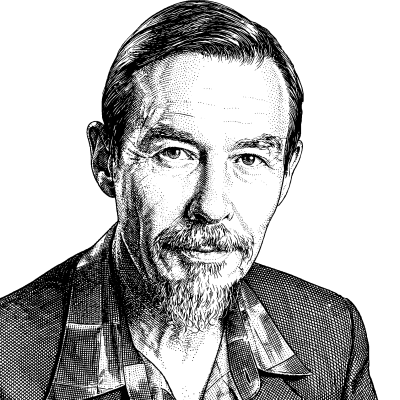
Carver Mead
Carver Mead (born 1934) is an American engineer, physicist, and pioneer of modern microelectronics whose foundational contributions to semiconductor theory and very-large-scale integration (VLSI) helped make the silicon age possible. A Gordon and Betty Moore Professor Emeritus of Engineering and Applied Science at the California Institute of Technology, Mead spent decades at the frontier of what computation could become, both as a theorist and as a practical builder of systems. Mead’s career achievements span an extraordinary range. He developed key models for understanding transistor behavior at the nanoscale, co-authored (with Lynn Conway) the landmark 1980 textbook Introduction to VLSI Systems , and essentially invented the methodology by which engineers design the dense integrated circuits that now inhabit every corner of modern life. He also pioneered neuromorphic engineering—the design of circuits that mimic the computational architecture of biological neural systems—and founded companies that applied these principles to sensory processing and analog computation. In 2022, he was awarded the Harold Pender Award; earlier recognition includes the Lemelson-MIT Prize and the National Medal of Technology and Innovation. What distinguishes Mead as a thinker is not only what he built but how he understood the act of building. He insisted that Moore’s Law is fundamentally a story about human belief: “Moore’s Law is really a thing about human activity, it’s about vision, it’s about what you’re allowed to believe. Because people are really limited by their beliefs, they limit themselves by what they allow themselves to believe about what is possible.” In this reading, technological progress is not an autonomous material force but a function of expanded imagination—a civilizational act of faith in possibility. This framing resonates deeply with traditions that locate human creativity within a larger divine economy, where intelligence, rightly directed and disciplined by moral courage, participates in the ongoing work of creation. Mead’s insistence that the boundary between what is and what could be is first a boundary of belief, and only second a boundary of physics, echoes the Mormon transhumanist conviction that humanity’s divine future is not given passively but willed, practiced, and built—one hard-won increment of understanding at a time.

Clifford Geertz
Clifford Geertz (1926-2006) was an American cultural anthropologist who changed how scholars think about religion, ritual, and meaning. Trained at Harvard and shaped by fieldwork in Java, Bali, and Morocco, he built his career on a conviction that culture is not a set of behaviors to be measured but a web of significance to be read, the way one reads a text. He taught at the University of Chicago before settling at the Institute for Advanced Study in Princeton, where he spent the latter half of his career writing some of the most widely cited books in the social sciences. Geertz called his method “thick description”: rather than explain a Balinese cockfight or a Javanese funeral by reducing it to biology or economics, he asked what the practice meant to the people inside it, and what it revealed about how they organized their sense of reality. This approach ran through his major works, including The Religion of Java , The Interpretation of Cultures , and Negara: The Theatre State in Nineteenth-Century Bali . His most quoted formulation defined religion as a system of symbols that establishes durable moods and motivations in people by framing a general order of existence and making that framing feel simply real. The definition is spare on purpose, and its reach turns out to exceed anything Geertz set out to catalogue. Because it locates religion in function rather than in a list of approved doctrines or institutions, it travels easily to commitments that never call themselves religious at all. Researchers who study what has come to be called implicit religion have used exactly this move to read nationalism, therapeutic self-help, environmentalism, and various strands of secular humanism as systems that generate the same durable moods and motivations, the same felt sense of a general order of existence, that Geertz found in Java and Bali. Even certain critiques of religion turn out to run on the pattern they attack: a conviction that history bends toward a certain outcome, a set of rituals of dissent, a community bound by shared moral certainty. None of this requires supernatural claims. It only requires that a symbol system do the work religion has always done, which is to make an account of reality feel like the account of reality. That insight matters for anyone thinking about religion as something people build and inhabit rather than only something they are handed. Geertz kept his own account descriptive, declining to adjudicate whether any given order of existence is true. But a tradition that treats faith as trust translated into action, and treats every serious human commitment as evidence of something worth taking seriously about how people orient toward transformation, finds in Geertz’s account not a rival theory but a working description of the machinery, machinery that operates whether the community calls its ultimate concern God, history, nature, or humanity’s own unrealized potential.
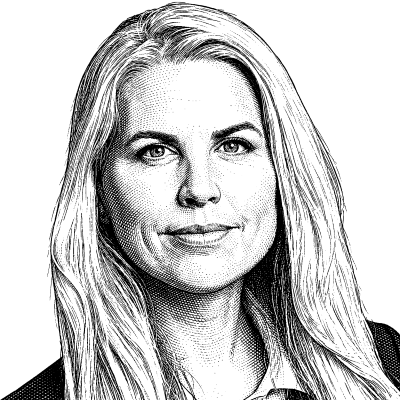
Elizabeth Parrish is the CEO of BioViva, a biotechnology corporation focused on combating cellular aging through the development of regenerative therapies for muscle and tissue. Driven by a humanitarian vision, BioViva strives to make these potentially life-saving therapies accessible to all. Parrish is recognized as a humanitarian entrepreneur, innovator, and a prominent voice advocating for genetic cures. As a strong proponent of education and advancement in regenerative medicine, she is a motivational speaker within the life sciences community and actively engages in international educational media outreach. She is also a founding member of the International Longevity Alliance. Further demonstrating her commitment to scientific discourse and discovery, Parrish is an affiliated member of the Complex Biological Systems Alliance (CBSA), a platform for highly gifted individuals. The CBSA’s mission is to advance scientific understanding of biological complexity and the origins of human disease. She also founded BioTrove Investments, LLC, and BioTrove Podcasts, initiatives dedicated to facilitating learning and funding research in the field of regenerative medicine. Though not raised religiously, Parrish expresses a reverence for nature and emphasizes the importance of self-reliance and action in achieving progress, urging individuals to actively utilize the tools available to them rather than waiting for others.
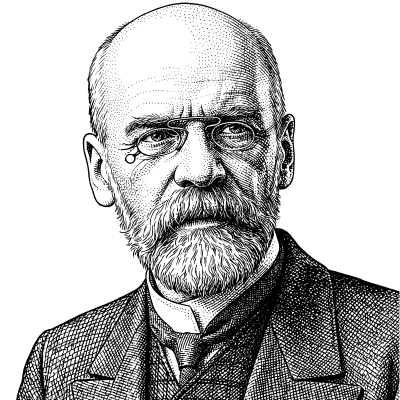
Emile Durkheim
Emile Durkheim was a pioneering French sociologist and philosopher, widely recognized alongside Karl Marx and Max Weber as one of the principal architects of modern social science. Born into a devout Jewish family in Épinal, France, Durkheim descended from a long line of rabbis. However, he broke with this tradition at an early age to lead a thoroughly secular life, dedicating his intellect to the scientific study of society rather than theology. A precocious student, Durkheim entered the prestigious École Normale Supérieure in 1879, where he studied alongside future intellectual luminaries such as Jean Jaurès and Henri Bergson. Dissatisfied with the abstract nature of traditional philosophy and the lack of a social science curriculum in France, he turned to the positivist theories of Auguste Comte and Herbert Spencer. He sought to establish sociology as a rigorous, empirical science, distinct from psychology and philosophy, capable of diagnosing social pathologies and guiding human progress. Durkheim’s academic career was defined by a prolific output of foundational texts. In 1893, he published his doctoral dissertation, The Division of Labour in Society , which introduced the concept of “anomie”—a breakdown of social norms resulting from rapid modernization. He argued that as societies evolve from primitive “mechanical” solidarity to complex “organic” solidarity, the interdependence of individuals becomes the new social glue. Two years later, he published The Rules of Sociological Method (1895) and established the first European department of sociology at the University of Bordeaux. His 1897 monograph, Suicide , pioneered the use of statistical methods in social research, demonstrating that even the most intensely personal act is influenced by social currents. Of particular relevance to the intersection of theology and human development was his final major work, The Elementary Forms of the Religious Life (1912). In this text, Durkheim analyzed religion not as a divine revelation but as a fundamental social fact—a “system of beliefs and practices relative to sacred things” that unites adherents into a single moral community. He introduced the concept of “collective consciousness” (or collective conscience), positing that the “sacred” is essentially society worshipping its own collective power. This sociological perspective suggests that while religious forms may evolve, the function of religion—to bind humanity together and preserve collective knowledge—remains a permanent and essential feature of human existence. Durkheim’s influence widened when he became a chair at the Sorbonne in Paris, where he profoundly shaped the French educational system. Tragically, his life was cut short by the First World War; devastated by the death of his son André on the war front, Durkheim died of a stroke in 1917. His legacy endures in the structural-functionalist approach to sociology and his enduring insight that human consciousness is deeply rooted in the collective social fabric.
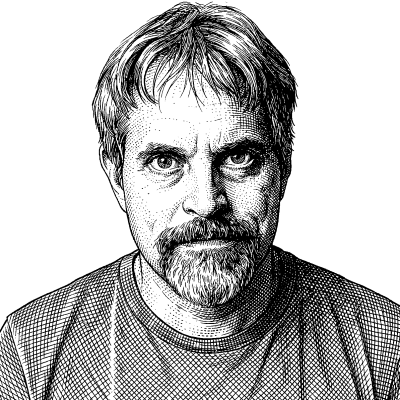
Eric Steinhart is a Professor of Philosophy at William Paterson University and the author of Your Digital Afterlives: Computational Theories of Life After Death . His work centers on metaphysics, employing contemporary analytical and logical methods, while also exploring historical metaphysical systems such as Neoplatonism and the philosophy of Leibniz. He is particularly interested in the intersection of formal sciences and theology, with a focus on alternatives to Abrahamic religions. Steinhart’s background is diverse. He grew up on a farm and initially trained as a computer scientist and mathematician, working as a software designer for several years, during which time he obtained patents for some of his algorithms. He later pursued advanced degrees in philosophy, and his earlier philosophical work included analyses of Nietzsche and metaphor, using possible world semantics. His research extends into the realms of metaphysics and computation, and he is featured in the documentary film Chronotrip , which deals with the concept of time travel. He affirms the existence of transfinitely endless hierarchies of sets, computers, languages, games, strategies, and minds. Steinhart’s current philosophical interests align with themes of eternal progression, alternative religious movements, and the application of evolutionary theory to cosmology.

F. Scott Fitzgerald
Francis Scott Key Fitzgerald (1896–1940) was an American novelist, essayist, and short story writer widely regarded as one of the greatest American authors of the twentieth century. He is best known for his novels depicting the era he named “the Jazz Age,” particularly The Great Gatsby (1925), which has become a cornerstone of American literary canon and a profound meditation on ambition, reinvention, and the limits of human aspiration. Fitzgerald’s career was marked by early success and later struggle. His debut novel, This Side of Paradise (1920), made him famous at twenty-three, and he became a celebrity chronicler of the Roaring Twenties alongside his wife, Zelda. His major works—including Tender Is the Night (1934) and the unfinished The Last Tycoon —explored themes of wealth, love, disillusionment, and the American Dream. He published prolifically in magazines such as The Saturday Evening Post to support his lifestyle, though his literary reputation declined in his later years. He died of a heart attack at forty-four in Hollywood, where he had been working as a screenwriter. Fitzgerald’s literary legacy resonates with questions central to Mormon Transhumanism, though often in a tragic register. His work obsessively examines the human yearning for self-transcendence—Jay Gatsby’s attempt to remake himself, to “repeat the past,” and to achieve a kind of personal transfiguration through sheer will. Yet Fitzgerald characteristically frames these aspirations as doomed by human frailty, moral failure, and the entropic pull of time. The famous closing line of The Great Gatsby —“So we beat on, boats against the current, borne back ceaselessly into the past”—suggests a vision fundamentally at odds with the Mormon Transhumanist confidence that humanity can, through ordained means, actually achieve the transcendence it longs for. Fitzgerald was raised Catholic and retained a complex, often ambivalent relationship with faith throughout his life. His work rarely engages with theosis or divine grace as real possibilities; instead, it tends toward an elegiac naturalism in which human striving, however beautiful, ultimately fails without access to any redemptive framework beyond the self. This positions his worldview in genuine contrast with Mormon Transhumanism’s affirmation that compassionate creation and glorification are attainable destinies rather than merely beautiful illusions. Nevertheless, his penetrating exploration of the desire for transcendence—and his honesty about what happens when that desire is pursued without grace—makes his work a powerful companion text for anyone reflecting on the relationship between aspiration and redemption.
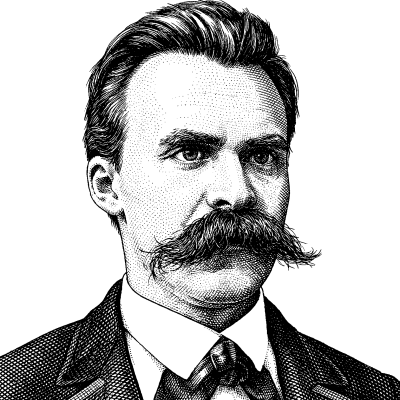
Friedrich Nietzsche
Friedrich Wilhelm Nietzsche (1844–1900) was a German philosopher, cultural critic, and philologist whose provocative ideas about morality, religion, and human potential have profoundly influenced modern thought. His concept of the ‘Übermensch’ (often translated as ‘overman’ or ‘superman’) and his call for humanity to transcend conventional values have made him a touchstone for transhumanist philosophy, even as his ideas remain subject to intense debate and varying interpretations. Born in Röcken, Prussia, Nietzsche was the son of a Lutheran pastor who died when Friedrich was four years old. He showed exceptional academic ability and became a professor of classical philology at the University of Basel at the remarkably young age of twenty-four. However, chronic illness forced his retirement from teaching in 1879, after which he spent the next decade as an independent philosopher, living modestly in boarding houses across Switzerland, Italy, and France while producing his most important works. Nietzsche’s major works—including Thus Spoke Zarathustra , Beyond Good and Evil , On the Genealogy of Morality , and The Gay Science —challenged the foundations of Western morality and religion. He famously proclaimed that ‘God is dead,’ not as a celebration but as a diagnosis of modern culture’s loss of transcendent meaning. His response was to call for a ‘revaluation of all values’ and the emergence of individuals who could create new meaning through the exercise of will. The concept of the Übermensch represents Nietzsche’s vision of human potential. Rather than a biological superman, Nietzsche envisioned a human being who had overcome the limitations of conventional morality to create new values and embrace life fully. This figure would say ‘yes’ to existence, including its suffering, through what Nietzsche called amor fati —love of fate. The Übermensch was to be the meaning of the earth, replacing otherworldly hopes with earthly creativity and self-overcoming. In 1889, Nietzsche suffered a mental collapse from which he never recovered, spending his final years in the care of his mother and sister. Despite the tragic end of his productive life, his influence only grew after his death. Transhumanists have drawn on his vision of human self-transcendence, though they typically emphasize technological means of enhancement that Nietzsche himself never contemplated. His insistence that humanity is ‘something to be overcome’ and his rejection of static human nature resonate with contemporary projects aimed at expanding human capabilities.