Authors
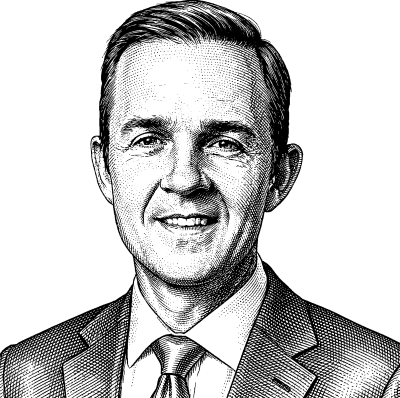
Carl Youngblood co-founded the MTA in 2006 and has served as its President and CEO since 2021. He is engaged with the Association’s efforts to explore the intersection of Mormon theology and transhumanist philosophy. Among the many initiatives that Carl has been involved with, he has designed and built the Association’s current website, which unifies all prior content in a single location using inspiring visuals and animations. Youngblood’s professional career spans more than two decades of full-stack software development at the intersection of Silicon Slopes and Silicon Valley. He was an early employee at Omniture (acquired by Adobe), a founding engineering leader at Divvy (a Utah-based unicorn startup), co-founder of Blockscale LLC (a blockchain services firm eventually contracted into Coinbase), and Senior Solutions Architect for Amazon Managed Blockchain at AWS. His technical fluency ranges from scalable web architecture to blockchain infrastructure—the kind of deep engineering experience that grounds his theological speculation in working knowledge of the systems he writes about. Under his leadership, the Association has developed its mission of promoting abundant human flourishing through the compassionate use of science and technology, fostering dialogue across secular and religious audiences and arguing that each has something essential to learn from the other. His writing, collected on his blog From the Depths , spans over a decade of conference presentations and theological essays: meditations on participatory resurrection, the alignment of artificial intelligence read through the Grand Council narrative, intelligence as eternal and multifaceted, and religion as social technology. He writes, as a colleague has observed, with warmth and accessibility on questions of momentous practical consequence—how to navigate faith crisis without losing faith’s power, how to think about resurrection as something we actively participate in rather than passively receive. Youngblood’s distinctive contribution to transhumanism is the integration of serious technical expertise with serious theological reflection. He embodies the Mormon transhumanist conviction that scientific and spiritual development are not parallel tracks but a single path—that the learning required to build better systems is continuous with the exaltation Mormon theology envisions, and that human ingenuity, rightly oriented, is itself a divine imperative.

Charles Randall Paul is the founder and president of the Foundation for Religious Diplomacy, an organization based in New York and Utah dedicated to fostering trust between religious critics and rivals. Recognizing the need for constructive online dialogue, he co-founded The World Table, a software platform designed to facilitate respectful conversations on the internet. Paul’s academic background spans diverse fields. He holds a B.S. in Social Psychology from Brigham Young University, an MBA from Harvard University, and a Ph.D. from the University of Chicago Committee on Social Thought. This interdisciplinary approach informs his work on religious diplomacy and online discourse. Prior to his academic pursuits, Paul had a career as a commercial real estate developer. Influenced by thinkers such as William James, Jonathan Haidt, and Chantal Mouffe, Paul’s work explores themes of radical empiricism, personalism, and agonistic pluralism. His perspectives, rooted in Mormon theology and Joseph Smith’s notions of Zion, challenge conventional assumptions about knowledge and behavior, especially in the context of conflict and cooperation. He draws insight from the Mormon mythological example of the war in heaven, highlighting that knowledge doesn’t necessarily ensure moral behavior. Paul is married to Jan, and together they have five children and fifteen grandchildren.

Charles W. Penrose
Charles W. Penrose (1832–1925) was a British-born Latter-day Saint apostle, editor, poet, and theologian whose six-decade career as a writer and church leader made him one of the most intellectually formidable figures in nineteenth- and early twentieth-century Mormonism. Born in London, Penrose converted to the Church of Jesus Christ of Latter-day Saints in 1850 and emigrated to Utah in 1861. He served as editor of the Deseret News for two significant stints and became one of the church’s most prolific public intellectuals, writing doctrinal essays, hymns—including the beloved O Ye Mountains High —and polemical defenses of Mormon theology. He was ordained an apostle in 1904 and served as Second Counselor in the First Presidency under Presidents Joseph F. Smith and Heber J. Grant until shortly before his death. What distinguished Penrose among his contemporaries was the rigor he brought to questions of religious authority and rational inquiry. His conviction that revelation must be investigated rather than merely received—that the Saints should weigh prophetic claims with active, disciplined intelligence rather than passive deference—reflects a deeply epistemically serious faith. “We respect him,” he wrote of a sitting church president, “but we do not believe his personal views or utterances are revelations from God; and when ‘Thus saith the Lord,’ comes from him, the saints investigate it.” This is not skepticism at the expense of faith; it is faith disciplined by the same intelligence that Mormon theology declares co-eternal with God. Penrose understood that genuine trust in divine communication requires the full exercise of human reason, not its suspension. That conviction connects naturally to the broader Mormon vision of theosis—the idea that intelligence, rightly cultivated, is itself the stuff of eternal progression. Penrose spent his life insisting that Latter-day Saints be not merely believing but thinking believers, capable of distinguishing personal opinion from revelation, tradition from truth. In a tradition that affirms the mind and the spirit as inseparable, his legacy is a reminder that the path toward Godhood runs through honest inquiry as surely as it runs through covenant and community.

D. H. Fowler
David Henry Fowler was an American educator, writer, and civic leader in the state of Utah, known for his decades of service in public education and his editorial contributions to early twentieth-century Latter-day Saint periodical literature. Born on May 8, 1879, in Hooper, Weber County, Utah, Fowler was the son of Samuel Fowler and Rachel Taylor. He was raised in a pioneer Latter-day Saint household during a formative period in Utah’s territorial and early statehood history, and from an early age demonstrated an aptitude for study that would shape the trajectory of his life’s work. In 1906, Fowler was called to serve a proselytizing mission for The Church of Jesus Christ of Latter-day Saints in the Northern States Mission. His capabilities as a writer and communicator were soon recognized, and he was transferred to the mission headquarters in Independence, Missouri, where he was appointed Associate Editor of Liahona, the Elders’ Journal . This publication—one of the principal periodicals serving missionaries and members outside the Intermountain West—provided doctrinal instruction, mission news, and devotional literature to a wide readership. Fowler’s editorial labors placed him among a small circle of early twentieth-century Latter-day Saint writers helping to amplify the voice of the Church during a period of expanding national presence. Fowler pursued higher education at the University of Utah, completing his degree in 1919. His academic pursuits translated directly into a career in public education, where he rose to serve as both a high school principal and a superintendent of schools in Emery and Summit counties, Utah. In these roles, Fowler shaped the educational foundations of two rural communities at a formative moment in Utah’s development as a state, helping to build institutional structures that would serve generations of students. Fowler’s career reflected a lifelong conviction that education, faith, and community progress were inseparable. As an administrator, he worked to extend the reach of secondary schooling into communities whose economic realities often competed with classroom attendance, and as a writer and editor he helped articulate the intellectual and spiritual aspirations of his religious tradition for a dispersed readership.

Dallin Bradford is a second-generation Mormon transhumanist and speaker at MTA conferences.
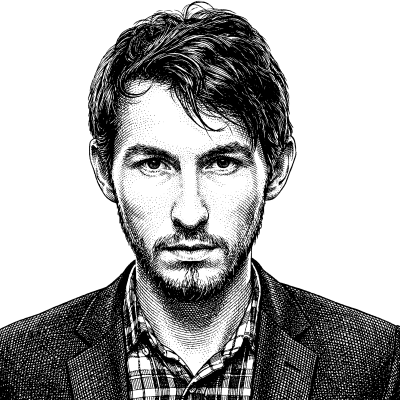
Donald Bradley Jr. , affectionately known as Donnie, is a speaker and thinker exploring the intersection of transhumanism, art, and theology. Although chronologically 84 years old, Bradley has benefited from advanced life extension technologies that have rejuvenated his physical appearance to resemble someone closer to 18. He is a member of the Mormon Transhumanist Association. Bradley’s intellectual pursuits are wide-ranging, encompassing theoretical computer science, cybernetics, foundations of mathematics, algorithmic information theory, the psychology of creativity, literary studies, and cognitive poetics. His work explores the aesthetic sense of a god, and its relation to artistic practice and religious transhumanist quests. He is particularly interested in the works of Jorge Luis Borges, viewing Borges’ creations as a laboratory for godhood and an exemplary artist for transhumanists. He argues that in art, we are doing the work of a god in microcosm, training for eventual godhood. He points to Borges’ themes of eternity, and his ability to predict future developments in a way that is training for eventual godhood and a significant religious practice. Bradley explores the idea of literature and its relation to Mormon theology.

John A. Widtsoe
John Andreas Widtsoe (1872–1952) was a Norwegian-American scientist and apostle who brought a unique synthesis of scientific rigor and religious faith to his Church service. Born on an island among fisherfolk in Norway, he emigrated to Utah after his mother’s conversion. He graduated from Harvard with the highest honors and earned his doctorate from the University of Gottingen in Germany. Widtsoe became renowned for his expertise in irrigation and dry farming, serving as director of the Utah Agricultural Experiment Station and later as president of both Utah State Agricultural College and the University of Utah. He was called to the Quorum of the Twelve in 1921 and later served as president of the European Mission. A prolific author, Widtsoe wrote A Rational Theology and Evidences and Reconciliations , which addressed common questions about faith and doctrine. His marriage to Leah Dunford, granddaughter of Brigham Young, united him with a distinguished Church lineage. Despite personal tragedy, losing four of his seven children in infancy, he maintained a life of faithful service.
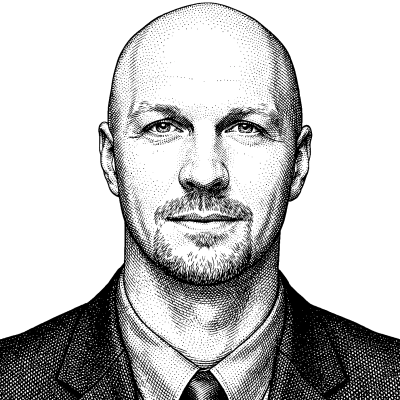
John Niman is a legal scholar and writer with a particular interest in the intersection of law, religion, and emerging technologies. He is currently pursuing legal research on the Free Exercise Clause of the US Constitution, particularly as it relates to the regulation of genetic engineering and other scientific advancements. Niman’s work explores the potential for religious exemptions to accelerate scientific discovery, arguing that the constitutional protections afforded to religious practices could provide a unique pathway for innovation in areas that might otherwise be constrained by secular regulations. His analysis considers how Mormon transhumanist beliefs might qualify for such legal protections. Niman is a frequent contributor to online publications focused on transhumanism and emerging technologies, including the Institute for Ethics at Emerging Technologies (IEET), Transhumanity.net, and H Plus Magazine . His writings delve into the ethical and legal implications of rapidly advancing technologies and their impact on society.

John Taylor
John Taylor (1808–1887) served as the third president of The Church of Jesus Christ of Latter-day Saints from 1880 until his death. Born in Milnthorpe, England, he immigrated to Canada in 1832 and converted to the Church in 1836. Known as the “Champion of Liberty,” he edited several Church publications and served multiple missions to England and France. Taylor was present in Carthage Jail when Joseph and Hyrum Smith were martyred in 1844. Shot five times, he survived and was thereafter known as a “living martyr.” He is remembered for singing “A Poor Wayfaring Man of Grief” at Hyrum’s request shortly before the attack. As Church President, Taylor led the Saints during intense federal persecution over plural marriage. The Edmunds Act of 1882 forced him into hiding for the last years of his life, during which he established colonies of refuge in Mexico and Canada. He died on July 25, 1887, still maintaining his convictions about religious liberty.
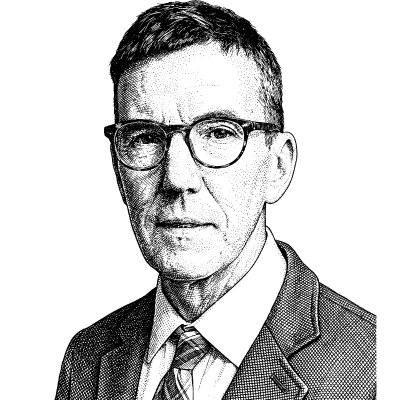
Jon Bialecki is a Continuing Lecturer in the Department of Anthropology at the University of California, San Diego, a position he has held since 2020. His research centers on the anthropology of religion, the anthropology of the subject, ontology and temporality, religious language ideology, and religious transhumanist movements. He approaches these topics with a keen interest in religious authority and its intersections with other authoritative discourses, such as science. Bialecki’s prior work includes a major field project with Southern California evangelicals, where he studied Pentecostal practices and the constitution of religious authority. This groundwork led to his current participant observation research focused on the Mormon Transhumanist Association (MTA). He holds a BA, MA, and PhD from the University of California, San Diego, as well as a JD from the University of San Diego. His work has appeared in numerous edited volumes and in academic journals such as the South Atlantic Quarterly , American Ethnologist , Anthropological Theory , and the Journal of the Royal Anthropological Institute . He also served as co-editor for a special issue of Anthropological Quarterly focusing on Christian language ideology.