Authors

Benjamin Peters
Benjamin Peters (born 1980) is an American media scholar, author, and professor known for his work on the history of communication technologies, information theory, and the social dimensions of digital networks. He serves as the Hazel Rogers Professor of Communication at the University of Tulsa and has held affiliations with several prominent research institutions. Peters is best known for his book How Not to Network a Nation: The Uneasy History of the Soviet Internet (2016), which explores the failed attempts to build a nationwide computer network in the Soviet Union and examines how social and political systems shape technological development. The work received widespread acclaim for its interdisciplinary approach, bridging media studies, history, and science and technology studies. He has also edited Digital Keywords: A Vocabulary of Information Society and Culture (2016), contributing to critical discourse around the language and concepts underpinning the digital age. Peters’s scholarship carries resonance for those interested in the intersection of technology, human potential, and collective aspiration. By investigating how societies envision and fail to realize transformative technological projects, his work illuminates the deeply human—and often ideological—dimensions of networked communication. His research reminds us that the tools we build to connect and elevate humanity are always embedded in moral, political, and even spiritual frameworks. For communities exploring themes of theosis and the cooperative pursuit of transcendence through technology, Peters’s insights into the promises and pitfalls of networked societies offer valuable perspective on how human aspiration and systemic constraints interact in the ongoing project of building a better world.

Blaire Ostler is a philosopher, author, and artist whose work explores the intersection of Mormon theology, transhumanism, and human identity. A ninth-generation Latter-day Saint, she has been a notable voice in conversations about the synthesis of religious tradition with technological progress and expanding theological inquiry. Ostler holds a Bachelor of Fine Arts in Design from the International Academy of Design and Technology–Seattle. Her background as an abstract modern artist deeply informs her philosophical work. Her paintings, characterized by their exploration of aesthetics and form, can be found in residences and businesses throughout Seattle. This artistic sensibility extends to her writing, where she examines the boundaries of traditional categories to explore a more expansive understanding of divinity and humanity. Ostler is the author of Queer Mormon Theology: An Introduction (2021), in which she engages with Mormon doctrinal concepts such as the nature of the divine, the significance of Heavenly Mother, and the potential for technological resurrection. Her involvement with the Mormon Transhumanist Association has been significant; she served on the Board of Directors for six years and as CEO from 2016 to 2018. Her transhumanist vision emphasizes active discipleship, where humanity participates in the work of God through morphological freedom and cognitive liberty. Blaire continues to write, paint, and speak on themes of identity, truth, and beauty, exploring the relationship between the human and the divine.

Cameron Dayton is an American video game creative director, novelist, and writer known for his work in the gaming industry and speculative fiction. He has held prominent creative roles at several major studios, contributing to well-known franchises and original intellectual properties. Dayton served as creative director at Certain Affinity and has worked in narrative and creative leadership positions across the video game industry. He is also the author of the novel Etherwalker , a science-fantasy work set in a far-future world where technology and myth have intertwined, exploring themes of lost civilizations, human potential, and the rediscovery of powerful ancient technologies. His fiction often inhabits the intersection of epic fantasy and science fiction, imagining futures in which humanity’s relationship with technology is both perilous and transformative. Dayton has roots in the Latter-day Saint community, and his creative work reflects an imagination shaped by themes resonant with Mormon Transhumanist thought—particularly the idea that humanity’s trajectory involves the responsible stewardship of extraordinary power, and that the boundaries between the mundane and the transcendent are more porous than they appear. His speculative worlds frequently explore the tension between knowledge and wisdom, technological mastery and moral responsibility, echoing the Mormon Transhumanist conviction that scientific and technological progress are inseparable from ethical and spiritual development. His storytelling invites readers to consider what it means for ordinary individuals to inherit or rediscover capacities that border on the divine—a narrative arc that parallels the Latter-day Saint doctrine of theosis and the transhumanist aspiration toward radical human flourishing.

Chris Bradford is a co-founder and former president of the Mormon Transhumanist Association. He has a background in helping people explore and understand their ancestral histories, having worked for a company dedicated to genealogy. He recognizes the powerful impact of understanding and shaping the stories of our past on our understanding of ourselves. His interests include the intersection of transhumanism, Mormonism, and historical narratives, particularly as they relate to themes of memory, identity, and community. Visiting from his home in Switzerland, Bradford brings an international perspective to the Mormon Transhumanist Association. His conference talks often explore the concept of “redeeming our dead,” drawing parallels between ghost stories, genealogical research, and the transhumanist aspiration to enhance and extend life.

Cynthia Bailey is a lecturer in computer science at Stanford University. A dedicated educator, her research focuses on best practices in computer science education, with a particular emphasis on promoting inclusiveness in the tech industry. She is known for her thoughtful and well-researched contributions to discussions surrounding women in technology and the queer community. Beyond her work in computer science, Cynthia Bailey has been actively engaged in exploring the intersection of Mormonism and modern life. For a time she blogged about Mormon life on By Common Consent , providing insights and perspectives on faith in a contemporary context. Her presentation at the Sunstone West 2016 highlighted her interest in bringing together her professional expertise and her engagement with Mormon themes, specifically addressing the underrepresentation of women in technology within the Mormon community and exploring the potential of gospel principles in empowering girls’ coding initiatives. Cynthia resides in Palo Alto. She is esteemed for her quiet dedication to life-altering ideas, community building, and insightful contributions to discussions related to technology, social issues, and faith.

Elicia A. Grist
British actress Elicia Allely Grist lived from 1827 to 1898. She joined the Church of Jesus Christ of Latter-day Saints in May 1853, approximately five months following her husband, John Grist’s conversion. Her decision to join the church came at a significant personal cost, as her parents responded by disinheriting her. Throughout their lives together, the Grist family relocated frequently across England and Ireland, residing in Birmingham, Dublin, and Liverpool. The period in which Grist lived coincided with Britain’s Industrial Revolution, an era marked by sweeping economic, social, cultural, and political transformations. Among these changes was the invention of the steam printing press, which democratized access to printed materials and made them available to the expanding working class. This flourishing print culture provided a valuable public forum where individuals like Grist could articulate their values freely and document their religious experiences.
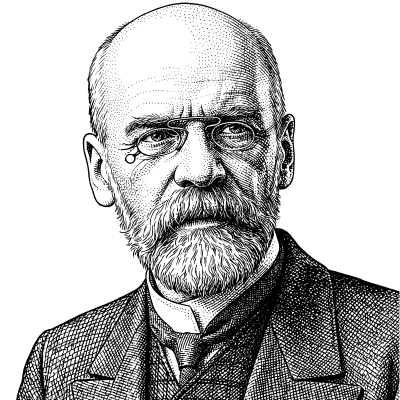
Emile Durkheim
Emile Durkheim was a pioneering French sociologist and philosopher, widely recognized alongside Karl Marx and Max Weber as one of the principal architects of modern social science. Born into a devout Jewish family in Épinal, France, Durkheim descended from a long line of rabbis. However, he broke with this tradition at an early age to lead a thoroughly secular life, dedicating his intellect to the scientific study of society rather than theology. A precocious student, Durkheim entered the prestigious École Normale Supérieure in 1879, where he studied alongside future intellectual luminaries such as Jean Jaurès and Henri Bergson. Dissatisfied with the abstract nature of traditional philosophy and the lack of a social science curriculum in France, he turned to the positivist theories of Auguste Comte and Herbert Spencer. He sought to establish sociology as a rigorous, empirical science, distinct from psychology and philosophy, capable of diagnosing social pathologies and guiding human progress. Durkheim’s academic career was defined by a prolific output of foundational texts. In 1893, he published his doctoral dissertation, The Division of Labour in Society , which introduced the concept of “anomie”—a breakdown of social norms resulting from rapid modernization. He argued that as societies evolve from primitive “mechanical” solidarity to complex “organic” solidarity, the interdependence of individuals becomes the new social glue. Two years later, he published The Rules of Sociological Method (1895) and established the first European department of sociology at the University of Bordeaux. His 1897 monograph, Suicide , pioneered the use of statistical methods in social research, demonstrating that even the most intensely personal act is influenced by social currents. Of particular relevance to the intersection of theology and human development was his final major work, The Elementary Forms of the Religious Life (1912). In this text, Durkheim analyzed religion not as a divine revelation but as a fundamental social fact—a “system of beliefs and practices relative to sacred things” that unites adherents into a single moral community. He introduced the concept of “collective consciousness” (or collective conscience), positing that the “sacred” is essentially society worshipping its own collective power. This sociological perspective suggests that while religious forms may evolve, the function of religion—to bind humanity together and preserve collective knowledge—remains a permanent and essential feature of human existence. Durkheim’s influence widened when he became a chair at the Sorbonne in Paris, where he profoundly shaped the French educational system. Tragically, his life was cut short by the First World War; devastated by the death of his son André on the war front, Durkheim died of a stroke in 1917. His legacy endures in the structural-functionalist approach to sociology and his enduring insight that human consciousness is deeply rooted in the collective social fabric.

F. Scott Fitzgerald
Francis Scott Key Fitzgerald (1896–1940) was an American novelist, essayist, and short story writer widely regarded as one of the greatest American authors of the twentieth century. He is best known for his novels depicting the era he named “the Jazz Age,” particularly The Great Gatsby (1925), which has become a cornerstone of American literary canon and a profound meditation on ambition, reinvention, and the limits of human aspiration. Fitzgerald’s career was marked by early success and later struggle. His debut novel, This Side of Paradise (1920), made him famous at twenty-three, and he became a celebrity chronicler of the Roaring Twenties alongside his wife, Zelda. His major works—including Tender Is the Night (1934) and the unfinished The Last Tycoon —explored themes of wealth, love, disillusionment, and the American Dream. He published prolifically in magazines such as The Saturday Evening Post to support his lifestyle, though his literary reputation declined in his later years. He died of a heart attack at forty-four in Hollywood, where he had been working as a screenwriter. Fitzgerald’s literary legacy resonates with questions central to Mormon Transhumanism, though often in a tragic register. His work obsessively examines the human yearning for self-transcendence—Jay Gatsby’s attempt to remake himself, to “repeat the past,” and to achieve a kind of personal transfiguration through sheer will. Yet Fitzgerald characteristically frames these aspirations as doomed by human frailty, moral failure, and the entropic pull of time. The famous closing line of The Great Gatsby —“So we beat on, boats against the current, borne back ceaselessly into the past”—suggests a vision fundamentally at odds with the Mormon Transhumanist confidence that humanity can, through ordained means, actually achieve the transcendence it longs for. Fitzgerald was raised Catholic and retained a complex, often ambivalent relationship with faith throughout his life. His work rarely engages with theosis or divine grace as real possibilities; instead, it tends toward an elegiac naturalism in which human striving, however beautiful, ultimately fails without access to any redemptive framework beyond the self. This positions his worldview in genuine contrast with Mormon Transhumanism’s affirmation that compassionate creation and glorification are attainable destinies rather than merely beautiful illusions. Nevertheless, his penetrating exploration of the desire for transcendence—and his honesty about what happens when that desire is pursued without grace—makes his work a powerful companion text for anyone reflecting on the relationship between aspiration and redemption.

Nikos Kazantzakis
Nikos Kazantzakis (1883–1957) was a Greek writer, philosopher, and one of the most celebrated authors of the 20th century. Born in Heraklion, Crete, during Ottoman rule, he studied law at the University of Athens before pursuing philosophy in Paris under Henri Bergson. His dissertation explored Nietzsche’s philosophy of right and state. Kazantzakis is best known for Zorba the Greek , inspired by his friendship with a worker named Georgios Zorbas. The novel became world-famous after the 1964 film adaptation. His other major works include The Last Temptation of Christ , Christ Recrucified , and his epic poem The Odyssey: A Modern Sequel , which he considered his greatest achievement. He was nominated for the Nobel Prize in Literature nine times, losing to Albert Camus in 1957 by a single vote. Camus later said Kazantzakis deserved the honor “a hundred times more” than himself. His epitaph, inscribed on his tomb overlooking the mountains and sea of Crete, reads: “I hope for nothing. I fear nothing. I am free.”

Tad R. Callister
Tad Richards Callister (1945-2025) was a General Authority of The Church of Jesus Christ of Latter-day Saints who served in the Presidency of the Seventy from 2008 to 2014 and as Sunday School General President from 2014 to 2019. A graduate of Brigham Young University and UCLA Law School, Callister practiced law before his full-time church service. He has written and spoken extensively on the Atonement and the divine potential of humanity. His BYU Education Week address “Our Identity and Our Destiny” explored the Latter-day Saint understanding of human beings as literal children of God with divine potential, connecting this doctrine to questions of purpose and meaning.