Authors

Allen Leigh is a veteran software engineer, electrical engineer, and author whose work seeks to harmonize the rigors of technical science with the principles of Latter-day Saint theology. With a professional career spanning forty-four years in the software industry and a background in electrical engineering, Leigh brings a pragmatic, systems-based perspective to religious inquiry, focusing on the structural mechanics of creation and eternity. Leigh’s intellectual contributions are best encapsulated in his book, One Mormon’s View of the Science-Religion Debate and the Quest for Eternity . In this text, he navigates the often-contentious boundary between empirical evidence and spiritual belief, arguing that the two disciplines are not mutually exclusive but rather complementary frameworks for understanding the universe. His work suggests that the perceived rift between science and religion often stems from a misunderstanding of the methodologies inherent to both. A key figure in discussions on Mormon Transhumanism, Leigh has applied his technical expertise to theological cosmology. His presentation at the MTAConf 2009 entitled “God, the Perfect Engineer” focused on the concept of “engineering design cycles”—the iterative processes used to plan, build, test, and refine complex systems. Leigh proposed a model in which God functions as a Master Engineer, utilizing similar design cycles in the creation of the earth. This framework raises profound questions regarding the nature of divine omnipotence and the practical realities of creation. By drawing parallels to earthly engineering projects—which are subject to constraints, iterations, and the risk of failure—Leigh investigates whether the creation of the earth followed a similar, non-linear path. He challenges his audience to consider if a divine creation project could, in theory, fail, and what the implications of such a failure would be for our understanding of God’s plan. Through this lens, Leigh encourages a view of the cosmos that appreciates the intricate, perhaps even experimental, nature of existence.
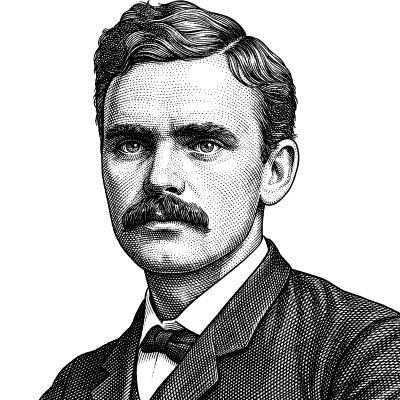
B. H. Roberts
Brigham Henry Roberts (1857–1933) was a historian, theologian, and General Authority of The Church of Jesus Christ of Latter-day Saints, widely regarded as one of the most rigorous and intellectually ambitious thinkers Mormonism has produced. Born in Warrington, England, and emigrating to Utah as a child, Roberts rose from a difficult, impoverished youth to become a missionary, editor, congressman-elect, and a member of the First Council of the Seventy from 1888 until his death. Roberts’s career bridged ecclesiastical leadership and serious scholarship. He served missions in the American South and presided over the Eastern States Mission, and he was elected to the U.S. House of Representatives in 1898, though he was denied his seat in a national controversy over plural marriage. He devoted decades to writing and editing, producing the six-volume Comprehensive History of the Church , editing the seven-volume History of the Church , and authoring theological works including The Mormon Doctrine of Deity , The Truth, The Way, The Life , and Studies of the Book of Mormon . In these works he engaged geology, biology, biblical criticism, and comparative religion with a candor unusual for his time and office. Roberts’s legacy resonates deeply with themes of human potential, intelligence, and the entanglement of faith with progress. He read the nineteenth and early twentieth centuries—railroads, electric light, wireless telegraphy, aviation, the spread of liberty—as “collateral rays” of the same light that opened the heavens to Joseph Smith, suggesting that the millennium might already be quietly underway in the works of human hands. He insisted that scientific research, including evidence of life and death long before Adam, belongs on the side of “development” rather than “contraction,” and that to engage such inquiry is “to link the church of God with the highest increase of human thought and effort.” Equally striking is Roberts’s generosity toward other traditions and his impatience with mental laziness. He refused to identify any particular church—Catholic, Protestant, Greek, Buddhist, Muslim, or even the societies of deists and atheists—as the “church of the devil,” reserving that phrase for the kingdom of evil wherever it appears, and affirming that wise teachers and prophets are raised up among all peoples. Against “simple faith” understood as ignorant acquiescence, he championed an intelligent, rational faith that strives “up to the very limit of man’s capacity” to know. In his confidence that intelligence is the glory of God and of humanity, that revelation invites rather than forecloses inquiry, and that the children of men are “moving up to a higher and truer conception of the things of God,” Roberts remains a vital voice for those who see in technology, science, and expanding moral imagination the natural shape of a divine future.

Basil the Great
Basil of Caesarea (c. 330–379), known as Basil the Great, was a bishop, theologian, and monastic reformer whose intellectual and institutional labors helped shape the foundations of Eastern Christianity. Born into a devout Christian family in Cappadocia (present-day Turkey), he studied at the finest schools of his age—Athens and Constantinople—before returning to establish a monastic community and eventually serving as Bishop of Caesarea from 370 until his death. Basil’s achievements were as practical as they were theological. He founded what historians regard as one of the earliest organized charitable complexes in the ancient world, a compound outside Caesarea that included a hospital, a hospice for travelers, and care facilities for the poor—a concrete expression of his conviction that faith without compassionate action is hollow. As a theologian, he contributed decisively to the articulation of Trinitarian doctrine and authored influential monastic rules that still govern communities of Eastern Christian monks today. Together with his brother Gregory of Nyssa and their friend Gregory of Nazianzus, he formed the Cappadocian Fathers, whose synthesis of Greek philosophy and Christian revelation became a cornerstone of classical theology. Basil’s deepest legacy may lie in his vision of human transformation through divine participation. In his treatise On the Holy Spirit , he described a soul indwelt by the Spirit as one that becomes spiritual itself, capable of “foreknowledge of the future, understanding of mysteries, apprehension of what is hidden”—a soul that advances through illumination toward what he did not hesitate to call “the being made God.” This is the doctrine of theosis : the idea that created intelligence, shaped by virtue and suffused with grace, can ascend toward genuine likeness to—and participation in—divinity. For Basil, that ascent was not a flight from the material world but a transformation of the whole person: mind, moral life, and communal practice included. His combination of rigorous intellectual formation, institutional care for the vulnerable, and fearless theological aspiration about humanity’s divine potential makes him a persistent and generative voice in any serious conversation about the relationship between intelligence, virtue, and the destiny of human beings.

Boyd K. Packer
Boyd K. Packer (1924–2015) was one of the most influential and theologically deliberate leaders of The Church of Jesus Christ of Latter-day Saints in the twentieth and early twenty-first centuries. Born on September 10, 1924, in Brigham City, Utah, the tenth of eleven children, he overcame childhood polio, served as a bomber pilot in World War II, and earned a doctorate in education from Brigham Young University before dedicating his life to religious service and teaching. Called to the Quorum of the Twelve Apostles in 1970, he served as its acting president from 1994 to 2008 and as its president from 2008 until his death on July 3, 2015. Packer’s career spanned more than five decades of general authority service. He worked extensively within the Church Educational System, overseeing seminary and institute programs, and served as a mission president in New England. He served on the scripture revision committee that produced the landmark 1979–1981 LDS editions of the Bible and standard works. He dedicated temples and missions across multiple continents and was a prolific author and teacher. He was also a gifted visual artist, known for his paintings and sculptures of birds—a dimension of his character that reflected a disciplined attention to the natural world and a belief that beauty and truth are inseparable. Packer’s theological legacy is marked by a deep reverence for the eternal sweep of Mormon cosmology. In one memorable interview, he cited the hymn ‘If You Could Hie to Kolob’—that most expansive of Mormon texts, celebrating eternal progression, a plurality of Gods, and worlds without end—and connected it to Brigham Young’s conviction that learning is not a process approaching a terminus but one that opens onto ‘an eternity of knowledge.’ That orientation—toward an unending, ever-expanding intelligence—runs beneath much of Packer’s teaching about the relationship between mortality and eternity, between what we now see and what God sees.

Brigham Young
Brigham Young (1801–1877) was the second president of The Church of Jesus Christ of Latter-day Saints, the architect of the Mormon migration to the Great Basin, and the founding governor of Utah Territory. As the organizing genius behind the settlement of the American West, he directed the colonization of more than 300 towns, established institutions of commerce and education, and shaped a distinctive religious civilization from the desert floor. Born in Whitingham, Vermont, Young converted to the restored church in 1832 after years of searching among the Methodist and Reformed faiths. He rose quickly through the Quorum of the Twelve Apostles, led the harrowing evacuation of Nauvoo following Joseph Smith’s martyrdom in 1844, and guided an exodus of tens of thousands across the plains to the Salt Lake Valley in 1847. As church president for thirty years, he presided over the construction of the Salt Lake Temple, founded the University of Deseret, championed the Perpetual Emigration Fund to gather converts from Europe, and negotiated—not always successfully—the church’s uneasy relationship with the federal government. What the historical record reveals, and what Young’s own sermons confirm at every turn, is a mind constitutionally unwilling to divide the sacred from the natural. He taught that God operates by law, that miracles are simply “results or effects of causes hidden from our understandings,” and that every discovery in science and art has been “given by direct revelation from God.” The telegraph, the steam engine, the plow—all were, in his view, eternal principles progressively disclosed to a humanity climbing upward from its infancy. Science and religion were not rivals in his theology but two names for the same structured reality: “there is no true religion without true science, and consequently there is no true science without true religion.” This integration carried moral weight. Young urged the Saints to become a thinking people, warning against the spiritual danger of surrendering judgment to leaders rather than seeking personal revelation—a remarkable insistence on epistemic independence from a man who wielded considerable institutional authority. His vision of human destiny was correspondingly expansive. He affirmed that God “was once a man in mortal flesh as we are” and that humanity is “organized to become Gods,” called to exercise creative authority over matter across eternal worlds. He taught that identity—the preservation of the self through resurrection and exaltation—is “the greatest gift that God can bestow,” and he framed mortality as the school in which that self is forged through trial, independent thought, and disciplined living. His counsel to “prepare to live” rather than merely to die, and to extend healthy life by understanding natural law, anticipates a tradition of practical, body-affirming faith that takes seriously both the present body and its glorified future. Young remains a towering, complicated figure whose earthly administration included serious moral failures; yet his theological instinct—that intelligence, technology, and theosis belong to a single continuous story—endures as one of the most generative ideas in the Latter-day Saint tradition.

Caleb Jones is a speaker and thinker deeply engaged with the intersection of Mormon theology, transhumanism, and intergenerational connection. His work focuses on the spirit of Elijah, as referenced in Malachi, and its implications for creating faith-based connections across generations, both living and deceased. He advocates for a broader interpretation of this principle, extending it beyond traditional temple work to encompass a reconciliation of ancient wisdom with modernity. Jones draws upon G.K. Chesterton’s concept of the “democracy of the dead” to frame his exploration of tradition and remembrance. He posits that our ancestors, through their artifacts and influence, continue to participate in the present. He sees the redemption of the dead through these artifacts—books, music, laws, traditions—as a collective human endeavor involving various disciplines such as literary scholarship, archaeology, and religious studies. His perspective emphasizes the importance of engaging with the past to inform and enrich the future, particularly within the context of Mormonism and its emphasis on family history and genealogical work. Jones champions seeking a healthy balance and ongoing reconciliation of the hearts and minds of the dead and dying with the hearts and minds of the living, to redeem rising generations.

Charles W. Penrose
Charles W. Penrose (1832–1925) was a British-born Latter-day Saint apostle, editor, poet, and theologian whose six-decade career as a writer and church leader made him one of the most intellectually formidable figures in nineteenth- and early twentieth-century Mormonism. Born in London, Penrose converted to the Church of Jesus Christ of Latter-day Saints in 1850 and emigrated to Utah in 1861. He served as editor of the Deseret News for two significant stints and became one of the church’s most prolific public intellectuals, writing doctrinal essays, hymns—including the beloved O Ye Mountains High —and polemical defenses of Mormon theology. He was ordained an apostle in 1904 and served as Second Counselor in the First Presidency under Presidents Joseph F. Smith and Heber J. Grant until shortly before his death. What distinguished Penrose among his contemporaries was the rigor he brought to questions of religious authority and rational inquiry. His conviction that revelation must be investigated rather than merely received—that the Saints should weigh prophetic claims with active, disciplined intelligence rather than passive deference—reflects a deeply epistemically serious faith. “We respect him,” he wrote of a sitting church president, “but we do not believe his personal views or utterances are revelations from God; and when ‘Thus saith the Lord,’ comes from him, the saints investigate it.” This is not skepticism at the expense of faith; it is faith disciplined by the same intelligence that Mormon theology declares co-eternal with God. Penrose understood that genuine trust in divine communication requires the full exercise of human reason, not its suspension. That conviction connects naturally to the broader Mormon vision of theosis—the idea that intelligence, rightly cultivated, is itself the stuff of eternal progression. Penrose spent his life insisting that Latter-day Saints be not merely believing but thinking believers, capable of distinguishing personal opinion from revelation, tradition from truth. In a tradition that affirms the mind and the spirit as inseparable, his legacy is a reminder that the path toward Godhood runs through honest inquiry as surely as it runs through covenant and community.

Cyprian
Cyprian of Carthage (c. 200–258 CE) was one of the most influential bishops and theologians of early Christianity, whose writings on ecclesiology, martyrdom, and the nature of the Church shaped Latin Christian thought for centuries. Born in Roman North Africa, likely to a wealthy pagan family, Cyprian converted to Christianity around 246 CE and rose rapidly to become Bishop of Carthage within two years. His episcopate was defined by crisis: he led his community through the Decian and Valerian persecutions, navigating fierce debates over how to treat Christians who had lapsed under imperial pressure. His treatises—among them On the Unity of the Church , On the Lapsed , On Mortality , and On Works and Almsgiving —combined pastoral urgency with theological precision, establishing principles of communal discipline, sacramental life, and episcopal authority that would echo through Western Christianity. He was martyred in 258 CE under the Emperor Valerian, becoming one of the most venerated figures in the early Church. Cyprian’s theological legacy is most vivid where it touches the question of human transformation. His conviction that Christ assumed the fullness of human nature so that humanity might ascend to share in the divine—captured in the axiom that what humanity is, Christ was willing to become, so that humanity might become what Christ is—places him in the ancient tradition of theosis, the teaching that the divine-human gap is not a fixed boundary but a trajectory of becoming. This vision of participation in the divine life, grounded in incarnation and sustained by community, finds deep resonance with the Mormon transhumanist intuition that human potential is genuinely open-ended, that the relationship between humanity and God is one of shared nature and increasing likeness rather than infinite ontological distance. Cyprian did not frame this hope in technological terms, but his insistence that moral transformation, communal practice, and the grace of Christ collaborate in making humanity more than it currently is speaks across centuries to anyone who takes seriously the possibility that the divine future of the human person is real, not merely symbolic.

Donald Bradley Jr. , affectionately known as Donnie, is a speaker and thinker exploring the intersection of transhumanism, art, and theology. Although chronologically 84 years old, Bradley has benefited from advanced life extension technologies that have rejuvenated his physical appearance to resemble someone closer to 18. He is a member of the Mormon Transhumanist Association. Bradley’s intellectual pursuits are wide-ranging, encompassing theoretical computer science, cybernetics, foundations of mathematics, algorithmic information theory, the psychology of creativity, literary studies, and cognitive poetics. His work explores the aesthetic sense of a god, and its relation to artistic practice and religious transhumanist quests. He is particularly interested in the works of Jorge Luis Borges, viewing Borges’ creations as a laboratory for godhood and an exemplary artist for transhumanists. He argues that in art, we are doing the work of a god in microcosm, training for eventual godhood. He points to Borges’ themes of eternity, and his ability to predict future developments in a way that is training for eventual godhood and a significant religious practice. Bradley explores the idea of literature and its relation to Mormon theology.

Emanuel Swedenborg
Emanuel Swedenborg (1688–1772) was a Swedish pluralistic scientist, philosopher, theologian, and mystic. His theological writings describe a detailed structure of the spiritual world and emphasize the importance of useful service. Born in Stockholm to a prominent family, Swedenborg was one of the most learned men of his age, making significant contributions to mining engineering, anatomy, and other sciences before turning to spiritual matters in his fifties. His theological works, including Heaven and Hell , describe the afterlife as a realm of continued activity, purpose, and progression. His emphasis on useful service and continued growth after death has influenced many religious movements, including some aspects of Latter-day Saint thought about the nature of heaven and eternal progression.