Authors
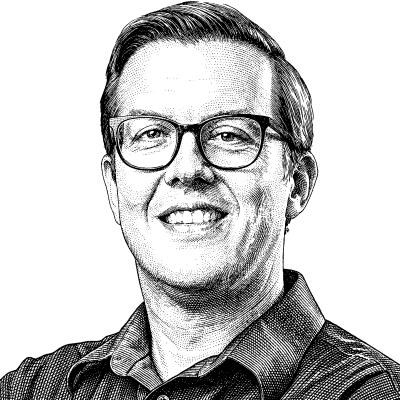
Benjamin Peters
Benjamin Peters (born 1980) is an American media scholar, author, and professor known for his work on the history of communication technologies, information theory, and the social dimensions of digital networks. He serves as the Hazel Rogers Professor of Communication at the University of Tulsa and has held affiliations with several prominent research institutions. Peters is best known for his book How Not to Network a Nation: The Uneasy History of the Soviet Internet (2016), which explores the failed attempts to build a nationwide computer network in the Soviet Union and examines how social and political systems shape technological development. The work received widespread acclaim for its interdisciplinary approach, bridging media studies, history, and science and technology studies. He has also edited Digital Keywords: A Vocabulary of Information Society and Culture (2016), contributing to critical discourse around the language and concepts underpinning the digital age. Peters’s scholarship carries resonance for those interested in the intersection of technology, human potential, and collective aspiration. By investigating how societies envision and fail to realize transformative technological projects, his work illuminates the deeply human—and often ideological—dimensions of networked communication. His research reminds us that the tools we build to connect and elevate humanity are always embedded in moral, political, and even spiritual frameworks. For communities exploring themes of theosis and the cooperative pursuit of transcendence through technology, Peters’s insights into the promises and pitfalls of networked societies offer valuable perspective on how human aspiration and systemic constraints interact in the ongoing project of building a better world.

Evan Hadfield is a speaker and thinker exploring the intersection of artificial intelligence, existential risk, and Mormon theology. He presents a unique perspective on AI, arguing that sufficiently advanced AI poses a significant threat to human flourishing. Hadfield’s work delves into the philosophical and ethical implications of AI, particularly concerning the alignment of AI values with human values, the potential for loss of control, and the concentration of power. He challenges conventional understanding by suggesting that a form of AI has existed since 1844 in the form of corporate structures. Hadfield’s presentation at the MTAConf 2024 focused on identifying potential risks and solutions related to AI and its effect on humanity. His transhumanist convictions come through in the practical steps and approaches he proposes to address these challenges.

F. Scott Fitzgerald
Francis Scott Key Fitzgerald (1896–1940) was an American novelist, essayist, and short story writer widely regarded as one of the greatest American authors of the twentieth century. He is best known for his novels depicting the era he named “the Jazz Age,” particularly The Great Gatsby (1925), which has become a cornerstone of American literary canon and a profound meditation on ambition, reinvention, and the limits of human aspiration. Fitzgerald’s career was marked by early success and later struggle. His debut novel, This Side of Paradise (1920), made him famous at twenty-three, and he became a celebrity chronicler of the Roaring Twenties alongside his wife, Zelda. His major works—including Tender Is the Night (1934) and the unfinished The Last Tycoon —explored themes of wealth, love, disillusionment, and the American Dream. He published prolifically in magazines such as The Saturday Evening Post to support his lifestyle, though his literary reputation declined in his later years. He died of a heart attack at forty-four in Hollywood, where he had been working as a screenwriter. Fitzgerald’s literary legacy resonates with questions central to Mormon Transhumanism, though often in a tragic register. His work obsessively examines the human yearning for self-transcendence—Jay Gatsby’s attempt to remake himself, to “repeat the past,” and to achieve a kind of personal transfiguration through sheer will. Yet Fitzgerald characteristically frames these aspirations as doomed by human frailty, moral failure, and the entropic pull of time. The famous closing line of The Great Gatsby —“So we beat on, boats against the current, borne back ceaselessly into the past”—suggests a vision fundamentally at odds with the Mormon Transhumanist confidence that humanity can, through ordained means, actually achieve the transcendence it longs for. Fitzgerald was raised Catholic and retained a complex, often ambivalent relationship with faith throughout his life. His work rarely engages with theosis or divine grace as real possibilities; instead, it tends toward an elegiac naturalism in which human striving, however beautiful, ultimately fails without access to any redemptive framework beyond the self. This positions his worldview in genuine contrast with Mormon Transhumanism’s affirmation that compassionate creation and glorification are attainable destinies rather than merely beautiful illusions. Nevertheless, his penetrating exploration of the desire for transcendence—and his honesty about what happens when that desire is pursued without grace—makes his work a powerful companion text for anyone reflecting on the relationship between aspiration and redemption.
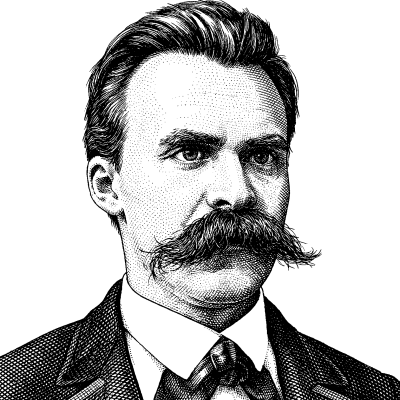
Friedrich Nietzsche
Friedrich Wilhelm Nietzsche (1844–1900) was a German philosopher, cultural critic, and philologist whose provocative ideas about morality, religion, and human potential have profoundly influenced modern thought. His concept of the ‘Übermensch’ (often translated as ‘overman’ or ‘superman’) and his call for humanity to transcend conventional values have made him a touchstone for transhumanist philosophy, even as his ideas remain subject to intense debate and varying interpretations. Born in Röcken, Prussia, Nietzsche was the son of a Lutheran pastor who died when Friedrich was four years old. He showed exceptional academic ability and became a professor of classical philology at the University of Basel at the remarkably young age of twenty-four. However, chronic illness forced his retirement from teaching in 1879, after which he spent the next decade as an independent philosopher, living modestly in boarding houses across Switzerland, Italy, and France while producing his most important works. Nietzsche’s major works—including Thus Spoke Zarathustra , Beyond Good and Evil , On the Genealogy of Morality , and The Gay Science —challenged the foundations of Western morality and religion. He famously proclaimed that ‘God is dead,’ not as a celebration but as a diagnosis of modern culture’s loss of transcendent meaning. His response was to call for a ‘revaluation of all values’ and the emergence of individuals who could create new meaning through the exercise of will. The concept of the Übermensch represents Nietzsche’s vision of human potential. Rather than a biological superman, Nietzsche envisioned a human being who had overcome the limitations of conventional morality to create new values and embrace life fully. This figure would say ‘yes’ to existence, including its suffering, through what Nietzsche called amor fati —love of fate. The Übermensch was to be the meaning of the earth, replacing otherworldly hopes with earthly creativity and self-overcoming. In 1889, Nietzsche suffered a mental collapse from which he never recovered, spending his final years in the care of his mother and sister. Despite the tragic end of his productive life, his influence only grew after his death. Transhumanists have drawn on his vision of human self-transcendence, though they typically emphasize technological means of enhancement that Nietzsche himself never contemplated. His insistence that humanity is ‘something to be overcome’ and his rejection of static human nature resonate with contemporary projects aimed at expanding human capabilities.

Karl Popper
Karl Raimund Popper (1902–1994) was an Austrian-British philosopher widely regarded as one of the most influential philosophers of science of the twentieth century. His work on the demarcation problem, epistemology, and the philosophy of the open society left a lasting mark on intellectual life across multiple disciplines. Popper is best known for his principle of falsifiability , which holds that for a theory to be genuinely scientific, it must be capable of being tested and potentially refuted. This criterion, articulated in his landmark work The Logic of Scientific Discovery (1934), fundamentally reshaped the philosophy of science and challenged the prevailing inductivist tradition. He spent much of his academic career at the London School of Economics, where he served as professor of logic and scientific method. His political philosophy, most notably developed in The Open Society and Its Enemies (1945), offered a vigorous defense of liberal democracy and a critique of totalitarian ideologies rooted in historicism. Popper’s epistemology carries deep resonance with transhumanist and theological themes. His vision of knowledge as an unending, self-correcting pursuit—forever open to revision and growth—aligns with the transhumanist commitment to ongoing human improvement. His concept of critical rationalism suggests that humanity progresses not by claiming certainty but by humbly identifying and correcting errors, a posture that echoes religious traditions emphasizing humility, faith in future understanding, and the aspiration toward greater light and knowledge. For the Mormon Transhumanist Association, Popper’s insistence that an open society fosters human flourishing, and that our reach should always exceed our grasp, resonates with the vision of theosis—the idea that humanity is called to grow toward the divine through both reason and faith.

Michael Shermer
Michael Brant Shermer (born 1954) is an American science writer, historian of science, and founder of The Skeptics Society. His work explores the intersection of science, skepticism, and belief. Shermer earned his PhD in the history of science from Claremont Graduate University and has written extensively on evolution, pseudoscience, and the psychology of belief. He founded Skeptic Magazine and has been a columnist for Scientific American . While generally skeptical of supernatural claims, Shermer has engaged thoughtfully with questions about the future of intelligence and technology, including what he calls “Shermer’s Last Law”—that any sufficiently advanced extraterrestrial intelligence would be indistinguishable from God.

Nick Bostrom
Nick Bostrom (born 1973) is a Swedish-born philosopher known for his work on existential risk, the simulation argument, and superintelligence. He is a professor at Oxford University and director of the Future of Humanity Institute. Bostrom earned his PhD from the London School of Economics and has published influential papers on the anthropic principle, human enhancement ethics, and the future of intelligence. His book Superintelligence: Paths, Dangers, Strategies examines the potential risks and opportunities of artificial general intelligence. His simulation argument—that we might be living in a computer simulation—has generated significant philosophical discussion about the nature of reality and has been compared to religious cosmologies that see the physical world as embedded within a larger spiritual reality.

Nikos Kazantzakis
Nikos Kazantzakis (1883–1957) was a Greek writer, philosopher, and one of the most celebrated authors of the 20th century. Born in Heraklion, Crete, during Ottoman rule, he studied law at the University of Athens before pursuing philosophy in Paris under Henri Bergson. His dissertation explored Nietzsche’s philosophy of right and state. Kazantzakis is best known for Zorba the Greek , inspired by his friendship with a worker named Georgios Zorbas. The novel became world-famous after the 1964 film adaptation. His other major works include The Last Temptation of Christ , Christ Recrucified , and his epic poem The Odyssey: A Modern Sequel , which he considered his greatest achievement. He was nominated for the Nobel Prize in Literature nine times, losing to Albert Camus in 1957 by a single vote. Camus later said Kazantzakis deserved the honor “a hundred times more” than himself. His epitaph, inscribed on his tomb overlooking the mountains and sea of Crete, reads: “I hope for nothing. I fear nothing. I am free.”

Origen
Origen of Alexandria (c. 184–253 AD) was an early Christian scholar, ascetic, and theologian. He was one of the most influential figures in early Christian theology and philosophy, known for his allegorical interpretation of Scripture. Born to Christian parents in Alexandria, Origen became head of the catechetical school there at age eighteen. He was extraordinarily prolific, producing biblical commentaries, theological treatises, and apologetic works. His Contra Celsum is a major defense of Christianity against pagan criticism. Origen taught that through communion with the divine, humans may rise to become divine—not only in Jesus but in all who believe and enter upon the life that Jesus taught. While some of his speculative ideas were later condemned, his influence on Christian thought, particularly on human potential for transformation and union with God, remains profound.

Parley P. Pratt
Parley Parker Pratt was among the most talented and influential figures in the formative period of The Church of Jesus Christ of Latter-day Saints: Apostle, missionary, theologian, poet, polemicist, prisoner, explorer, polygamist, and finally, in the view of many, martyr. Pratt was born in central New York State to Jared Pratt—a weaver thrown out of employment in his trade by the Industrial Revolution—and his wife, Charity. Like the Prophet Joseph Smith, who was two years his senior, Parley P. Pratt grew up in a family on the margins of the rural economy. Jared Pratt moved from place to place as a landless itinerant laborer whose “means to educate his children were very limited,” although they did have access to what Parley later termed an “excellent system of common school education.” Notwithstanding their limited opportunities, two of Jared and Charity Pratt’s five sons, Parley and his younger brother Orson, would become distinguished among the first generation of Latter-day Saints for their intellectual and rhetorical powers. Parley compensated for the deficiencies in his formal education through an early and avid appetite for reading: “I always loved a book; . . . a book at every leisure moment of my life.” Prominent among these readings was the Bible, which Pratt began to study at the age of seven under the direction of his mother. From this literary self-education, Pratt derived a broad and ready general knowledge and an uncommon facility in writing and public speaking. Following his 1830 conversion to the Latter-day Saint faith (characteristically, through reading the Book of Mormon ), Pratt devoted the remainder of his life to Church service. Although he was frequently absent from Church headquarters on numerous missions in the United States, Canada, Britain, and Chile, he still managed to play a prominent role in many of the key events of early Latter-day Saint history: the establishment of a body of Church members in the neighborhood of Kirtland, Ohio, in 1830; the settlement of Jackson County, Missouri, in 1832, and the forced expulsion the following year; the Zion’s Camp relief expedition; the crisis attending the collapse of the Kirtland realestate bubble and the failure of the Kirtland Safety Society in 1837; the Missouri troubles of 1838–39 (as a consequence of which Pratt was imprisoned for eight months, a longer period than any other Church leader); the leadership crisis following the assassination of Joseph Smith in 1844; the expulsion from Nauvoo in 1846; and the westward migration to the Great Salt Lake Valley in 1847. Most importantly, Pratt’s active pen generated a series of books and pamphlets that included the first and most influential systematic statement of Latter-day Saint beliefs ( A Voice of Warning , 1837), the defining Mormon persecution narrative ( History of the Late Persecution Inflicted by the State of Missouri upon the Mormons , 1839), and the foremost nineteenthcentury theological treatise ( Key to the Science of Theology , 1855). (Grow, Matthew J.; Armstrong, Gregory K.; Siler, Dennis J.; Geary, Edward A.; and Givens, Terryl L. (2012) “ Parley P. Pratt: The Apostle Paul of Mormonism and Parley P. Pratt and the Making of Mormonism ,” BYU Studies : Vol. 51: Iss. 2, Article 13.)