Authors

David A. Bednar
David A. Bednar (b. 1952) is a member of the Quorum of the Twelve Apostles of The Church of Jesus Christ of Latter-day Saints. Widely regarded as one of the most analytically rigorous teachers in contemporary Latter-day Saint leadership, he has shaped how millions of members understand the relationship between agency, covenant, and discipleship. Before his call to the holy apostleship in 2004, Bednar served as president of Ricks College (later BYU–Idaho) from 1997 to 2004, where he led a significant institutional transformation, including the college’s transition to a four-year university. His academic background is in organizational behavior, and he has brought that analytical sensibility to his theological teaching, consistently emphasizing patterns, principles, and the active responsibilities of covenant discipleship. Bednar’s legacy rests substantially on his insistence that discipleship is participatory rather than passive. His teaching frames human beings not as recipients of divine action but as agents commissioned in a shared work of redemption—what he has described as the Lord’s agents in the work of salvation and exaltation. That framing resonates with the Mormon transhumanist reading of theosis: Godhood is not bestowed but developed through active, willing participation in the work of God.

E. L. T. Harrison
Elias L. T. Harrison (1830–1900) was an early Latter-day Saint leader and writer who served missions in Great Britain and contributed thoughtful writings on priesthood responsibility and the nature of godliness. His 1858 essay in the Millennial Star articulated a profound vision of priesthood holders as representatives of God’s spirit and actions upon earth. He taught that ordinations alone do not make one godlike—rather, the priesthood calls individuals to put down evil and embody the virtues of the eternal God. Harrison emphasized that the world is to comprehend God through the lives of those who hold the priesthood. True priesthood, he taught, means becoming images of the living God, blessing and helping the weak and downtrodden until such service becomes natural.

Emanuel Swedenborg
Emanuel Swedenborg (1688–1772) was a Swedish pluralistic scientist, philosopher, theologian, and mystic. His theological writings describe a detailed structure of the spiritual world and emphasize the importance of useful service. Born in Stockholm to a prominent family, Swedenborg was one of the most learned men of his age, making significant contributions to mining engineering, anatomy, and other sciences before turning to spiritual matters in his fifties. His theological works, including Heaven and Hell , describe the afterlife as a realm of continued activity, purpose, and progression. His emphasis on useful service and continued growth after death has influenced many religious movements, including some aspects of Latter-day Saint thought about the nature of heaven and eternal progression.

Ezra Taft Benson
Ezra Taft Benson (1899–1994) was an American religious leader, statesman, and farmer who served as the thirteenth President of The Church of Jesus Christ of Latter-day Saints (1985–1994) and as U.S. Secretary of Agriculture under President Dwight D. Eisenhower (1953–1961). Born in Whitney, Idaho, Benson grew up on a family farm and carried a lifelong commitment to agrarian values, self-reliance, and public service. He served as a mission president in the British Isles and later as President of the European Mission following World War II, overseeing significant humanitarian and spiritual reconstruction efforts. Benson’s public career spanned both ecclesiastical and governmental spheres with unusual distinction. As Secretary of Agriculture, he advocated for free-market principles and became one of the most prominent Latter-day Saint voices in twentieth-century American political life. Within the Church, he served as President of the Quorum of the Twelve Apostles for nearly two decades before ascending to the presidency, during which he placed particular emphasis on the Book of Mormon as a keystone of faith and a guide for modern life. Benson held a deeply integrative view of truth, insisting that science and revealed religion are not adversaries but complementary paths toward the same reality. “Truth is truth, whether labeled science or religion,” he affirmed—a conviction that frames inquiry and faith as close allies. He also taught that God works through human beings, especially those of good will, to accomplish divine purposes across history. These commitments—to the unity of truth, to divine collaboration with mortal effort, and to the ongoing work of human progress—resonate naturally with the Mormon transhumanist conviction that technology, science, and religious aspiration are all expressions of a single trajectory toward greater intelligence, creativity, and Godhood.

George Q. Cannon
George Quayle Cannon (1827–1901) was one of the most influential leaders in the early history of The Church of Jesus Christ of Latter-day Saints, serving as a member of the Quorum of the Twelve Apostles and later as First Counselor in the First Presidency under four successive church presidents. A skilled orator, prolific publisher, and astute politician, Cannon shaped the church’s public image and theological discourse during a critical period of its development. Born in Liverpool, England, Cannon immigrated to the United States with his family at age fifteen following their conversion to the LDS faith. After his parents’ deaths, he was raised by his uncle John Taylor, who would later become the third president of the church. Cannon crossed the plains to Utah in 1847 and soon demonstrated exceptional abilities as a writer and leader. In 1849, he was called on a mission to California, and later served in Hawaii, where he learned the Hawaiian language and translated the Book of Mormon into Hawaiian. Cannon’s publishing career began in San Francisco, where he edited the Western Standard. Returning to Utah, he founded the Deseret News and later established the Juvenile Instructor magazine. He served as editor of the Millennial Star in England and built a publishing empire that produced books, pamphlets, and periodicals defending and explaining Latter-day Saint beliefs. His editorials and writings helped articulate church doctrine on subjects ranging from plural marriage to the nature of God. In 1860, Cannon was ordained an apostle at age thirty-two. He also served six terms as Utah’s delegate to the U.S. Congress (1872–1882), where he advocated for Utah statehood while defending the church against anti-polygamy legislation. Though he was eventually denied his congressional seat due to polygamy charges, his political experience proved invaluable to church leadership during the difficult years of federal prosecution. Cannon’s theological contributions reflect themes resonant with transhumanist thought. He taught extensively about human deification and eternal progression, declaring that ‘the object of man’s existence is that he might become like God.’ He envisioned humanity’s potential for infinite development and wrote of the transformative power of knowledge and technology in advancing God’s purposes. His writings on the resurrection emphasized the perfection and glorification of the human body—ideas that anticipate contemporary discussions of human enhancement and transcendence.
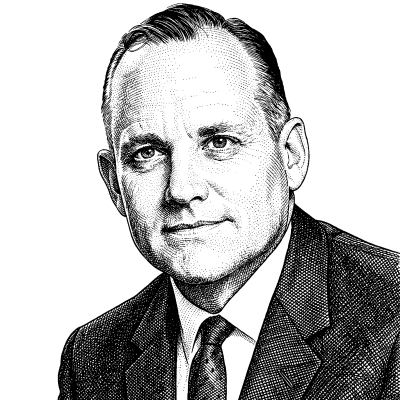
Howard W. Hunter
Howard William Hunter (1907–1995) was the fourteenth President of The Church of Jesus Christ of Latter-day Saints, serving the shortest presidential tenure in Church history—just nine months from June 1994 until his death. Born in Boise, Idaho, he was the first Church President born in the twentieth century and the last to die in it. Hunter grew up in a part-member family; his mother was an active member while his father did not join until Howard was an adult. He begged to be baptized and was finally permitted at age twelve, becoming the first Church President to be baptized in an indoor font. He was the second person to earn Eagle Scout in Idaho. He met Clara May “Claire” Jeffs in 1928; they married in the Salt Lake Temple in 1931 and had three sons, though their first son William died in infancy. After graduating with a law degree in 1939, Hunter served as the first president of the Pasadena California Stake. In 1959, President David O. McKay called him as an Apostle, prompting him to leave his law practice for full-time Church service. He served for over 35 years as a general authority, contributing to the establishment of the Polynesian Cultural Center, the Orson Hyde Memorial Garden in Jerusalem, and the BYU Jerusalem Center. From 1964 to 1972, he oversaw the Genealogical Society of Utah’s first computerization of records. As Church President, Hunter emphasized Christlike living and temple attendance. Despite numerous health challenges including a heart attack, tumor surgery, and quadruple bypass, he dedicated the Orlando Florida and Bountiful Utah temples before his death. His ministry, though brief, called Latter-day Saints to make the temple the great symbol of their membership.

Hugh Nibley
Hugh Winder Nibley (1910–2005) was an American Latter-day Saint scholar, polyglot, and intellectual widely regarded as the most erudite defender and interpreter of Mormon scripture and theology in the twentieth century. Born in Portland, Oregon, Nibley demonstrated exceptional linguistic ability from an early age and ultimately mastered more than a dozen ancient and modern languages. He earned his doctorate in history from the University of California, Berkeley, served in military intelligence during World War II, and joined the faculty of Brigham Young University in 1946, where he taught for four decades and produced an extraordinary body of scholarship on early Christianity, ancient Near Eastern texts, the Dead Sea Scrolls, Egyptian papyri, and Latter-day Saint scripture. Nibley’s scholarly output was staggering in both volume and range. His works—collected across nearly twenty volumes in the Collected Works of Hugh Nibley series—engaged ancient texts with rigorous philological and historical method while consistently arguing that the restored Gospel of Joseph Smith finds deep resonance with the earliest layers of Christian and Jewish tradition. He was equally comfortable with Greek patristics, Coptic manuscripts, and Mesoamerican archaeology, and his willingness to follow evidence wherever it led made him a singular figure in Mormon intellectual life: a committed believer whose faith was inseparable from disciplined scholarship. Nibley’s treatment of Zion reveals the practical and communal urgency at the heart of his theology. Drawing on Brigham Young, he argued that Zion is not a destination to be passively awaited but a project to be actively built—that the Saints are called to prepare themselves and the earth so that a heavenly Zion and an earthly one can meet as equals. Zion, in his reading, is “an eternal and universal type,” a pattern realized across the eternities that must nonetheless be constructed here, by human hands and human hearts, one person at a time. This insistence that transcendent ideals become real only through consecrated human work—that “Zion is still our business”—resonates directly with the Mormon transhumanist conviction that theosis is not a gift received in passivity but an achievement pursued through intelligence, compassion, and the long labor of becoming.
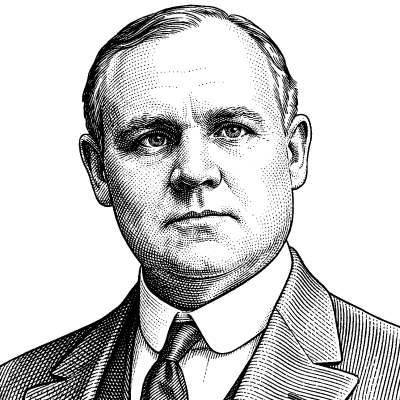
James E. Talmage
James Edward Talmage (1862–1933) was an Englishborn scientist and religious leader who served as a member of the Quorum of the Twelve Apostles of The Church of Jesus Christ of Latter-day Saints from 1911 until his death. Born in Hungerford, England, he emigrated with his family to Utah in 1877 and began teaching at Brigham Young Academy at age sixteen. Talmage pursued advanced studies in chemistry and geology at Lehigh University and Johns Hopkins University, receiving his Ph.D. from Illinois Wesleyan University in 1896. He served as president of the University of Utah and was elected a Fellow of the Royal Microscopical Society, the Royal Scottish Geographical Society, and the Geological Society of London. At the request of the First Presidency, Talmage wrote Jesus the Christ , completing much of it in a room set aside for him in the Salt Lake Temple. Published in 1915, it remains one of the most influential Latter-day Saint works on the life and ministry of Jesus Christ. His other significant works include The Articles of Faith and The Great Apostasy .

Jeffrey R. Holland
Jeffrey Roy Holland (3 December 1940 – 27 December 2025) was an American religious leader, educator, and author who served as Acting President of the Quorum of the Twelve Apostles of The Church of Jesus Christ of Latter-day Saints. Born in St. George, Utah, to a convert father and a mother from a long line of Latter-day Saints, he was a student leader and varsity athlete who met his future wife Patricia Terry while she was a cheerleader. Holland served a mission to Great Britain from 1960 to 1962, where his companions included future apostles Quentin L. Cook and his mission president Marion D. Hanks. He earned a BA in English and an MA in Religious Education from BYU, followed by a second master’s degree and PhD in American Studies from Yale University. He married Patricia in 1963; they have three children. His educational career included service as an Institute director, dean of Religious Instruction at BYU (where he established the Religious Studies Center), commissioner of the Church Educational System, and ninth president of Brigham Young University from 1980 to 1989. During his BYU presidency, he founded the BYU Jerusalem Center. He was called as a general authority in 1989 and ordained an apostle on June 23, 1994. Known for his powerful oratory and passionate testimony, Holland chaired the Missionary Curriculum Task Force that developed Preach My Gospel . He served as Acting President of the Quorum of the Twelve from November 2023 until his death. His books, including Christ and the New Covenant and Trusting Jesus , combined scholarly depth with pastoral warmth. He died on December 27, 2025, from complications of kidney disease.
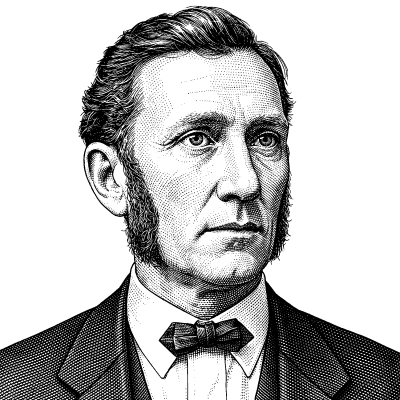
Joseph F. Smith
Joseph Fielding Smith (1838–1918) was the 6th President of The Church of Jesus Christ of Latter-day Saints, serving from 1901 until his death. He was the son of Hyrum Smith and nephew of Joseph Smith. Born in Far West, Missouri, Joseph F. Smith experienced the trials of early Church history firsthand. As a young child, he witnessed the aftermath of the Carthage martyrdom. At age nine, he drove an ox team across the plains to Utah with his widowed mother. At fifteen, he was called on a mission to Hawaii, where he had a transformative vision of the afterlife. He taught that Jesus’s work was not finished with his death and resurrection but continues until all who can be saved are redeemed. This expansive vision of salvation includes work for the dead and the promise that the faithful become saviors on Mount Zion alongside Christ.