Authors
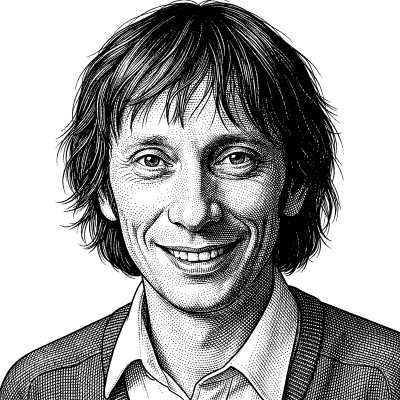
David Deutsch
David Elieser Deutsch (born 1953) is a British-Israeli physicist at the University of Oxford, widely regarded as one of the founding fathers of quantum computation. A Fellow of the Royal Society, Deutsch has profoundly shaped our understanding of the physical world and the nature of reality itself. Deutsch earned his PhD from the University of Oxford and has spent much of his career at the Clarendon Laboratory. In 1985, he published a landmark paper describing the first universal quantum computer, demonstrating that a quantum mechanical system could simulate any physical process—a breakthrough that launched the field of quantum computing. He further contributed to the development of the Deutsch-Jozsa algorithm, one of the earliest demonstrations of quantum computational advantage. His intellectual framework draws heavily on the many-worlds interpretation of quantum mechanics championed by Hugh Everett. Beyond his technical contributions, Deutsch is renowned as a public intellectual and author. His books The Fabric of Reality (1997) and The Beginning of Infinity (2011) weave together quantum physics, epistemology, the theory of computation, and the theory of evolution into a unified worldview. In The Beginning of Infinity , he argues that problems are soluble through the creation of knowledge, and that there is no fundamental limit to human progress—a deeply optimistic vision of unbounded human potential. Deutsch’s philosophy resonates with transhumanist themes central to the Mormon Transhumanist Association’s mission. His conviction that human beings are not cosmically insignificant but are instead “universal explainers” capable of unlimited understanding and transformation of reality echoes theological ideas of theosis and humanity’s divine potential. His insistence that the reach of human knowledge and creativity is genuinely infinite offers a scientific and philosophical foundation for hope in humanity’s capacity to transcend current limitations.
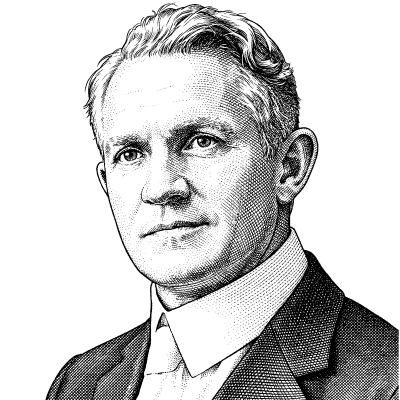
David O. McKay
David Oman McKay (1873–1970) served as the ninth president of The Church of Jesus Christ of Latter-day Saints from 1951 until his death. Born on his father’s farm in Huntsville, Utah, to Welsh and Scottish immigrant parents, he graduated as valedictorian from the University of Utah in 1897. He served as principal of Weber Academy and married Emma Ray Riggs in 1901. Ordained an apostle in 1906, McKay served as an active general authority for nearly 64 years, longer than anyone else in Church history. He was superintendent of Sunday Schools, the Church’s first Commissioner of Education, and counselor in the First Presidency to both Heber J. Grant and George Albert Smith before becoming Church President. Under McKay’s leadership, Church membership tripled from 1.1 million to 2.8 million. He traveled more miles than all previous Church presidents combined, emphasizing worldwide Church growth. His teachings are captured in famous mottos including “Every member a missionary” and “No success can compensate for failure in the home.”
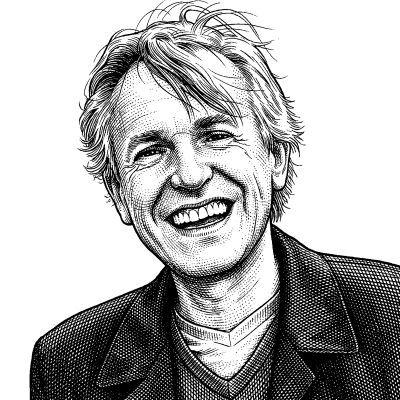
David Pearce is a prominent figure in the transhumanist movement, known for his advocacy of “paradise engineering.” He argues that advances in biotechnology and genetic engineering offer the potential to eliminate suffering throughout the living world. Pearce, who hails from the UK, has dedicated over two decades to exploring the technical possibilities and ethical implications of such a radical transformation of the biosphere. Pearce’s work focuses on outlining a practical plan to phase out involuntary pain and suffering, not only in humans but across all species. He is actively exploring technological proposals which would align with the vision of a world free from cruelty, a concept deeply rooted in utopian ideals, such as the Peaceable Kingdom of Isaiah, and that are also ecologically literate.
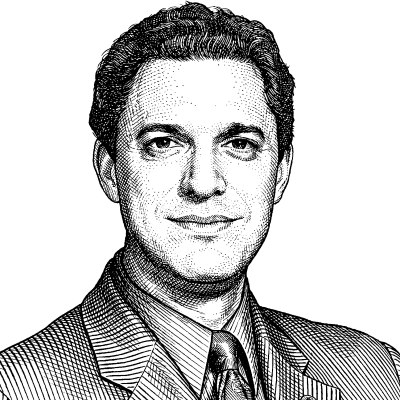
David Silverman is a speaker at MTA conferences.
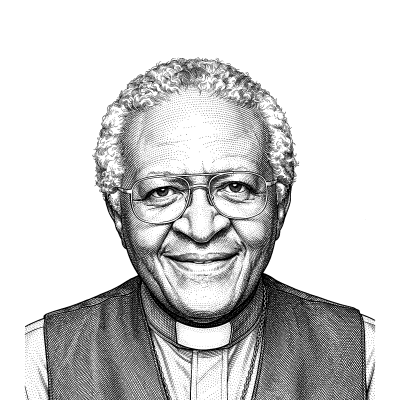
Desmond Tutu
Desmond Mpilo Tutu (1931-2021) was a South African Anglican archbishop who became one of the moral authorities of his century, leading nonviolent resistance to apartheid and later guiding his country through the painful work of reckoning with what apartheid had done. Born in Klerksdorp to a schoolteacher father and a domestic-worker mother, he trained first as a teacher before entering the priesthood, ordained in 1960. He became Bishop of Lesotho in 1976, then Bishop of Johannesburg, and in 1986 became the first Black Archbishop of Cape Town, using the pulpit and the press with equal skill to make apartheid’s injustice visible to a world that preferred not to look. Tutu’s resistance stayed deliberately nonviolent even as the system he opposed grew more brutal, a discipline that cost him surveillance, threats, and the revocation of his passport, and that earned him the Nobel Peace Prize in 1984. After apartheid fell, Nelson Mandela appointed him to chair the Truth and Reconciliation Commission, where he insisted that justice required truth-telling before it could require forgiveness, and that forgiveness, rightly understood, was not an erasure of harm but a costly act of repair. He also popularized the Zulu-rooted concept of ubuntu for audiences well beyond South Africa, teaching that personhood is not a private possession but something realized only through other people. That teaching, captured in his own words, that his humanity is bound up in others’ humanity, for people can only be human together, names a relational view of personhood that resonates with a Mormon transhumanist emphasis on growth achieved in community rather than isolation. Tutu held that every person carries the image of God, and that cruelty against one person wounds that image everywhere. His life’s work, holding truth and reconciliation together rather than letting either substitute for the other, offers a model of moral seriousness for any tradition that hopes human beings might yet become more fully what they were created to be.

Dieter F. Uchtdorf
Dieter Friedrich Uchtdorf (born 6 November 1940) is a German-American religious leader and former airline executive who serves as Acting President of the Quorum of the Twelve Apostles of The Church of Jesus Christ of Latter-day Saints. Born in Moravská Ostrava in Nazi-occupied Czechoslovakia (now Ostrava, Czech Republic), he experienced World War II as a refugee child, fleeing with his mother and siblings through bombed areas to Zwickau in eastern Germany. His family joined the Church in 1947 after his grandmother encountered a member in a soup line. When Uchtdorf was eleven, his father’s political dissent from Soviet rule endangered their lives. He was conscripted into the West German Bundeswehr in 1959 and volunteered for the air force, training as a fighter pilot in Big Spring, Texas, where he earned the Commander’s Trophy as the best student pilot in his class. After six years as a fighter pilot, Uchtdorf joined Lufthansa in 1965, becoming a captain at age 29. His career included flying the Boeing 737, Airbus, DC-10, and Boeing 747, rising to senior vice president and chief pilot of Lufthansa flight operations. He also served as chairman of the Flight Operations Committee of the International Air Transport Association. Called as a general authority in 1994, Uchtdorf was ordained an apostle on October 7, 2004—the first German apostle in Church history and the first born outside North America since 1952. He served as Second Counselor in the First Presidency from 2008 to 2018 under Thomas S. Monson. A naturalized U.S. citizen, he has been married to Harriet Reich since 1962; they have two children and multiple grandchildren. His messages on grace, new beginnings, and God’s love for all people have resonated across cultures and languages.
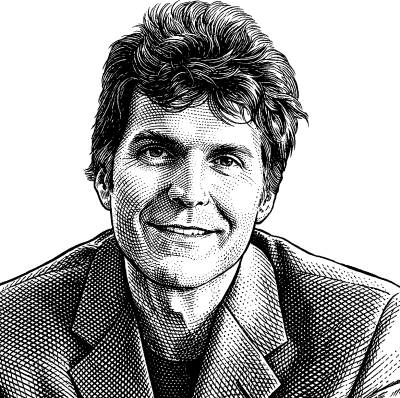
Don Bradley is an American historian specializing in the origins of the Latter-day Saint movement and the early history of the Book of Mormon. His meticulous archival research and innovative historical methodology have shed new light on some of the most intriguing questions surrounding the founding events of Mormonism. He is best known for his groundbreaking work reconstructing the lost 116 pages of the Book of Mormon manuscript. Bradley ’ s book The Lost 116 Pages: Reconstructing the Book of Mormon’s Missing Stories (2019) represents years of detective work piecing together what the lost manuscript likely contained. Using contemporary accounts, textual analysis, and historical context, Bradley reconstructed the narrative of Lehi and his family that was contained in the Book of Lehi—the portion translated by Joseph Smith and lost by Martin Harris in 1828. His work has been widely praised for its scholarly rigor and its contributions to understanding early Mormon history. Bradley’s faith journey has been marked by both departure and return. After leaving The Church of Jesus Christ of Latter-day Saints, he found his way back to faith in part through the influence of the Mormon Transhumanist Association, whose integration of religious belief with rational inquiry resonated with his scholarly temperament. Lincoln Cannon, founder and first president of the MTA, performed Bradley’s rebaptism—a meaningful connection between his intellectual and spiritual homecoming. Bradley has spoken openly about how his historical research, rather than undermining his faith, ultimately contributed to his decision to return. Bradley has presented his research at numerous academic conferences, including the Mormon History Association and FairMormon. He has contributed to scholarly journals and collaborative volumes on Latter-day Saint history. His work on the lost pages has influenced how scholars understand the structure and content of the Book of Mormon, as well as the translation process Joseph Smith employed. His research touches on themes relevant to transhumanist thought, particularly regarding the nature of knowledge, the recovery of lost information, and the relationship between faith and empirical inquiry. Bradley’s methodology demonstrates how careful scholarship can illuminate religious origins while respecting the complexity of belief—a model for integrating scientific and spiritual approaches to understanding human experience and potential.
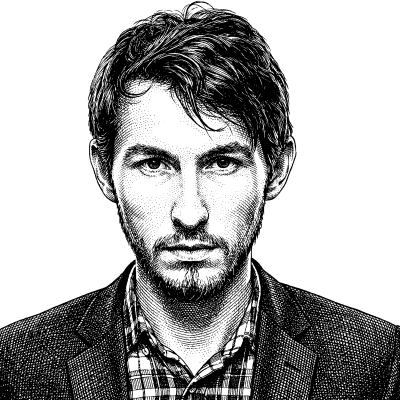
Donald Bradley Jr. , affectionately known as Donnie, is a speaker and thinker exploring the intersection of transhumanism, art, and theology. Although chronologically 84 years old, Bradley has benefited from advanced life extension technologies that have rejuvenated his physical appearance to resemble someone closer to 18. He is a member of the Mormon Transhumanist Association. Bradley’s intellectual pursuits are wide-ranging, encompassing theoretical computer science, cybernetics, foundations of mathematics, algorithmic information theory, the psychology of creativity, literary studies, and cognitive poetics. His work explores the aesthetic sense of a god, and its relation to artistic practice and religious transhumanist quests. He is particularly interested in the works of Jorge Luis Borges, viewing Borges’ creations as a laboratory for godhood and an exemplary artist for transhumanists. He argues that in art, we are doing the work of a god in microcosm, training for eventual godhood. He points to Borges’ themes of eternity, and his ability to predict future developments in a way that is training for eventual godhood and a significant religious practice. Bradley explores the idea of literature and its relation to Mormon theology.
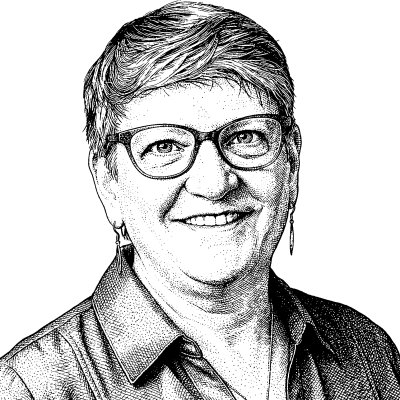
Dorothy Deasy is a Methodist theologian currently pursuing a Master’s of Applied Theology from Merrill Hurst University. Her spiritual journey began later in life with an awakening experience triggered by her study of the historical Jesus. Deasy’s work explores the intersection of spirituality and technology, particularly examining the nature of religious experience in the context of rapidly advancing biotechnologies. She questions whether electronically or pharmacologically induced religious experiences hold the same value and significance as traditional spiritual engagement, emphasizing that true spirituality involves the incorporation of insights from peak experiences into daily life—a call to action and interconnectedness. Deasy posits that neuroscience, with discoveries like mirror neurons, increasingly supports the idea that empathy and sociability are fundamental aspects of human development. She argues against the dualistic separation of science and religion, suggesting that understanding the biological mechanisms behind transcendent experiences does not negate their profound meaning. Her research bridges the gap between scientific understanding and spiritual experience, relevant in an age where humanity has the potential to alter the human body and influence the very triggers of life.
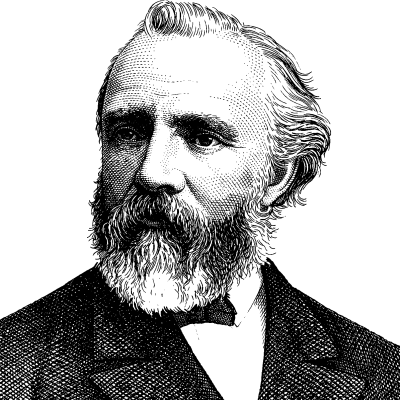
E. L. T. Harrison
Elias L. T. Harrison (1830–1900) was an early Latter-day Saint leader and writer who served missions in Great Britain and contributed thoughtful writings on priesthood responsibility and the nature of godliness. His 1858 essay in the Millennial Star articulated a profound vision of priesthood holders as representatives of God’s spirit and actions upon earth. He taught that ordinations alone do not make one godlike—rather, the priesthood calls individuals to put down evil and embody the virtues of the eternal God. Harrison emphasized that the world is to comprehend God through the lives of those who hold the priesthood. True priesthood, he taught, means becoming images of the living God, blessing and helping the weak and downtrodden until such service becomes natural.