Authors

Tomicah Tillemann is a partner and global chief policy officer at KRH Partners, a cryptocurrency venture fund led by former A16Z general partner, Katie Hahn. In this role, he focuses on building the public policy architecture to support the next generation of the Internet. A frequent speaker on the intersection of technology and theology, he brings both spheres together in his work and thought. Prior to joining KRH Partners, Tillemann served as senior advisor to two Secretaries of State, leading a team that developed 20 major initiatives across 55 countries. He previously served as Hillary Clinton’s speechwriter and spent four years on the staff of the Senate Foreign Relations Committee, working with Joe Biden, Barack Obama, and John Kerry. He has spearheaded programs addressing social impact, finance, and governance challenges on a global scale. Tillemann’s experience includes serving as Executive Director of the Digital Impact and Governance Initiative at New America, as well as membership in the World Economic Forum’s Center for the Fourth Industrial Revolution, the United Nations World Food Program Innovation Advisory Council, and the Lantos Foundation Board of Trustees. He is also Chairman of the Global Blockchain Business Council. Dr. Tillemann holds a BA magna cum laude from Yale University and a PhD with distinction from the School for Advanced International Studies at Johns Hopkins University. He is a member of The Church of Jesus Christ of Latter-day Saints and spoke at the MTAConf 2022 about the decentralization of power.

Trent Larson got a computer science PhD in 2002, then went to write software for industry. In 2014, he helped establish Medici Ventures, creating the first SEC-approved cryptocurrency-based stock exchange; he then worked for Medici Land Governance, documenting land rights with blockchain and securing identities with cryptography. His not-for-profit work on the side involves GiftEconomies.org supported by the app at TimeSafari.org , with the goal to allow fully peer-to-peer operations; he is also on the board of BridgeFoundation.community for affordable construction and agriculture at the Riverbed Ranch.

Ugo Perego is a senior researcher at the Sorenson Molecular Genealogy Foundation and a native of Italy. He holds a doctorate in molecular biology and specializes in genetics at the molecular level. His work encompasses both anthropological investigations of human migration and genealogical research, tracing family history through molecular biology. Perego’s involvement with the Sorenson Molecular Genealogy Foundation stems from its founder, James LeVoy Sorenson’s, vision to promote understanding and peace through genetics. Sorenson, who passed away in 2008, believed that demonstrating the close genetic relationships between individuals worldwide could foster greater cooperation and empathy, a goal that aligns with transhumanist ideals of improving human life. Perego’s research explores how DNA information and discoveries in the last two decades have revolutionized cultural and religious traditions, as well as changed views of humanity with regard to religions and other fields. He approaches these subjects with the explicit goal of tying them to the Mormon Transhumanist Association’s purpose and values.

Varden Hadfield is a speaker and professional with a deep interest in the intersection of Mormonism and Transhumanism, particularly focusing on the role of Jesus Christ and the concept of grace. He presented at the MTA (Mormon Transhumanist Association) conference, exploring the perceived differences and potential merging points between these seemingly disparate fields. Since 1999, Varden has worked in major gifts for LDS Philanthropies at BYU. Prior to that, he contributed to the American Lung Association of Colorado and the Research Information Division of The Church of Jesus Christ of Latter-day Saints. His educational background includes a Bachelor of Science degree in Sociology from BYU and a Master of Arts degree in Philanthropic Studies from Indiana University. A convert to the LDS Church multiple times throughout his life, Varden served a mission in Detroit and is currently a scoutmaster in Orem, Utah. He is married with six children and enjoys a variety of hobbies including backpacking, dancing, fiddling, and woodworking. He also finds personal satisfaction in running.

Vinay Gupta is an entrepreneur, humanitarian, and technologist. He is the founder and CEO of Materium, a blockchain technology company focused on bridging the virtual and physical economies. Materium aims to provide buyer and seller protection for physical asset NFTs, integrating real-world assets with blockchain technology. Gupta is also recognized for his contributions to the Ethereum blockchain platform. His work reflects a deep humanitarian concern, particularly for the world’s poorest populations and disaster relief efforts. This concern drives his interest in leveraging technology for social good. Beyond his work in blockchain, Gupta is known for inventing the HexaUt refugee shelter—a cheap, simple, non-patented, and open-source design. The HexaUt has become iconic within the Burning Man counterculture and serves as an example of his commitment to practical, accessible solutions for humanitarian challenges. He is also interested in weaving Gandhian principles of fair trade into his work, particularly through Materium, which is an attempt to define the moral responsibility around things people consume.
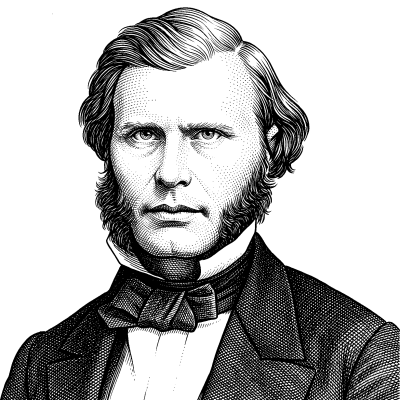
W. W. Phelps
William Wine Phelps (1792–1872) was an early leader in the Latter Day Saint movement who served as a printer, editor, poet, and hymn writer. Though his relationship with the church was tumultuous—including excommunication and rebaptism—his literary and theological contributions left an indelible mark on Latter-day Saint worship and thought. Several of his hymns remain among the most beloved in the LDS hymnal, exploring themes of cosmic scope and human divine potential. Born in Hanover, New Jersey, Phelps worked as a printer and newspaper editor before his conversion to the Latter Day Saint faith in 1831. His professional skills proved invaluable to the young church. He established the first church printing operation in Independence, Missouri, where he published The Evening and the Morning Star, the church’s first periodical, and printed the Book of Commandments. When mobs destroyed his printing press in 1833, he relocated to Kirtland, Ohio, where he continued his publishing work. Phelps served as a scribe and close associate of Joseph Smith, assisting with the translation of Egyptian papyri and the production of church publications. He helped compile the first LDS hymnal in 1835. However, his involvement in questionable financial dealings in Missouri led to his excommunication in 1838. He testified against Joseph Smith during the Missouri persecutions, an act that deeply wounded their relationship. In 1840, Phelps wrote a letter of repentance to Joseph Smith, who responded with the famous words: ‘Come on, dear brother, since the war is past, / For friends at first, are friends again at last.’ Rebaptized and restored to fellowship, Phelps resumed his work for the church. After Joseph Smith’s death, he followed Brigham Young to Utah, where he continued writing and served in various civic capacities until his death in Salt Lake City. Phelps’s hymns explore profound theological themes that resonate with transhumanist thought. If You Could Hie to Kolob contemplates the infinite nature of existence—endless space, eternal time, and the boundless potential of intelligence. The Spirit of God celebrates knowledge, vision, and the restoration of ancient truths. His lyrics articulate a cosmology in which humanity participates in an eternal process of learning, progression, and glorification—themes that anticipate modern discussions of human enhancement and cosmic purpose.
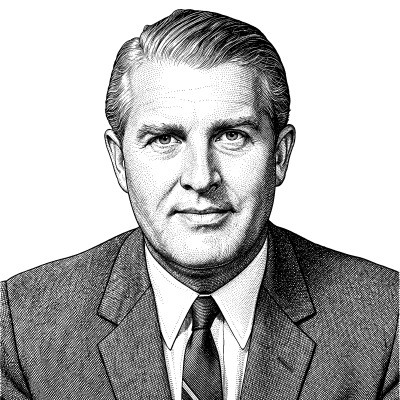
Wernher von Braun
Wernher von Braun (1912–1977) was a German-American aerospace engineer and space architect who led the development of the V-2 rocket for Nazi Germany and later served as the chief architect of the Saturn V rocket for NASA
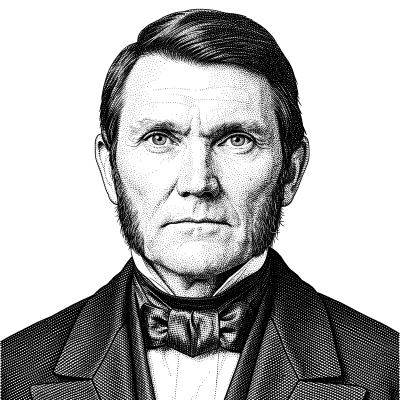
Wilford Woodruff
Wilford Woodruff (1807–1898) served as the fourth president of The Church of Jesus Christ of Latter-day Saints from 1889 until his death. Born in Connecticut, he worked as a miller before joining the Church in 1833. He was ordained an apostle in 1839 and served a remarkably successful mission in England, leading many converts to Nauvoo. Woodruff’s journals constitute one of the most valuable records in Latter-day Saint history, documenting decades of Church development. In 1890, after receiving revelation, he issued the Manifesto that ended the practice of plural marriage, helping to resolve the conflict with the U.S. government that had plagued the Church for decades. His presidency saw the 1893 dedication of the Salt Lake Temple and Utah’s 1896 admission to statehood. He founded the Genealogical Society of Utah and directed the first mission calls to single women, opening a new era of sister missionary service. He died in San Francisco on September 2, 1898.
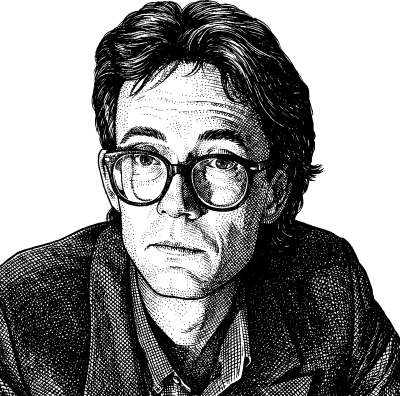
William Gibson
William Ford Gibson , born March 17, 1948, in Conway, South Carolina, is an American-Canadian speculative fiction writer widely credited with pioneering the cyberpunk genre. After dropping out of high school and traveling to Canada, he earned a B.A. from the University of British Columbia in 1977. Gibson coined the term “cyberspace” in his 1982 short story “ Burning Chrome ” and popularized the concept in his groundbreaking debut novel Neuromancer (1984), which remains the only novel to win the Hugo, Nebula, and Philip K. Dick Awards. His visionary works anticipated the Internet, virtual reality, and the pervasive digital culture that defines modern life. Gibson’s Sprawl trilogy— Neuromancer , Count Zero (1986), and Mona Lisa Overdrive (1988)—merged technology, multinational corporate capitalism, and vast urban landscapes in ways that revolutionized science fiction. His influence extends far beyond literature, inspiring films like The Matrix and shaping how we understand the relationship between humanity and technology. Gibson continues to write and lives in Vancouver, British Columbia, exploring themes of technological change and human adaptation that resonate deeply with transhumanist thought.
William Irwin Thompson
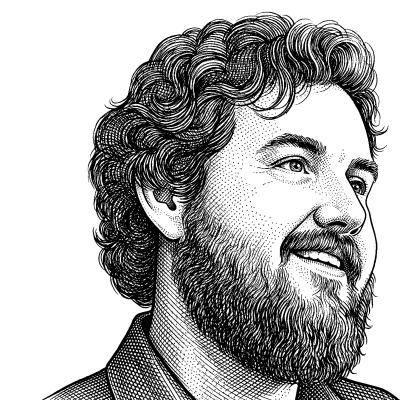
William Irwin Thompson (July 16, 1938-November 8, 2020) was an American cultural historian, poet, and social philosopher who studied how myth, science, and consciousness evolve together. Born in Chicago and educated at Pomona College and Cornell, he taught at MIT from 1965 to 1968 and at York University from 1968 to 1973, serving as a visiting professor at Syracuse in spring 1973. In 1972 he founded the Lindisfarne Association, which he led as founder and president until 1997. He built it into a meeting place for scientists, artists, and contemplatives who shared his conviction that no single discipline could account for a mind capable of building both cathedrals and computers. His books, including At the Edge of History (1971), Passages About Earth (1974), and The Time Falling Bodies Take to Light (1981), treat evolution as a story running through galaxies, cells, and civilizations. Drawing on figures like Teilhard de Chardin, they connect myth, spirituality, ecology, and cultural transformation. In 1976 he argued that technological expansion, including space colonization, should not become a way to evade ecological responsibility or the harder work of cultural change here on Earth.