Authors

Jason Crawford
Jason Crawford is the founder of The Roots of Progress , where he writes and speaks about the history of technology and the philosophy of progress. He is also the creator of Progress Studies for Young Scholars , an online learning program for high schoolers; and a part-time adviser and technical consultant to Our World in Data, an Oxford-based non-profit for research and data on global development. Previously, he spent 18 years as a software engineer, engineering manager, and startup founder. From 2013–2018, he was co-founder & CEO of Fieldbook, a hybrid spreadsheet-database. He has also been an engineering manager at Flexport, Amazon, and Groupon, and a co-founder or early employee at other startups. Before that, he was a research engineer at D. E. Shaw Research, working on a new supercomputing architecture for computational biochemistry.

Jason Xu is a transhumanist with a deep interest in the intersection of technology, religion, and culture. Driven by a desire to find meaning and purpose in a world increasingly dominated by what he perceives as morally bankrupt cultural trends, Xu seeks to create art and rituals that celebrate and reinforce transhumanist values. He is passionate about the potential of technology to advance humanity towards a teleological end goal. Frustrated by the lack of established transhumanist communities and artistic expressions, Xu embarked on a unique spiritual journey. He explored various religious practices, including Christianity, Islam, and Hare Krishna, interpreting their rituals and beliefs through a transhumanist lens—specifically focusing on concepts such as mind uploading and ancestor simulation. This quest ultimately led him to Terasem, an organization whose principles resonated deeply with his own. Xu’s intellectual journey began in high school with an exploration of transhumanist ideas online. His desire for a deeper connection to these concepts and a community of like-minded individuals eventually led him to seek out organizations and practices that could foster a sense of shared belief and purpose. He has lived in the Bay Area for over 15 years and moved to Florida to join Terasem.

Jaxon Washburn is a Ph.D. student in Near Eastern Languages and Cultures with a focus on Armenian Studies at UCLA. He holds a Master of Theological Studies in History of Christianity from Harvard Divinity School (2023) and dual bachelor’s degrees in Religious Studies and History from Arizona State University (2021), both earned summa cum laude. Raised in an interfaith household, Jaxon has long been passionate about religious studies and interfaith activism, with early speaking engagements at venues including the Parliament of the World’s Religions and the United Nations. He formerly served as youth advisor for the Arizona Interfaith Movement and as a member of the Mormon Transhumanist Association. He went on to serve a mission for the Church of Jesus Christ of Latter-day Saints in Armenia—an experience that profoundly shaped the trajectory of his academic career. At Harvard Divinity School, Jaxon deepened his commitment to both scholarship and faith. He worked as a Research Associate with the Harvard Pluralism Project, contributing to efforts promoting religious literacy and interreligious engagement. His studies there also led to a published essay, “Mormonism: The Most American ‘Religious Other,’” in the Harvard Divinity Bulletin (Fall/Winter 2022). During his time at HDS, he developed a strong interest in Armenian religious history, studying Classical Armenian and working with Dr. Christina Maranci following the reestablishment of Harvard’s Mashtots Chair for Armenian Studies. Jaxon’s current research interests encompass the history of Christianity, Eastern and Armenian Christianity, mediums of interreligious exchange, and religious pluralisms in the South Caucasus. His earlier work on intersections between Hindu and Latter-day Saint traditions around themes of transfiguration and divine embodiment has broadened into a wider exploration of how religious communities interact, exchange, and develop across cultural boundaries.
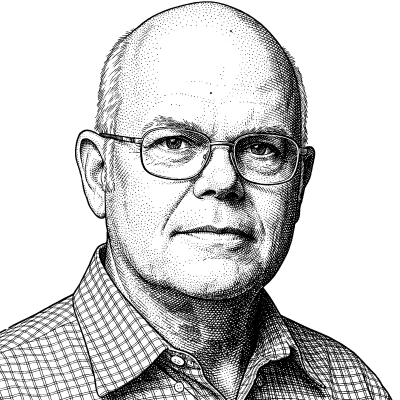
Jeff Beck is a farmer and independent researcher with a deep interest in consciousness and its underlying mechanisms. His exploration of these topics has led him to consider questions surrounding how meaning is encoded in the brain and the nature of reality beyond linguistic abstraction. Beck’s interest in transhumanism stems from a fascination with solving seemingly impossible problems. Prior to his current pursuits, Beck worked as a research engineer for Conoco, where he specialized in tackling challenging engineering problems related to coal slurry, horizontal drilling, and other complex industrial processes. He gained extensive experience in designing and building pilot plants with feedback loops and control systems, often working with air and hydraulics for safety in explosive environments. This work sparked an interest in self-regulating systems and their potential applications. Beck holds a master’s degree in system dynamics and controls, which provided him with a foundation for understanding complex systems and their behavior. He is particularly interested in exploring the connections between dual aspect monism, high-level construction, and the nature of consciousness, seeking to bridge the gap between linguistic representations and the underlying continuum of experience.
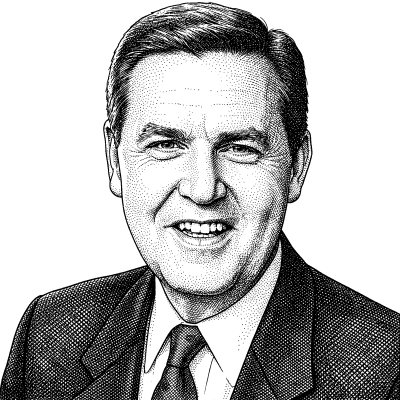
Jeffrey R. Holland
Jeffrey Roy Holland (3 December 1940 – 27 December 2025) was an American religious leader, educator, and author who served as Acting President of the Quorum of the Twelve Apostles of The Church of Jesus Christ of Latter-day Saints. Born in St. George, Utah, to a convert father and a mother from a long line of Latter-day Saints, he was a student leader and varsity athlete who met his future wife Patricia Terry while she was a cheerleader. Holland served a mission to Great Britain from 1960 to 1962, where his companions included future apostles Quentin L. Cook and his mission president Marion D. Hanks. He earned a BA in English and an MA in Religious Education from BYU, followed by a second master’s degree and PhD in American Studies from Yale University. He married Patricia in 1963; they have three children. His educational career included service as an Institute director, dean of Religious Instruction at BYU (where he established the Religious Studies Center), commissioner of the Church Educational System, and ninth president of Brigham Young University from 1980 to 1989. During his BYU presidency, he founded the BYU Jerusalem Center. He was called as a general authority in 1989 and ordained an apostle on June 23, 1994. Known for his powerful oratory and passionate testimony, Holland chaired the Missionary Curriculum Task Force that developed Preach My Gospel . He served as Acting President of the Quorum of the Twelve from November 2023 until his death. His books, including Christ and the New Covenant and Trusting Jesus , combined scholarly depth with pastoral warmth. He died on December 27, 2025, from complications of kidney disease.

Jeremy Hadfield currently works in Applied AI at Anthropic. He completed his undergraduate studies in philosophy, neuroscience, and computer science, as well as a Master of Engineering Management, at Dartmouth College. His academic interests have long been intertwined with the exploration of consciousness, happiness, and suffering, themes he addresses with a rigorous, multidisciplinary approach. Previously, as an intern at the Qualia Research Institute (QRI), Jeremy contributed to groundbreaking research focused on quantifying consciousness and developing a consistent, meaningful understanding of valence—the spectrum of experience from happiness to suffering. His work at QRI involved exploring the “symmetry theory of valence,” an innovative framework for understanding these fundamental aspects of human experience. Jeremy’s past presentation at the MTAConf 2020 demonstrated his unique ability to bridge scientific inquiry with theological considerations. He explored how scriptures address happiness and suffering within the wider context of neuroscience, computer science, and philosophical inquiry.

Jessica Finnigan is a scholar and project consultant operating at the intersection of social systems, technological innovation, and organizational health. Originally recognized for her academic work at the University of Cambridge and King’s College London, Jessica’s research explored how religious frameworks and technological access impact human progress in the developing world. Today, she translates those high-level insights into high-impact results as a Fractional Project Manager and the founder of Project Startup LLC. Jessica’s research highlights the critical, yet often overlooked, role of technology in alleviating suffering and fostering sustainable development in the developing world. Drawing upon her experience working with international databases focused on women’s issues, she emphasizes the need for culturally sensitive and nuanced approaches to technological implementation, advocating for solutions that acknowledge the complexities and tensions inherent in diverse cultural contexts. Jessica bridges the gap between technological innovation and the realities of the developing world, seeking to understand and address the “Great Divide” between technological access and implementation in developed and developing nations. Her work emphasizes the importance of considering sustainable food security and other fundamental needs when introducing technology into communities facing significant challenges.
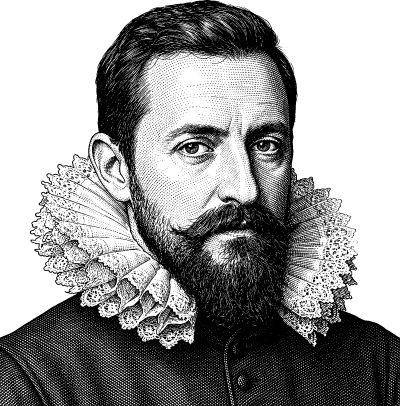
Johannes Kepler
Johannes Kepler (27 December 1571 – 15 November 1630) was a German mathematician, astronomer, and natural philosopher who fundamentally transformed humanity’s understanding of the cosmos. Born in Weil der Stadt, Germany, to a soldier father and an herbalist mother who was later accused of witchcraft, Kepler studied at the University of Tübingen under Michael Maestlin, who taught him the Copernican heliocentric system. In 1596, Kepler published Mysterium Cosmographicum ( The Cosmographic Mystery ), the first published defense of Copernicus’s sun-centered model. After being forced out of his teaching position in Graz due to his Lutheran faith, he moved to Prague in 1600 to work for the renowned astronomer Tycho Brahe. When Tycho died suddenly in 1601, Kepler succeeded him as imperial mathematician to Holy Roman Emperor Rudolf II. Kepler’s greatest achievement was his three laws of planetary motion: that planets move in elliptical orbits with the sun at one focus (1609); that a line connecting a planet to the sun sweeps equal areas in equal times; and that the square of a planet’s orbital period is proportional to the cube of its mean distance from the sun (1619). These laws, published in Astronomia Nova (1609) and Harmonices Mundi (1619), laid the foundation for Newton’s law of universal gravitation. Called the “founder of celestial mechanics,” Kepler was the first to identify natural laws in the modern sense. His fusion of physics and astronomy created modern astronomical science, demonstrating that the same physical principles governing motion on Earth apply throughout the universe—a revolutionary insight with profound implications for understanding humanity’s place in the cosmos.
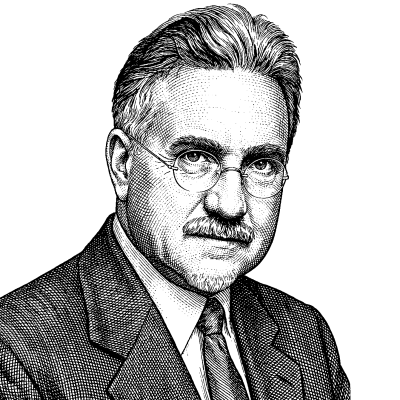
John A. Widtsoe
John Andreas Widtsoe (1872–1952) was a Norwegian-American scientist and apostle who brought a unique synthesis of scientific rigor and religious faith to his Church service. Born on an island among fisherfolk in Norway, he emigrated to Utah after his mother’s conversion. He graduated from Harvard with the highest honors and earned his doctorate from the University of Gottingen in Germany. Widtsoe became renowned for his expertise in irrigation and dry farming, serving as director of the Utah Agricultural Experiment Station and later as president of both Utah State Agricultural College and the University of Utah. He was called to the Quorum of the Twelve in 1921 and later served as president of the European Mission. A prolific author, Widtsoe wrote A Rational Theology and Evidences and Reconciliations , which addressed common questions about faith and doctrine. His marriage to Leah Dunford, granddaughter of Brigham Young, united him with a distinguished Church lineage. Despite personal tragedy, losing four of his seven children in infancy, he maintained a life of faithful service.

John Niman is a legal scholar and writer with a particular interest in the intersection of law, religion, and emerging technologies. He is currently pursuing legal research on the Free Exercise Clause of the US Constitution, particularly as it relates to the regulation of genetic engineering and other scientific advancements. Niman’s work explores the potential for religious exemptions to accelerate scientific discovery, arguing that the constitutional protections afforded to religious practices could provide a unique pathway for innovation in areas that might otherwise be constrained by secular regulations. His analysis considers how Mormon transhumanist beliefs might qualify for such legal protections. Niman is a frequent contributor to online publications focused on transhumanism and emerging technologies, including the Institute for Ethics at Emerging Technologies (IEET), Transhumanity.net, and H Plus Magazine . His writings delve into the ethical and legal implications of rapidly advancing technologies and their impact on society.