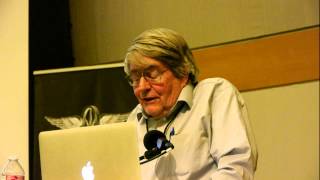
Roger Dennis Hansen is a professional water resources engineer, historian, and a contemplative figure within the Mormon Transhumanist movement. With a career spanning several decades in hydraulic engineering and international development, Hansen has carved out a unique niche by bridging the technical rigors of environmental science with the expansive cosmological visions of Latter-day Saint theology.
Born and raised in the American West, Hansen’s early life was informed by the cultural and physical landscapes of the Mormon corridor. He pursued a rigorous academic path, earning a Bachelor of Science and a Master of Science in Civil and Environmental Engineering from Utah State University, followed by a PhD from the University of Colorado. Professionally, he distinguished himself through his work with the United States Bureau of Reclamation and various international water management projects in the Middle East and Africa, focusing on the sustainable use of the earth’s most vital resource.
Beyond his engineering achievements, Hansen is a dedicated historian and author. His research often centers on the intersection of nineteenth-century Mormonism and the development of the American West. He has authored several works, including The Mormon New World Order, which examines the radical social and theological structures envisioned by early Church leaders. Hansen views these historical efforts not as relics of the past, but as a trajectory toward a future defined by communal progression and technological stewardship.
In his 2014 presentation at the Mormon Transhumanist Association Conference, titled “What If Joseph Smith Jr. Had Lived Longer?”, Hansen explored the counterfactual history of a long-lived Joseph Smith. He posited that the Prophet’s trajectory was leaning toward an increasingly sophisticated, high-bandwidth “Pure Language” and a radical restructuring of society. Hansen suggested that Smith’s vision of a “global brain” or a unified human consciousness—achieved through spiritual and intellectual refinement—parallels modern transhumanist aspirations for enhanced communication and collective intelligence.
Hansen’s work is characterized by the belief that science and religion are complementary tools for understanding the cosmos. He maintains that the Mormon tradition, with its emphasis on the eternal nature of matter and the potential for human deification, provides an ideal framework for embracing transhumanist goals.