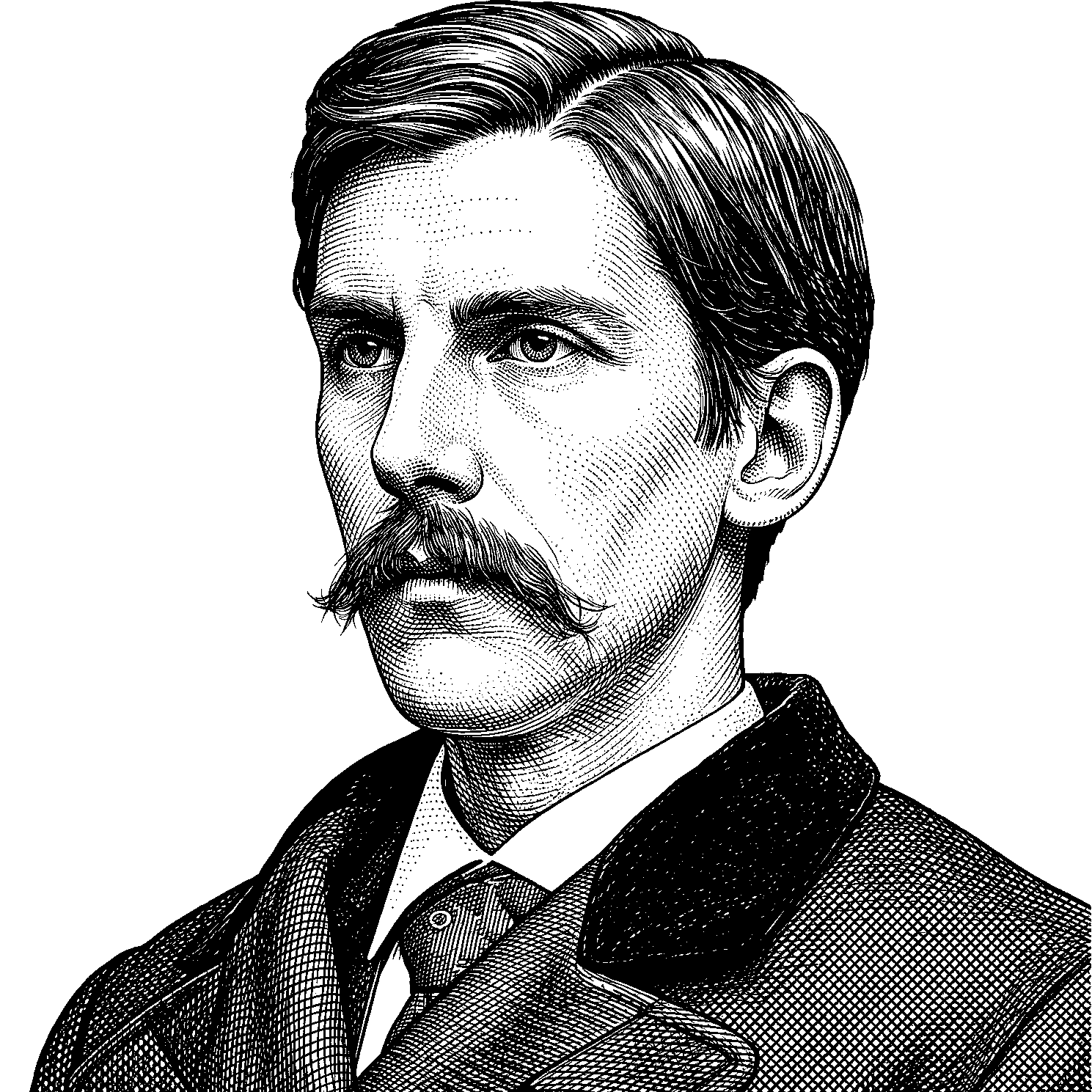
Oliver Wendell Holmes Jr. (1841–1935) was an American jurist and legal scholar who served on the United States Supreme Court from 1902 to 1932. Born in Boston, he was the son of the physician and writer Oliver Wendell Holmes Sr. He graduated from Harvard College in 1861, served as a Union officer during the Civil War, and was wounded three times. After the war, he studied at Harvard Law School and entered legal practice in Boston.
Holmes combined practice with editing, teaching, and scholarship. In The Common Law (1881), he examined the historical development of legal rules and argued that experience, social conditions, and practical judgments shape the law. He briefly held a professorship at Harvard Law School before joining the Massachusetts Supreme Judicial Court in 1882. He became its chief justice in 1899. President Theodore Roosevelt appointed him to the United States Supreme Court in 1902.
His judicial opinions helped shape debates about constitutional interpretation, legislative authority, and freedom of speech. His dissent in Lochner v. New York (1905) opposed imposing a particular economic theory through constitutional adjudication. His later free-speech dissents, including Abrams v. United States (1919), influenced the development of stronger protections for political expression. His writing also contributed to the intellectual foundations of American legal realism.
Holmes's record includes decisions that severely restricted individual rights. In Buck v. Bell (1927), he wrote the majority opinion upholding Virginia's compulsory sterilization law, lending judicial authority to eugenics and its coercive treatment of disabled people. His legacy therefore encompasses both influential arguments for intellectual freedom and grave failures to protect vulnerable individuals. He retired in 1932 and died in Washington, D.C., in 1935.